There’s something quietly mesmerizing about a handful of roasted almonds. It’s not just their crunch or their smoky, oily scent—it’s how they reveal their true essence when roasted properly. I’ve always loved turning a simple ingredient into a small, fragrant ritual, especially when it’s as humble as almonds. It’s a moment of transformation I find oddly satisfying, like coaxing their best flavor out of them with just heat and patience.
This recipe is about more than just snacking. Once roasted, almonds become a versatile ingredient—crushed into toppings, blended into sauces, or just enjoyed straight from the jar. I’ve learned that the key is keeping it simple, focusing on bringing out their natural oils and smoky aroma without overdoing it. It’s a humble process that, when done right, elevates these everyday nuts into something truly special.
Focusing on the overlooked beauty of the simple, everyday roasted almond—highlighting its transformative potential from snack to ingredient, and exploring the subtle art of bringing out their natural oils and smoky aroma.
The story behind this recipe
- I first stumbled upon roasting almonds during a lazy Sunday kitchen experiment. The nuts weren’t meant for anything fancy, just a quick snack. But as they toasted, their scent filled the apartment—smoky, warm, a little sweet—and I realized how much flavor a simple roast can unlock. Ever since, I keep a jar of roasted almonds on hand, not just for snacking but for tossing into salads or chopping into desserts.
- There’s a little magic in watching raw almonds turn golden and fragrant. It’s a humble act, but it transforms the nuts from plain to complex—oily, smoky, almost nutty. I love the way the aroma lingers, hints of toasted butter and caramel, that makes you want to keep nibbling. It’s a small ritual that grounds me, reminds me that good things often come from simple steps.
- heading: ‘The story behind this recipe’
Ingredient breakdown
- Raw almonds: I like using fresh, plump almonds—they ripen with a subtle, sweet aroma and a firm texture. If yours feel dry or dull, try soaking them briefly before roasting for extra flavor.
- Oil (optional): A light drizzle of neutral oil helps the almonds roast evenly and enhances their oily sheen and smoky scent. Skip it if you prefer a leaner snack—just watch for uneven browning.
- Salt: A pinch of flaky sea salt at the end amplifies the nutty depth and adds a satisfying crunch. For a smoky twist, toss with smoked salt or pinch of paprika.
- Sweeteners (optional): A touch of honey or maple syrup can turn roasted almonds into a sweet, candylike snack. Be mindful—they can burn quickly, so watch the oven closely.
- Spices (optional): Ground cinnamon, cayenne, or cumin can add warmth or heat. Use sparingly to keep the natural almond flavor front and center, but don’t shy away from experimenting.
- Cooling rack: I swear by a wire rack for cooling—air circulation keeps them crisp and prevents sogginess. If you leave them on the baking sheet, they might steam and soften.
- Baking sheet: Use a rimmed sheet to prevent any rolling around. I prefer lining it with parchment for easy cleanup and to avoid sticking or burnt bits.
Spotlight on key ingredients
Raw almonds:
- I like using fresh, plump almonds—they ripen with a subtle, sweet aroma and a firm texture. If yours feel dry or dull, try soaking them briefly before roasting for extra flavor.
- Oil (optional): A light drizzle of neutral oil helps the almonds roast evenly and enhances their oily sheen and smoky scent. Skip it if you prefer a leaner snack—just watch for uneven browning.
- Salt: A pinch of flaky sea salt at the end amplifies the nutty depth and adds a satisfying crunch. For a smoky twist, toss with smoked salt or pinch of paprika.
Almonds during roasting:
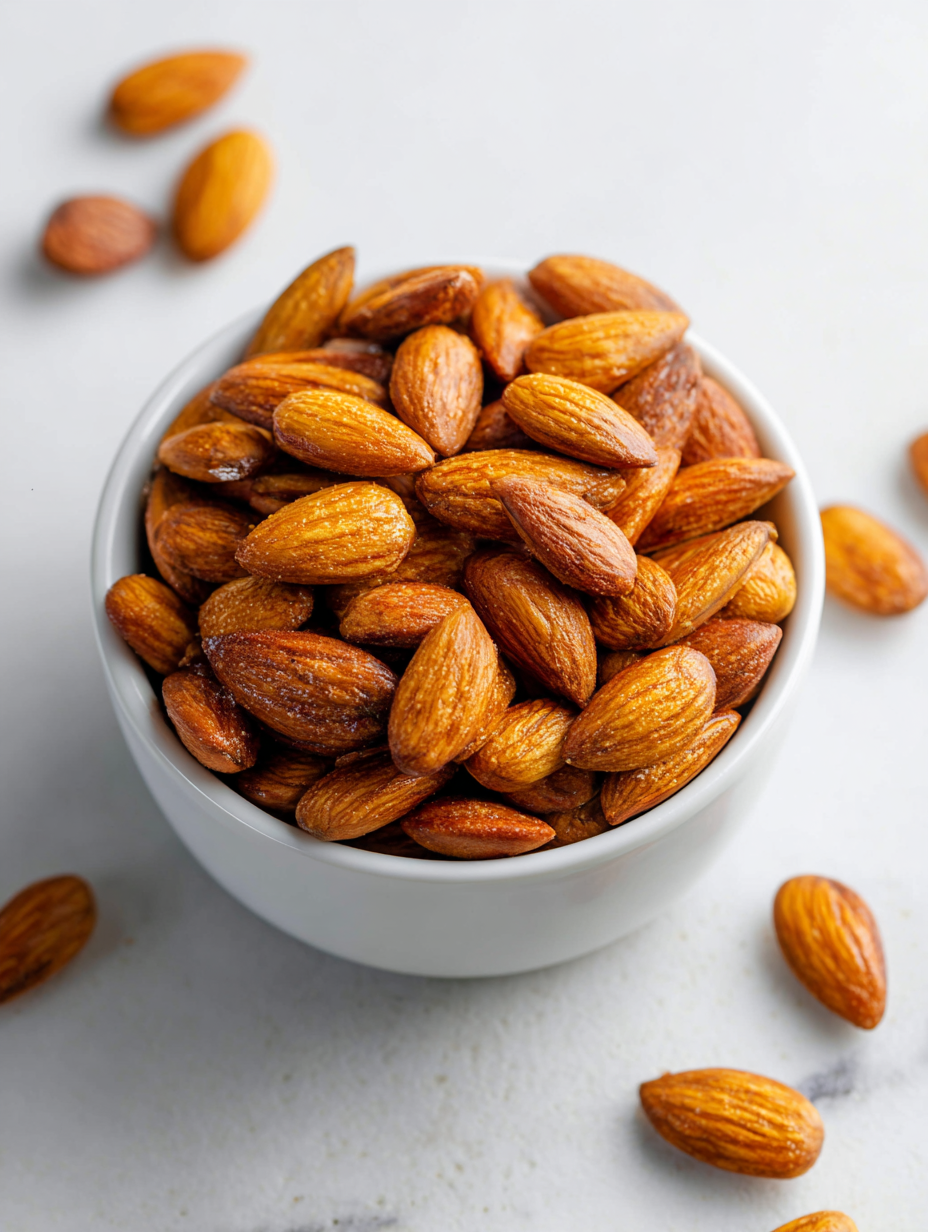
- Oily coating: During roasting, almonds release their natural oils, creating a glossy, fragrant surface that signals they’re perfectly toasted.
- Smoky aroma: As they roast, almonds develop a warm, smoky scent, almost caramel-like, which intensifies if you increase heat slightly or toast longer.
- Crunch factor: Once cooled, almonds should feel firm and snap easily—over-roasting makes them brittle, under-roasting leaves them soft and bland.
Notes for ingredient swaps
- Dairy-Free: Skip butter or oils—use a splash of water to help almonds roast, but expect slightly less glossy finish.
- Salt: Use sea salt or smoked salt to enhance flavor differently—smoked adds a gentle smoky aroma, flaky salt gives crunch.
- Sweeteners: Maple syrup or agave nectar can replace honey—both will add sweetness and a hint of floral or caramel notes.
- Spices: Swap cinnamon for smoked paprika or cayenne—just a pinch, for a warm or spicy twist that complements the nutty aroma.
- Oil: Use a neutral oil like grapeseed or avocado—these have high smoke points and won’t interfere with the natural almond flavor.
- Nuts: Try pecans or cashews for a different crunch and flavor profile—rich, buttery alternatives that roast similarly.
- Cooling Rack: If you don’t have one, use a clean baking sheet with a slight tilt for air to circulate—just avoid stacking the nuts.
Equipment & Tools
- Oven: For roasting the almonds evenly at controlled heat.
- Baking sheet with parchment: Provides a non-stick surface for roasting and easy cleanup.
- Spatula: To toss almonds halfway through roasting for even color.
- Wire cooling rack: Allows air circulation for crisp, cooled almonds.
Step-by-step guide to roasting almonds
- Preheat your oven to 180°C (350°F). Line a rimmed baking sheet with parchment paper for easy cleanup.
- Measure out 2 cups of raw almonds. No need to soak, just pick through to remove any broken bits or skins.
- Spread almonds evenly on the prepared baking sheet. Avoid overcrowding to ensure even roasting.
- Place the sheet in the oven. Roast for 10-12 minutes. Keep an eye out for a gentle golden hue and a nutty aroma filling your kitchen.
- Halfway through, give the almonds a quick toss with a spatula. This helps them brown evenly and prevents burning.
- When they smell toasted—warm, slightly smoky, with a hint of caramel—check their color. They should be golden, not burnt.
- Remove from oven. Let them cool on the baking sheet for 5 minutes. The nuts will continue to crisp as they cool.
- Transfer almonds to a wire rack. Let them cool completely—about 10 minutes—before handling or storing.
- Once cooled, you can season them with a pinch of flaky sea salt or your favorite spices. Toss gently to coat.
- Store in an airtight jar or container. They stay crisp for up to 2 weeks at room temperature, longer if refrigerated.
Allow almonds to cool completely on a wire rack before storing. Season with salt or spices if desired, then transfer to an airtight container.
How to Know It’s Done
- Color: Nuts should be golden, not dark or burnt.
- Aroma: Expect a warm, smoky, roasted scent filling your kitchen.
- Texture: Nuts should feel firm and crisp when cooled, not greasy or soft.
Simple Roasted Almonds
Ingredients
Equipment
Method
- Preheat your oven to 180°C (350°F) and line a baking sheet with parchment paper for easy cleanup.
- Measure out two cups of raw almonds, making sure they are uniform in size and free of any broken pieces or skins.
- If desired, toss the almonds with a teaspoon of neutral oil to help them roast evenly and develop a glossy, fragrant surface.2 cups raw almonds
- Spread the almonds in a single layer on the prepared baking sheet, ensuring they aren’t crowded to promote even browning.
- Place the sheet in the oven and roast for 10 to 12 minutes, stirring once halfway through to promote uniform color and aroma development.
- Watch for a fragrant, warm aroma and a golden hue as visual cues that the almonds are perfectly toasted—avoid over-browning.
- Remove the baking sheet from the oven and transfer the almonds to a wire cooling rack to cool completely, which helps them crisp up and prevents sogginess.
- Once cooled, sprinkle a pinch of flaky sea salt over the almonds and toss gently to evenly distribute the seasoning.2 cups raw almonds
- Enjoy the almonds as a snack or chop and add them to salads, desserts, or other dishes for a crunchy, flavorful boost.
Notes
Pro tips for perfect roasted almonds
- Watch the color: Keep an eye on the almonds—they turn a warm golden hue, signaling perfect toasting, not burning.
- Smell early: Expect a fragrant, nutty aroma that deepens as they roast—this is your cue to check for doneness.
- Stir midway: Toss the almonds at the halfway point to promote even browning and prevent sticking or burning on one side.
- Cool completely: Spread on a wire rack and let cool fully before handling—this keeps them crispy and prevents sogginess.
- Use parchment: Lining your baking sheet with parchment prevents sticking and makes cleanup easier, especially if you add oil or spices.
- Adjust for moisture: If almonds seem dry or dull, a light toss with oil before roasting can boost flavor and sheen.
- Handle with care: Hot almonds can be brittle; let them cool a few minutes to avoid breakage and get that perfect crunch.
Common roasting mistakes and fixes
- FORGOT to watch the nuts? Stir sooner to prevent burning.
- DUMPED cold water on hot almonds? Dry thoroughly to avoid sogginess.
- OVER-TORCHED almonds? Lower oven temperature and extend roasting time.
- MISSED the color change? Pull out when golden and fragrant for perfect crunch.
Quick fixes and pantry swaps
- When almonds burn quickly, splash with cold water and stir to cool them down.
- If almonds seem dull, toss with a pinch of oil to boost gloss and aroma.
- DUMPED salt or spices unevenly? Shake the jar to distribute seasonings evenly.
- Over-toasted? Patch with a quick 1-minute re-toast at lower heat for even color.
- Splash a bit of water if almonds turn soggy—then bake again at 150°C (300°F) for crispness.
Prep, store, and reheat tips
- Prepare almonds in advance by measuring and spreading them on a baking sheet. They can be roasted the day before, which frees up time and ensures even toasting.
- Store cooled roasted almonds in an airtight container at room temperature. They stay crisp for up to 2 weeks, but for maximum freshness, refrigerate for up to a month.
- Reheating isn’t necessary; however, if you want to revive their crunch, give them a quick 2-minute toast at 150°C (300°F) in the oven, watching for that fragrant, toasted aroma.
- During storage, almonds may slightly lose their smoky aroma over time. Refresh flavor by tossing with a pinch of sea salt or spices just before serving.
Top questions about roasted almonds
1. How do I choose good almonds for roasting?
Look for almonds that are plump, with a fresh, nutty aroma. Dull or shriveled almonds may be past their prime.
2. What’s the ideal oven temperature and time?
Roast almonds at 180°C (350°F) for about 10-12 minutes until golden and fragrant. Stir halfway for even color.
3. Should I cool the almonds before storing?
Allow almonds to cool completely on a wire rack before storing; warm almonds can become soggy or stick together.
4. Can I add seasonings after roasting?
Yes, tossing with a pinch of flaky sea salt after cooling enhances flavor and adds crunch. Add spices or sweeteners as desired.
5. What equipment do I need for roasting almonds?
Use parchment paper on your baking sheet to prevent sticking and make cleanup easier. A rimmed sheet helps contain the nuts.
6. What if my almonds burn during roasting?
If almonds burn quickly, remove them immediately and toss with a little water or lower oven temp next time.
7. How long do roasted almonds stay fresh?
Store roasted almonds in an airtight container at room temperature for up to 2 weeks, longer if refrigerated.
8. Can I reheat roasted almonds?
Reheat roasted almonds briefly at 150°C (300°F) for a few minutes to revive crispness. Keep an eye on them to prevent burning.
9. How can I make almonds more flavorful after roasting?
If almonds seem dull or flat, toss with a tiny bit of oil before roasting to boost flavor and shine.
10. Can I spice roasted almonds?
Yes, adding spices like cinnamon or cayenne before roasting can infuse the nuts with extra flavor and aroma.
There’s something quietly satisfying about turning raw almonds into their toasted, fragrant form. The smoky aroma and crunchy texture make them a simple but special snack, or a versatile ingredient for so many dishes. Especially now, when we crave small comforts and familiar flavors, roasting almonds feels like a gentle act of home cooking.
Once you get the hang of it, this process becomes a quick, soothing ritual. Keep a jar on hand for snacking, topping salads, or adding a nutty crunch to baked goods. It’s a humble step that, surprisingly, unlocks a lot of flavor and warmth in the simplest of ingredients.