There’s something quietly satisfying about roasting peanuts at home. It’s not just about flavor; it’s about transforming those little raw nuggets into something smoky, deeply aromatic, and oozing with richness. Every batch feels like a small act of alchemy — a simple, honest way to elevate a snack or ingredient.
Most folks are used to buying roasted peanuts in bags, but the real magic happens when you do it yourself. The process is straightforward, but paying attention to timing and heat unlocks a whole new level of flavor that store-bought just can’t match. Plus, the smell—oh, that nutty, toasted aroma—makes your whole kitchen smell like a cozy bakery.
This recipe isn’t just about crunch; it’s about appreciating the slow, sensory journey from plain raw peanuts to smoky, fragrant bites. It’s perfect for when you want to add a personal touch to your snacks or get a little more out of a humble ingredient. Once you get the hang of roasting peanuts at home, you’ll never look at those shelled bags the same way again.
Focusing on the overlooked art of roasting peanuts to unlock their full aromatic potential, emphasizing the sensory transformation from raw to richly smoky and oozing with flavor.
The story behind this recipe
- Growing up, I remember my grandma roasting peanuts over a small open flame outside. The smell was so rich and inviting, it drew everyone out of the house. Those moments stuck with me—how a simple ingredient could carry so much warmth and nostalgia.
- One day, I decided to revisit that childhood memory, experimenting with my own oven. The slow, steady heat drew out a smoky aroma that instantly transported me back to lazy summer afternoons. It’s funny how just a handful of peanuts can hold such a story—one of tradition, patience, and simple pleasures.
- heading
- story_type
Ingredient breakdown: key components
- Raw peanuts: I like using unsalted, shelled peanuts—they roast evenly and develop a deep, oaky aroma that fills the kitchen and makes your mouth water. If you prefer a saltier snack, lightly sprinkle with sea salt after roasting.
- Oil: Just a splash of neutral oil helps even out the heat and enhances that glossy, toasted surface. Skip it if you want a drier, crunchier nut—just watch closely, as they can burn quickly.
- Salt: A pinch of flaky sea salt at the end brightens the roasted flavor and adds a satisfying crunch. For a smoky twist, try smoked salt—just sparingly, so it doesn’t overpower.
- Sweetener (optional): A sprinkle of sugar or honey can add a caramelized note. I do this when I want that sweet-salty combo, but be cautious—sugar can burn fast and turn bitter if you’re not attentive.
- Spices (optional): A pinch of cayenne or paprika can turn your peanuts into a spicy snack. I add these before roasting for an even coat, but beware—they can intensify quickly, so start small.
- Storage: Once cooled, I keep roasted peanuts in an airtight container. They stay fresh for about a week, but if you want that crunch to last longer, refrigerate or freeze them—just let them come to room temp before munching.
Spotlight on key ingredients
Peanuts:
- Raw peanuts: I prefer unsalted, shelled peanuts—they roast evenly and develop a deep, oaky aroma. If you like a saltier snack, sprinkle with sea salt after roasting.
- Oils: Just a touch of neutral oil helps with even browning and a glossy finish. Skip if you want them drier, but keep a close eye—they can burn quickly.
Salt & Spices:
- Salt: Flaky sea salt at the end brightens the flavor and adds crunch. Smoked salt adds a subtle smoky dimension—use sparingly to not overpower.
- Optional spices: Cayenne or paprika can turn your peanuts spicy. Add before roasting for even coverage, but start small—they can intensify fast.
Notes for ingredient swaps
- Dairy-Free: Skip butter or oil, use a splash of water to help with roasting—peanuts stay crisp but lose some richness.
- Salt Alternatives: Use smoked or flavored salts for a different punch—smoked salt adds a subtle smoky depth, while sea salt keeps it classic.
- Sweeteners: Honey or maple syrup can be drizzled post-roast for caramelized sweetness—watch carefully to prevent burning.
- Spice Variations: Chili powder, cumin, or curry powder can be added before roasting—these infuse the nuts with warm, complex flavors.
- Oil Choices: Use coconut oil for a hint of sweetness or sesame oil for nuttiness—just remember, different oils can influence the aroma and flavor.
- Seasonings on Cool Nuts: Toss with herbs or citrus zest after roasting—fresh herbs bring brightness, zest adds a zing.
- Raw Nuts: Unsalted, shelled peanuts are best—if using salted, reduce or skip additional salt to avoid over-salting.
Equipment & Tools
- Baking sheet: To hold peanuts for even oven roasting.
- Silicone spatula or wooden spoon: To stir the peanuts during roasting.
- Kitchen towel or bowl: To cool and season the peanuts after roasting.
Step-by-step guide to roasting peanuts
- Preheat your oven to 180°C (350°F). Choose a baking sheet with a rim to prevent peanuts from rolling off. No need to oil or salt yet.
- Spread the raw peanuts in a single, even layer on the baking sheet. Avoid overlapping to ensure even roasting.
- Place the sheet in the oven. Roast for about 15 minutes, stirring every 5 minutes to promote uniform color and aroma.
- Watch closely after 12 minutes; the peanuts should start to turn golden and smell nutty and toasted. If they darken too quickly, lower the temperature slightly.
- Once they reach a deep golden hue and emit a fragrant, smoky aroma, remove from the oven. The nuts will continue to crisp as they cool.
- Transfer the hot peanuts to a clean towel or bowl. If desired, sprinkle with flaky sea salt or your preferred seasonings while still warm for better adhesion.
- Let the peanuts rest and cool completely for 10–15 minutes. This allows them to develop crunch and deepen their flavor.
- For the best texture, serve once cooled. Store in an airtight container for up to a week, or longer if refrigerated.
Cool the roasted peanuts completely before storing or serving. Optionally, sprinkle with salt or spices while warm for better flavor adherence.
How to Know It’s Done
- Color: Peanuts should be a deep golden brown with a slightly oily sheen.
- Aroma: Expect a rich, nutty, smoky scent filling your kitchen.
- Texture: When cooled, they should be crispy and crunchy, not soft or chewy.
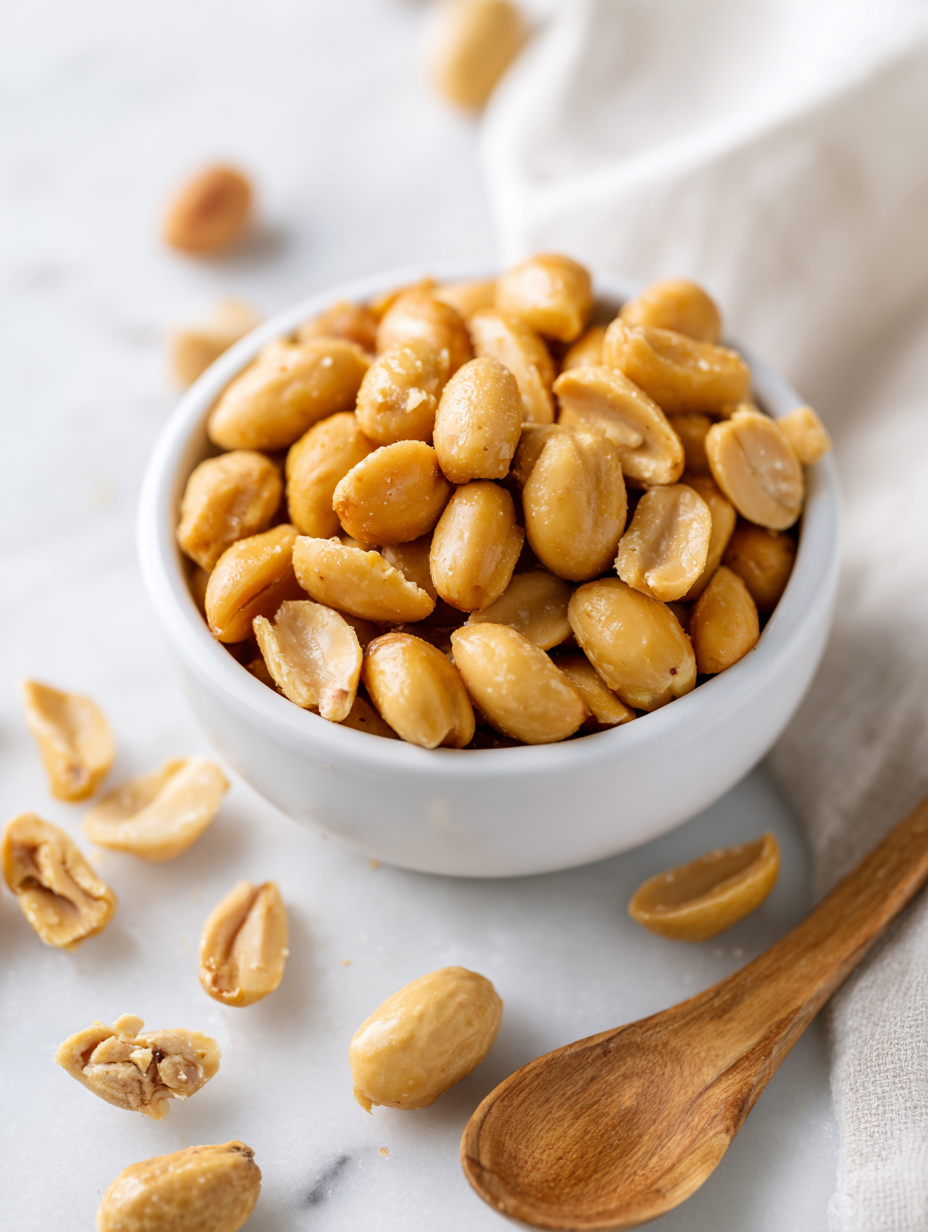
Homemade Roasted Peanuts
Ingredients
Equipment
Method
- Preheat your oven to 180°C (350°F). Place a rimmed baking sheet in the oven to heat up, ensuring even roasting.
- Spread the raw peanuts in a single, even layer on the hot baking sheet, making sure they aren’t overlapping for uniform cooking.
- Place the baking sheet in the oven and roast for about 15 minutes, stirring every 5 minutes with a spatula or spoon. Listen for the peanuts to start smelling nutty and toasted, and watch for a golden hue.
- Once they turn a deep golden-brown and emit a fragrant, smoky aroma, remove the peanuts from the oven and transfer them to a bowl or kitchen towel to cool slightly.
- If desired, sprinkle the hot peanuts with sea salt or your preferred seasonings while still warm, tossing gently to coat evenly.
- Allow the peanuts to cool completely, which helps them crisp up and deepen in flavor. Once cooled, enjoy your homemade roasted peanuts as a snack or use them to add crunch to salads and dishes.
Notes
Pro tips for perfect roasted peanuts
- Bolded mini-head: Use a dry skillet for an even roast— moisture can cause uneven color and sogginess.
- Bolded mini-head: Stir frequently—every 5 minutes prevents burning and promotes uniform browning.
- Bolded mini-head: Smell for that rich, toasted aroma—it’s your cue to pull them out before they overdo it.
- Bolded mini-head: Cool on a wire rack—this stops residual heat and keeps nuts crispy.
- Bolded mini-head: Season while still warm—salt and spices adhere better, enhancing flavor and crunch.
Common mistakes and how to fix them
- FORGOT TO PREHEAT: Always preheat oven; peanuts won’t roast evenly if cold start.
- DUMPED PEANUTS: Overcrowding causes uneven roasting—spread in a single layer.
- OVER-TORCHED: Peanuts turn bitter—remove early if aroma is burnt or color is too dark.
- MISSED SALT: Season immediately after roasting for better flavor absorption.
Quick Fixes for Roasted Peanuts
- When shell fragments are stuck, splash with cold water to loosen debris.
- If peanuts burn quickly, lower oven temperature by 10°C (20°F) and stir more often.
- DUMPED too many peanuts? Spread them out more evenly on the baking sheet.
- Overcooked peanuts? Rescue by tossing with a damp towel to remove some charred bits.
- If aroma is faint, increase roasting time slightly or add a pinch of salt for extra flavor shimmer.
Prep, store, and reheat tips
- Peanuts can be roasted a day ahead; store in an airtight container at room temperature for up to a week, keeping their crunch intact.
- Cooling completely before sealing prevents condensation and sogginess, preserving that crispy texture and toasty aroma.
- Reheat by spreading in a low oven at 150°C (300°F) for 5–7 minutes until warm and fragrant—listen for that crackling sound.
- For longer storage, freeze roasted peanuts for up to a month; thaw at room temp and re-crisp in the oven briefly before serving.
- The flavor deepens after resting—if they sit overnight, the smoky notes become more pronounced, but check for any loss of crunch.
Common Questions about Roasted Peanuts
1. How do I know when roasted peanuts are done?
Look for a deep golden color and a fragrant, nutty aroma. They should smell smoky and oozing with richness, not pale or bland.
2. How long do roasted peanuts stay fresh?
Peanuts are best fresh but can be stored in an airtight container at room temperature for about a week. For longer storage, refrigerate or freeze, then reheat briefly to restore crunch.
3. Can I use salted peanuts for roasting?
Use unsalted, shelled raw peanuts for even roasting. If you prefer salted, reduce or skip added salt after roasting to avoid over-salting.
4. Can I spice my roasted peanuts?
Yes, you can add spices like cayenne, paprika, or cinnamon before roasting for extra flavor. Just sprinkle lightly and toss to coat evenly.
5. How do I prevent burning during roasting?
To prevent burning, stir the peanuts every 5 minutes and keep a close watch after 12 minutes. Remove once they reach a deep golden hue and smell toasted.
6. What’s the best way to spread out peanuts for roasting?
For an even roast, spread peanuts in a single layer on the baking sheet. Use a rimmed sheet to prevent overflow and stir frequently for uniform color.
7. What if my peanuts burn?
If they turn bitter or black, remove from oven immediately. Lower oven temperature if necessary and stir more often to avoid hot spots.
8. When should I season roasted peanuts?
Add seasonings like salt or spices immediately after removing from the oven while still warm. This helps them stick and enhances flavor.
9. Can I prepare roasted peanuts in advance?
Roasted peanuts can be made ahead and stored in an airtight container at room temp for up to a week, or longer refrigerated or frozen.
10. How do I fix soggy roasted peanuts?
If they feel soft or lose crunch, re-crisp by spreading on a baking sheet and warming in a low oven for 5–7 minutes until fragrant and crunchy.
Roasted peanuts hold a quiet, grounded charm—simple but transformative. The smoky scent lingering after baking makes the whole kitchen feel warm and inviting, a little ritual in the chaos of everyday life.
Once you’ve roasted your own, store them well and enjoy that satisfying crunch whenever you need a quick, honest snack or a flavor boost for other dishes. It’s one of those little kitchen acts that reminds you of how good ingredients truly shine.