
There’s something almost magic about getting cauliflower to crackle and smoke like it’s been roasted over an open fire, even if you’re just using your home oven. It’s all in the technique—taking that extra minute for a deep, smoky flavor and a surprising crunch that defies the usual soft veggie expectation.
I’ve always loved cauliflower for its versatility, but these bites have a special place in my kitchen because they challenge my patience and precision. Each batch is a little chaos, a little triumph, and a reminder that sometimes the best textures come from a bit of deliberate effort. They’re perfect for when you want something familiar, but with a smoky edge that makes it feel special.
Focusing on the unexpected crunch and smoky depth that homemade cauliflower bites develop, highlighting the importance of technique and patience in achieving that perfect bite.
The crunch that defies expectations
- Discovering how a simple cauliflower can surprise with a smoky crunch changed my approach to veggie snacks.
- There’s a weird joy in coaxing that golden, crispy exterior out of something so unassuming as cauliflower.
- Every batch reminds me that patience and a hot oven can turn humble ingredients into something truly memorable.
- I used to think cauliflower was too bland for snacks, but these bites proved me wrong in the best way.
- Sharing these with friends always sparks that moment of delight when they realize how cauliflower can get that crispy edge.
The story behind this recipe
- This recipe came from a night when I was craving something crispy but didn’t want to fry. I was experimenting with oven roasting and thought, what if cauliflower could get that smoky, crunchy edge without all the mess? It’s a bit of a happy accident—realized that a high heat and a good coating can turn these humble florets into snackable bites that feel indulgent but are still pretty straightforward. I keep coming back to it because it reminds me that simple ingredients, treated right, can surprise you.
- One evening, I threw together a batch just for myself, craving something hearty but veggie-forward. The smell of roasting cauliflower with smoky spices filled my kitchen, and I knew I’d found something worth sharing. These bites are now a staple for game nights, casual dinners, and whenever I need a little crunch that’s full of flavor.
- heading: The story behind this recipe
Trivia and Origins
- Cauliflower bites gained popularity in the early 2010s as part of the plant-based snack trend, emphasizing crispy textures without frying.
- The technique of roasting cauliflower to achieve a smoky, crunchy exterior has roots in traditional Mediterranean roasted vegetable practices.
- Experimenting with coatings like chickpea flour or nutritional yeast can trace back to health-conscious food movements aiming for flavor and nutrition.
Key ingredients and tips
- Cauliflower: I like to pick firm, dense florets that feel heavy in my hand—makes for a better bite, and the smoky roasting really amplifies their natural sweetness. Swap for broccoli if you want a slightly different crunch and flavor profile.
- Olive oil: A generous drizzle helps the coating stick and crisps up beautifully. If you’re out, avocado oil works just as well, and adds a slightly fruitier note. Avoid using too little; it’s key for that golden crust.
- Smoked paprika: This is my secret weapon for that deep smoky flavor—don’t skip it, or use regular paprika if you want a milder taste. The smoky aroma should fill your kitchen as it roasts.
- Nutritional yeast: Adds a cheesy, umami depth that balances the smoky spice. If you’re avoiding it, a sprinkle of grated Parmesan or vegan cheese can work, but it changes the flavor a bit.
- Cornstarch or arrowroot powder: I use this to help create a crisp, crackly exterior. It’s like magic—just a tablespoon mixed into the coating. Skip it, and you might miss that crunchy contrast.
- Lemon juice: A squeeze brightens up the smoky, earthy flavors—adds a zing that makes the bites pop. If fresh lemon isn’t handy, a splash of vinegar can mimic that brightness.
- Salt: It’s simple but essential. I prefer sea salt for a flaky finish, but kosher salt works too. Adjust to taste after roasting, when the flavors have concentrated.
Spotlight on key ingredients
Cauliflower:
- I pick dense, firm florets that feel heavy—these hold up well during roasting and develop a deep, nutty sweetness as they crisp. Swap for broccoli if you want a more pronounced earthy flavor and slightly firmer texture.
- Cauliflower’s tendency to release moisture can make the coating soggy if not properly dried beforehand. Pat dry thoroughly for best results.
Smoked paprika:
- This spice infuses the bites with a rich, smoky aroma that’s surprisingly deep—use it generously for that characteristic flavor. If you only have regular paprika, add a pinch of chipotle powder for an extra smoky punch.
- It’s bright-red and powdery, turning everything it touches a vibrant hue. During roasting, it releases a warm, smoky scent that fills your kitchen and makes the bites irresistible.
Notes for ingredient swaps
- Vegetables: Broccoli florets can replace cauliflower, offering a slightly firmer bite and a more pronounced earthy flavor.
- Oil: Avocado oil gives a similar lusciousness and high smoke point; skip extra virgin olive oil if you want a milder aroma.
- Spices: Smoked paprika can be swapped with chipotle powder for a hotter, smoky kick—just use less if you prefer milder heat.
- Vegan options: Nutritional yeast can be replaced with grated vegan cheese or a sprinkle of toasted sesame seeds for umami.
- Coating: Instead of cornstarch, rice flour creates a lighter, slightly crisp crust; arrowroot powder works well for a more delicate crunch.
- Brightening: Lemon juice is perfect for zing, but a splash of apple cider vinegar can add a similar tang without the citrus aroma.
- Salt: Sea salt flakes add a flaky finish and more complex flavor, but regular kosher salt works just as well if adjusted for volume.
Equipment & Tools
- Large mixing bowl: Toss cauliflower in coating evenly.
- Baking sheet: Roast the cauliflower to develop crispness.
- Parchment paper: Prevent sticking and easy cleanup.
- Mixing spoons: Combine ingredients and toss florets.
- Small bowl: Mix coating ingredients.
Step-by-step guide to cauliflower bites
- Equipment & Tools: Gather a large mixing bowl (for coating), baking sheet (for roasting), parchment paper (to prevent sticking), mixing spoons, and a small bowl (for coating mixture).
- Preheat your oven to 220°C (430°F). Line the baking sheet with parchment and set aside.
- Cut the cauliflower into bite-sized florets—aim for uniform pieces, around 2-3 cm (1 inch) in size for even cooking.
- In the large bowl, whisk together 2 tbsp olive oil, 1 tsp smoked paprika, 1/2 tsp garlic powder, 1 tbsp nutritional yeast, 1 tbsp cornstarch, and a pinch of salt.
- Add the cauliflower florets to the bowl and toss thoroughly until each piece is evenly coated with the spice mixture. The cauliflower should feel slightly sticky and well-dressed.
- Spread the coated florets in a single layer on the prepared baking sheet, ensuring they aren’t crowded—this helps them crisp.
- Roast in the oven for about 25-30 minutes. Halfway through, flip the florets with a spatula. Look for a deep golden color and some darkened edges.
- Check for doneness: the cauliflower should crackle when you shake them, smell smoky and roasted, and feel crispy on the outside but tender inside.
- Remove from oven. Let sit for 3-5 minutes to firm up—this helps develop the crunch. Drizzle with fresh lemon juice if desired.
- Serve immediately, garnished with a sprinkle of flaky sea salt or chopped herbs, for maximum crunch and flavor.
Let the cauliflower sit for 3-5 minutes after roasting to firm up. Serve hot, garnished with a squeeze of lemon or a sprinkle of flaky salt for added brightness and crunch.
How to Know It’s Done
- Color: deep golden with some dark edges.
- Sound: crackling when shaken or bitten.
- Texture: crispy outside with tender inside.
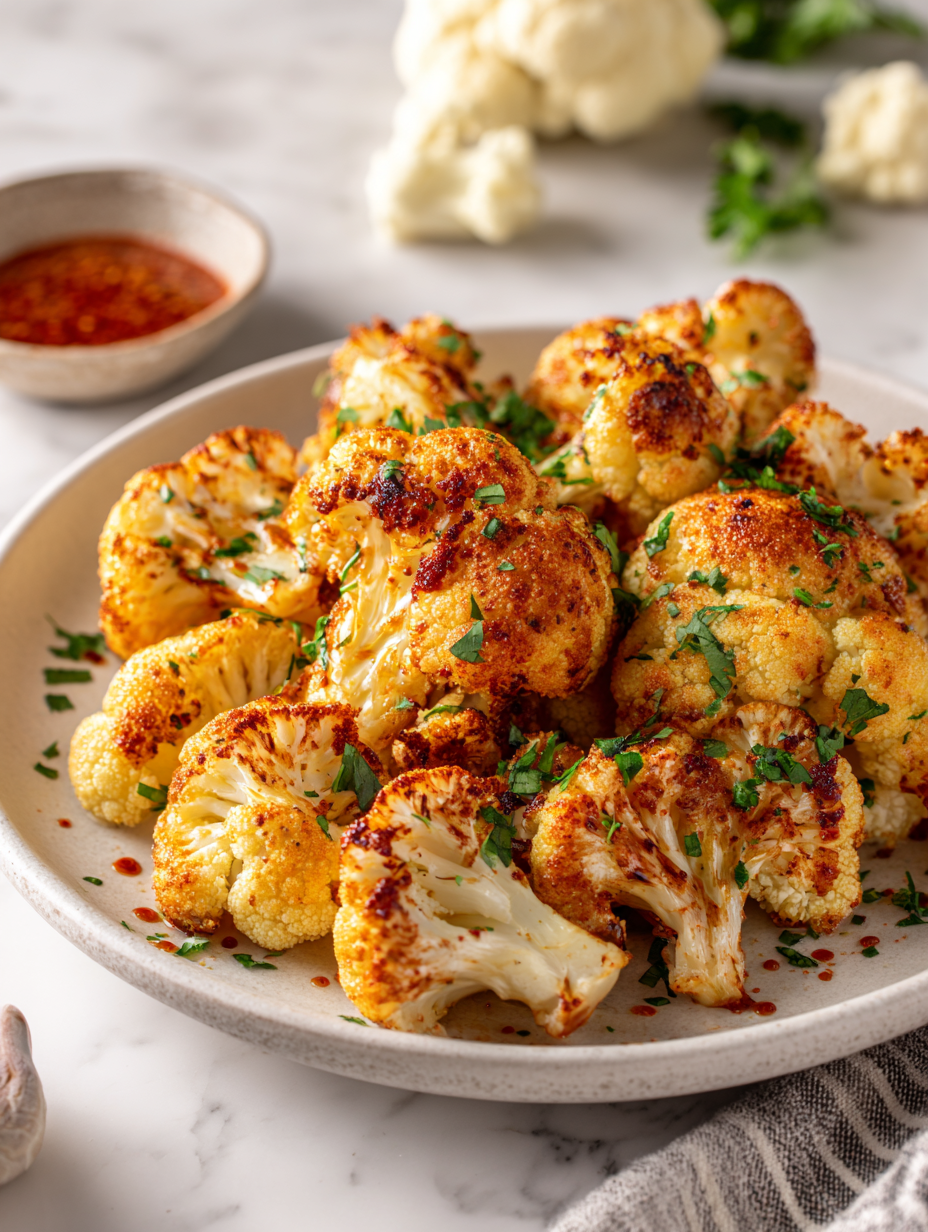
Smoky Roasted Cauliflower Bites
Ingredients
Equipment
Method
- Preheat your oven to 220°C (430°F) and line a baking sheet with parchment paper.
- Wash and thoroughly dry the cauliflower, then cut it into bite-sized florets, aiming for uniform pieces for even roasting.
- In a large mixing bowl, whisk together olive oil, smoked paprika, garlic powder, nutritional yeast, cornstarch, and a pinch of salt until well combined.
- Add the cauliflower florets to the bowl and toss vigorously until each piece is evenly coated with the spice mixture. The cauliflower should feel slightly sticky and well-dressed.
- Spread the coated florets in a single layer on the prepared baking sheet, ensuring they aren’t crowded to promote crisping.
- Roast in the oven for about 25-30 minutes, flipping the florets halfway through to promote even browning and crackling. Look for a deep golden color and some darkened edges.
- Once roasted, remove the cauliflower from the oven and let sit for 3-5 minutes to allow the crust to set and become extra crispy.
- Squeeze fresh lemon juice over the hot cauliflower bites for a bright, tangy contrast that enhances the smoky flavor.
- Garnish with a sprinkle of flaky sea salt or chopped herbs if desired, and serve immediately while they’re still crackly and aromatic.
Notes
Tips for crispy, smoky cauliflower bites
- High heat: Preheat your oven thoroughly—430°F (220°C)—for that quick, smoky, crispy exterior.
- Even coating: Toss cauliflower florets in oil and spices vigorously—this helps achieve that crackly, flavorful crust.
- Size matters: Keep florets uniform—around 2-3 cm (1 inch)—for even roasting and consistent crunch.
- Don’t overcrowd: Space florets well on the baking sheet—crowding traps steam, softening the crispness.
- Flip halfway: Turn the cauliflower after 15 minutes—this promotes even browning and prevents burning.
- Check for crackle: When shaken, the bites should crackle—this indicates perfect crispness and doneness.
- Rest briefly: Let the bites sit 3-5 minutes after roasting—this helps set the crust and enhances crunch.
Common mistakes and how to fix them
- FORGOT to dry cauliflower thoroughly → Causes sogginess, dry with a clean towel before coating.
- DUMPED all spices at once → Mix spices well for even flavor distribution.
- OVER-TORCHED edges → Reduce oven temperature slightly or check earlier to prevent burning.
- USED too little oil → Ensure generous coating for crispness and even browning.
Quick fixes and pantry swaps
- If sauce is too thick, splash in warm water to loosen it without losing flavor.
- When cauliflower releases too much moisture, pat dry before coating for crunch.
- Splash vinegar if lemon juice isn’t available to brighten flavors and mimic brightness.
- Patch burnt edges by scraping off char and lowering oven temperature for even roasting.
- Shield delicate bites with foil if they brown too quickly, preventing over-torched spots.
Prep, store, and reheat tips
- Prep the cauliflower by cutting into florets a day in advance; keep in an airtight container in the fridge—will stay fresh for up to 24 hours, with minimal moisture loss, maintaining its firm texture.
- You can assemble the coating mixture ahead of time and store it in a sealed jar in the pantry—flavors will meld nicely, making assembly quicker on busy days.
- Roasted cauliflower bites are best enjoyed fresh, but can be stored in an airtight container in the fridge for up to 2 days; reheating in the oven restores crispness with a few crackles and a smoky aroma.
- Reheat in a 180°C (350°F) oven for about 10 minutes, or until the bites shimmer with renewed crispness and smell invitingly roasted—avoid microwaving, which can make them soggy.
Top questions about cauliflower bites
1. How do I pick the best cauliflower?
Look for firm, dense cauliflower florets that feel heavy—this helps them crisp up better during roasting.
2. How much oil do I need?
Use a good splash of olive oil to coat evenly—too little and they won’t crisp properly, too much and they’ll be greasy.
3. Can I substitute smoked paprika?
Smoked paprika adds a deep smoky aroma—if you only have sweet paprika, consider adding a dash of chipotle for extra smoky flavor.
4. How do I know when they’re done?
Roast until the edges are deeply golden and they crackle when shaken—usually around 25-30 minutes at 220°C (430°F).
5. Why are my bites soggy?
If they’re soggy, make sure to dry the cauliflower thoroughly before coating and avoid overcrowding the baking sheet.
6. How should I reheat leftovers?
Reheat in a 180°C (350°F) oven for about 10 minutes to restore crispness and bring back that smoky aroma.
7. Can I add a finishing touch?
For a brighter flavor, squeeze fresh lemon juice over the hot cauliflower bites before serving.
8. What equipment do I need?
Use parchment paper to prevent sticking and help the cauliflower crisp up evenly during roasting.
9. Why is my coating not crispy?
Pat the cauliflower dry before tossing in the coating to prevent excess moisture, which can make the bites soggy.
10. Should I season after baking?
Adjust the seasoning to taste after roasting—sometimes a pinch more salt or a squeeze of lemon makes all the difference.
These cauliflower bites are a reminder that good texture and smoky flavor come from patience and attention. They’re perfect for cozy nights or when you need a snack that feels indulgent but isn’t fried. Once you master that crispy, smoky edge, you’ll keep coming back for more.
In a world obsessed with quick fixes, this recipe asks for a little care—turning simple cauliflower into something unexpectedly satisfying. It’s a small, messy process that pays off with a crunch and aroma that make every bite worth the effort. No matter the occasion, they’ve got a way of making the kitchen smell like a smoky dream.