
There’s something about mixing batter with your hands that turns cooking into a slow, deliberate ritual. When I make vegetable pakoras, I love feeling the cool, sticky dough cling to my fingers, almost like a form of moving meditation amidst a busy kitchen. It’s a simple act that connects me to every step of the process, turning chaos into calm.
Frying these crispy, golden bites isn’t just about the end result—it’s the tactile joy of shaping each one, the smell of spices filling the air, and the satisfying crackle as they hit hot oil. It’s a recipe that’s rooted in tradition but also a reminder to slow down and enjoy the small, sensory moments that make cooking truly nourishing.
Focusing on the tactile joy of mixing batter by hand, feeling the cool, sticky dough cling to your fingers as you shape each pakora, turning cooking into a mindful, almost meditative act. This recipe emphasizes the sensory connection to the food, making every step a moment of presence and care in the chaotic kitchen rush.
The tactile joy of mixing batter
- The first time I felt the batter cling to my fingers, I realized cooking can be a form of slow, mindful play.
- There’s a strange pride in shaping each pakora, feeling the texture change as the vegetables and spices meld.
- Frying these bites always takes me back to my grandmother’s kitchen, the air thick with spice and warmth.
- Sometimes, I surprise myself by how perfectly crispy they turn out, especially after a messy first attempt.
- Making vegetable pakoras is my quiet weekend ritual—an imperfect, honest act of creating something delicious from scratch.
The story behind this recipe
- Making vegetable pakoras has always been about more than just the snack. It’s a messy, tactile process that reminds me of lazy Sunday afternoons spent with my mother in her cluttered kitchen. We’d toss vegetables into batter while chatting about everything and nothing, the air thick with warm spices and the smell of frying oil. That memory makes me realize how food is often about connection and comfort, even when it’s imperfect.
- This recipe came from a craving for that nostalgic, homey feeling—something crispy and savory to make the kitchen smell alive. Over the years, I’ve tweaked it to suit my busy weekends, turning a simple snack into a mindful ritual. Whenever I fry these, I feel a bit like I’m channeling those quiet, chaotic afternoons with family, where the act of cooking feels like a small act of care.
- heading: ‘The story behind this recipe’
Historical and Cultural Insights
- Vegetable pakoras trace back to Indian street food vendors, where frying was a quick way to serve fresh, flavorful snacks.
- Traditionally, pakoras are made with seasonal vegetables, highlighting regional produce and local spice blends.
- In some parts of India, these fritters are a festive staple, often enjoyed during monsoon season with a cup of chai.
- The word ‘pakora’ comes from Hindi and Sanskrit origins, meaning ‘small fried snack,’ emphasizing their humble, everyday roots.
Ingredient breakdown: key components
- Chickpea flour: I love the nutty aroma of fresh chickpea flour, but if you need a substitute, rice flour works—just expect a slightly crisper texture.
- Vegetables: Carrots and zucchini add color and moisture; for a milder flavor, swap in sweet potato or squash, but keep an eye on moisture levels.
- Spices: Cumin and coriander make the batter fragrant and warm; if you prefer a punch of heat, toss in some crushed red pepper flakes or a dash of cayenne.
- Water: I add just enough to make a thick batter that coats the vegetables; if it feels too sticky, stir in a little more water or a splash of sparkling water for extra lightness.
- Oil: Use a neutral oil like sunflower or canola for frying; if you want more flavor, a touch of ghee adds richness, but keep the temperature steady at around 180°C (350°F).
- Salt: I test the batter by a quick fry—if it’s bland, I sprinkle a bit more salt; trust your nose for seasoning.
- Optional herbs: Fresh cilantro or mint brighten up the batter; dried herbs can work too, but add them sparingly to avoid overpowering.
Spotlight on key ingredients
Chickpea flour:
- I love its nutty aroma and how it crisps up beautifully when fried, giving that rich, oaty bite. If you’re out, rice flour can work—just expect a slightly lighter crunch.
- Vegetables: Carrots and zucchini provide a moist, sweet contrast. For a different vibe, try sweet potato—just chop finely and watch moisture levels so batter stays sticky.
Spices & Oil:
- Spices: Cumin and coriander fill the air with warm, earthy scents. For a spicy punch, toss in red pepper flakes—makes each bite a little fiery surprise.
- Oil: Neutral oils like sunflower or canola fry the best—clean and crisp. Ghee adds richness but watch the temperature to avoid smoking or burning.
Notes for ingredient swaps
- Dairy-Free: Swap yogurt with coconut or almond yogurt for a creamy, dairy-free option without sacrificing tang.
- Gluten-Free: Use rice flour or a gluten-free all-purpose blend instead of chickpea flour for a different nutty flavor and texture.
- Vegetable Variations: Replace zucchini and carrots with sweet potato or pumpkin for a sweeter, richer bite.
- Oil Choices: Substitute with sesame or coconut oil for added flavor; keep in mind smoke points and adjust heat accordingly.
- Spice Level: Omit cayenne or red pepper flakes for milder pakoras, or add a dash of smoked paprika for a smoky kick.
- Herbs & Greens: Incorporate chopped spinach or cilantro for fresh greens; dried herbs are fine but add sparingly to avoid overwhelming the batter.
Equipment & Tools
- Deep frying pan or wok: For frying the pakoras evenly in hot oil.
- Slotted spoon: To lift and drain excess oil from cooked pakoras.
- Mixing bowl: To combine batter and vegetables thoroughly.
- Cooling rack: To drain oil and keep pakoras crispy.
Step-by-step guide to vegetable pakoras
- Equipment & Tools: Gather a deep frying pan or wok, a slotted spoon, a mixing bowl, and a cooling rack. The pan needs to hold enough oil for shallow frying, about 5-6 cm deep. The slotted spoon helps lift the pakoras without breaking them, and the cooling rack prevents sogginess by allowing excess oil to drain.
- Prep Vegetables: Finely chop or grate 1 cup each of carrots, zucchini, and bell peppers. Aim for small, uniform pieces to ensure even cooking. Set aside.
- Make Batter: In a large mixing bowl, combine 1 cup chickpea flour, ½ teaspoon cumin, ½ teaspoon coriander, a pinch of cayenne, and ½ teaspoon salt. Gradually add ¾ cup water, whisking until smooth and thick enough to coat the vegetables without dripping off. Adjust water or flour as needed.
- Mix Vegetables & Batter: Fold the chopped vegetables into the batter until well coated. The mixture should be sticky but manageable; if too loose, add a little more chickpea flour.
- Heat Oil: Place your pan over medium heat (about 180°C/350°F). Test the temperature by dropping a tiny bit of batter—if it sizzles immediately and rises to the surface, the oil’s ready.
- Fry Pakoras: Using a spoon or your hands, scoop small portions of batter and gently lower into the hot oil. Don’t overcrowd—about 4-5 at a time. Fry for 3-4 minutes, turning occasionally, until golden brown and crispy.
- Check for Doneness: The pakoras should be deep golden, with a crackling surface. They should feel firm but not hard, and smell fragrant with spices. If they’re pale, turn up the heat slightly; if too dark too fast, lower the heat.
- Drain & Rest: Use a slotted spoon to lift the cooked pakoras onto a cooling rack set over paper towels. Rest for 2 minutes to allow excess oil to drain and the crust to firm up.
- Serve & Enjoy: Serve hot with chutney or yogurt. Keep warm in a low oven if making in batches, but best enjoyed fresh and crispy.
Let the fried pakoras rest briefly on a rack to drain excess oil. Serve immediately while hot and crispy, with your favorite chutney or yogurt. For best texture, eat soon after frying, but they can be kept warm in a low oven for a few minutes if needed.
How to Know It’s Done
- Golden brown color with a crackling surface.
- Aroma of spices with a smoky note from the frying oil.
- Pakoras feel firm but not hard when gently pressed; they crackle when touched.
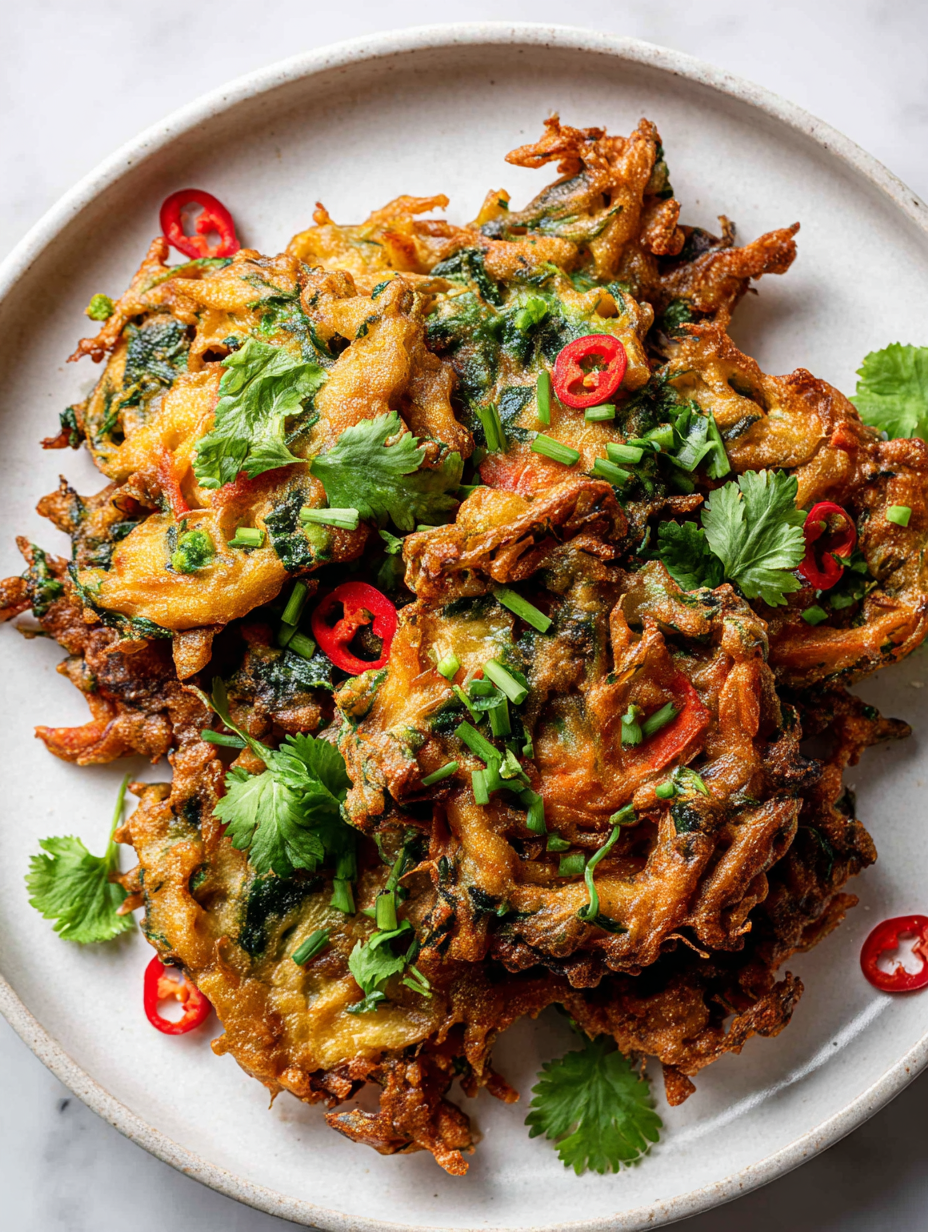
Vegetable Pakoras
Ingredients
Equipment
Method
- Gather your deep frying pan or wok, a slotted spoon, a mixing bowl, and a cooling rack to set your fried pakoras on.
- Finely chop or grate your chosen vegetables—carrots, zucchini, and bell peppers—until they’re small and uniform. Set aside in a bowl.
- In a large mixing bowl, whisk together chickpea flour, cumin, coriander, cayenne (if using), and salt. Once combined, slowly pour in water while stirring, aiming for a thick batter that coats the vegetables but isn’t runny. Adjust with more water or flour as needed.
- Fold the chopped vegetables into the batter until they are evenly coated. The mixture should be sticky but manageable; if it feels too loose, sprinkle in a little more chickpea flour.
- Heat your oil in the pan over medium heat until it reaches about 180°C (350°F). To test, drop a tiny spoonful of batter into the oil—if it sizzles immediately and rises to the surface, the oil is ready.
- Using a spoon or your fingers, gently scoop small portions of batter and carefully lower them into the hot oil. Don’t overcrowd the pan—fry about 4-5 at a time.
- Fry the pakoras for about 3-4 minutes, turning occasionally with a slotted spoon, until they’re deep golden brown and crispy. You’ll hear a crackling sound as they fry.
- Use a slotted spoon to lift the cooked pakoras out of the oil and transfer them to a cooling rack to drain excess oil. Rest for a couple of minutes to crisp up further.
- Repeat frying in batches until all the batter is used, maintaining the oil temperature for even crispiness. Serve the hot, crispy pakoras with chutney or yogurt for dipping.
Tips for perfect vegetable pakoras
- Keep oil at consistent 180°C (350°F) for even frying and golden results.
- Use a spoon or your fingers to gently shape pakoras—avoid pressing too hard to keep them light.
- Test oil temperature by dropping a tiny batter piece—if it sizzles immediately, you’re ready.
- Fry in small batches to prevent temperature drops, ensuring crispy, not greasy, pakoras.
- Drain fried pakoras on a rack rather than paper towels for crispier texture and less sogginess.
- Adjust batter thickness—should coat vegetables without being runny or too stiff, for perfect crunch.
- Add a pinch of baking soda for extra puffiness, but don’t overdo—it can make batter bitter.
Common mistakes and how to fix them
- TOO MUCH OIL: Use less oil for a lighter pakora; too much makes them greasy.
- UNDERESTIMATED TEMP: If oil isn’t hot enough, pakoras absorb oil and become soggy.
- OVERMIXED BATTER: Mix until just combined; overmixing causes tough, dense fritters.
- SKIPPED RESTING: Rest batter 10 minutes for better texture and easier shaping.
Quick fixes and pantry swaps
- If batter feels too thick, splash in a bit more water and mix quickly to loosen.
- When oil shimmers but doesn’t crackle, increase heat slightly for crispy pakoras.
- Splash a few drops of water on batter if it falls apart while frying.
- Patch soggy pakoras by reheating at 180°C (350°F) until crisp—watch for shimmering oil and crackle.
- Shield fragile vegetables with a thicker batter or smaller pieces to prevent breakdown during frying.
Prep, store, and reheat tips
- Prepare the batter and chop vegetables ahead—store separately in airtight containers in the fridge for up to 24 hours, keeping the vegetables crisp and the batter fresh.
- Pakoras are best enjoyed fresh, but you can fry them a few hours in advance and reheat in a 180°C (350°F) oven until crispy, about 8–10 minutes, with a crackling exterior and fragrant aroma.
- Store leftover cooked pakoras in an airtight container at room temperature for up to 2 days. Reheat in the oven to regain crunch, avoiding sogginess.
- Avoid freezing raw batter or cooked pakoras, as it alters texture and flavor. If you must, freeze cooked ones for up to a month, then reheat in oven or air fryer for best texture, with a slight aroma of reheated oil.
Top questions about vegetable pakoras
1. Can I substitute chickpea flour?
Use chickpea flour for authentic flavor and crispiness. Rice flour can be a lighter alternative, but it changes the texture slightly.
2. Can I use different vegetables?
Yes, but keep an eye on moisture. Veggies like sweet potato or squash add sweetness and moistness, so adjust batter consistency accordingly.
3. How do I know when the oil is hot enough?
Heat oil to about 180°C (350°F). Drop a tiny piece of batter—if it sizzles and rises, it’s ready. Fry in small batches.
4. How can I tell when they’re done?
Fry until golden brown and crispy, about 3-4 minutes. The pakoras should crackle when you touch them and smell fragrant.
5. How do I control the spice level?
For a milder flavor, skip cayenne or red pepper flakes. To add heat, toss in crushed red pepper or a pinch of cayenne.
6. How should I store and reheat leftovers?
Drain cooked pakoras on a rack to keep them crispy. Reheat in a 180°C (350°F) oven for 8-10 minutes to restore crunch.
7. What’s the best oil for frying?
Use neutral oils like sunflower or canola for frying. Ghee adds richness but requires careful temperature control to avoid burning.
8. Can I make them fluffier?
Adding a pinch of baking soda can make pakoras puffier. Don’t overdo it—it might make the batter bitter.
9. Should I rest the batter?
Rest the batter for about 10 minutes before frying. It helps improve texture and makes shaping easier.
10. How do I avoid tough pakoras?
Yes, mixing the batter just until combined prevents tough, dense fritters. Overmixing develops gluten and ruins texture.
Frying vegetable pakoras is a small act of joy in my busy days, the sizzling oil and fragrant spices pulling me into the moment. There’s something satisfying about that crispy, golden crust giving way to tender vegetables inside, all infused with warm, earthy flavors.
These bites remind me how simple ingredients and honest technique can turn into something truly comforting. They’re imperfect, yet deeply satisfying—perfect for sharing, or just for savoring alone with a cup of tea on a quiet afternoon.