
Using seasonal vegetables in fritters isn’t just about freshness; it’s about capturing the essence of the moment. Each batch turns out a little different, reflecting what’s ripe and abundant right now, which keeps things lively in my kitchen. There’s something satisfying in transforming what’s in the fridge into a crispy, vibrant snack or light meal.
I love how this approach makes the dish feel alive, almost like a culinary snapshot of the season. It’s a flexible recipe that invites improvisation—swap in zucchini, carrots, or whatever’s looking good at the market. Sometimes I add a pinch of fresh herbs, sometimes a splash of lemon juice, just to brighten those vegetable flavors.
These fritters are honest, unpolished comfort food that remind me to stay connected to the seasons and the produce that’s at its peak. They’re perfect for busy days when I want something quick, colorful, and satisfying—no fuss, just good ingredients turned into something crispy and tender.
Focusing on how using seasonal vegetables transforms simple fritters into a vibrant, ever-changing dish that reflects the freshest produce at hand, making each batch a little different but always satisfying.
Seasonal Veggies and Spontaneity
- Cooking these fritters always reminds me of summer afternoons at my grandma’s house, where the scent of frying vegetables filled the air.
- There’s a quiet pride in turning whatever fresh produce I have into something crispy and comforting, especially when it turns out just right on the first try.
- I get a little thrill from experimenting with different vegetables—each batch feels like a small, edible adventure that keeps me coming back for more.
The inspiration behind these fritters
- This recipe actually started as a way to use up leftovers from my vegetable drawer. I’d toss in whatever was about to go soft, and somehow, they’d turn into these crispy, satisfying fritters. It’s become a little ritual, a way to make something new out of what I’d normally toss out.
- One afternoon, I was feeling overwhelmed with a fridge full of odds and ends. I threw together a batch, not expecting much, but the smell of frying vegetables filled the kitchen—it was unexpectedly comforting. That moment made me realize how improvising with seasonal produce can turn a simple snack into a small celebration.
- heading: ‘The inspiration behind these fritters’
Fritters’ Roots in Food Waste Minimization
- These fritters trace back to humble street food vendors in South Asia, where seasonal vegetables are turned into quick snacks.
- In many traditional cuisines, mixing leftover vegetables into fritters was a way to minimize waste and make hearty, satisfying bites.
- The idea of combining seasonal produce into fritters gained popularity during farm-to-table movements, emphasizing fresh, local ingredients.
- Ancient recipes often used whatever vegetables were available, making each batch unique and reflective of the local harvest.
Ingredient breakdown: key components
- Carrots: I love how their sweetness intensifies when grated finely, adding a subtle crunch and bright orange hue. Swap with parsnips for earthier tones, but keep the sweetness in mind.
- Zucchini: It brings moisture and a mild, fresh flavor that keeps fritters tender. Squeeze out excess water vigorously or they’ll be soggy, especially if you’re using large chunks.
- Onion: I prefer yellow onions for a mellow, sweet aroma, but shallots or scallions work if you want a gentler bite. Sauté briefly before mixing for extra depth.
- Flour: All-purpose is my go-to—it’s reliable and neutral, giving fritters structure. For gluten-free, try rice or chickpea flour, but be prepared for a slightly different texture.
- Eggs: They bind everything together, giving a crispy exterior. If you’re vegan, a flaxseed or chia seed slurry works, but the fritters won’t be quite as firm.
- Herbs: Fresh cilantro or parsley brighten up the mix with herbal bursts and color. Dried herbs can be substituted, but fresh makes a noticeable difference in flavor.
- Oil: I prefer neutral oils like canola or sunflower for frying—hot, but not smoky. Use butter or ghee for richer flavor, but watch the temperature carefully to avoid burning.
Spotlight on key ingredients
Carrots:
- I love how their sweetness intensifies when grated finely, adding a subtle crunch and bright orange hue. Swap with parsnips for earthier tones, but keep the sweetness in mind.
- Zucchini: It brings moisture and a mild, fresh flavor that keeps fritters tender. Squeeze out excess water vigorously or they’ll be soggy, especially if you’re using large chunks.
Onion & Flour:
- Onion: I prefer yellow onions for a mellow, sweet aroma, but shallots or scallions work if you want a gentler bite. Sauté briefly before mixing for extra depth.
- Flour: All-purpose is my go-to—it’s reliable and neutral, giving fritters structure. For gluten-free, try rice or chickpea flour, but be prepared for a slightly different texture.
Notes for ingredient swaps
- Dairy-Free: Use chickpea or rice flour instead of wheat flour. The texture stays hearty, though it loses a bit of that tender crumb.
- Gluten-Free: Swap regular flour for almond flour or gluten-free baking blend. Expect a slightly nuttier flavor and a denser bite.
- Vegan: Replace eggs with flaxseed or chia seed slurry (1 tablespoon seeds + 3 tablespoons water). Fritters will be a touch softer but still delicious.
- Oil for Frying: Use coconut or sesame oil for added flavor. Keep in mind these oils have distinct aromas that will subtly influence the fritters.
- Herbs: Fresh basil or mint can replace cilantro or parsley. The flavor will be more pungent and vibrant, especially when fresh.
- Vegetables: Swap zucchini for eggplant or sweet corn. The moisture content varies, so squeeze out excess water thoroughly to prevent sogginess.
- Salt: Use sea salt or Himalayan pink salt for a more nuanced flavor. Adjust quantity based on saltiness of other ingredients.
Equipment & Tools
- Large mixing bowl: Combine ingredients evenly.
- Box grater: Shred vegetables uniformly.
- Frying pan or skillet: Cook the fritters evenly.
- Spatula: Flip and remove fritters.
- Paper towels: Drain excess oil.
Step-by-step guide to vegetable fritters
- Equipment & Tools: Gather a large mixing bowl (for combining ingredients), a box grater (for shredding vegetables), a frying pan or skillet (for cooking), a spatula (for flipping), and paper towels (for draining excess moisture).
- Prep the vegetables: Grate 1 cup each of carrots, zucchini, and onion. Squeeze out excess water from zucchini using paper towels. Set aside.
- Mix the batter: In the bowl, combine grated vegetables. Add 1/2 cup all-purpose flour, 1 beaten egg, 1 teaspoon salt, and a handful of chopped herbs. Mix until well combined. The batter should hold together but not be too stiff; if too loose, add a touch more flour.
- Heat the pan: Place over medium heat (about 160°C/320°F). Add 2-3 tablespoons of neutral oil, enough to coat the bottom. Let it shimmer and smell slightly nutty.
- Form the fritters: Scoop about 2 tablespoons of batter per fritter. Gently flatten into rounds on your palm or spoon directly into the hot oil, leaving space between each. Cook in batches if needed.
- Fry until golden: Cook for 3-4 minutes on each side, until crispy and deep amber in color. Use a spatula to flip—listen for a crackling sound. If they brown too quickly, reduce heat slightly.
- Check doneness: Fritters should be crispy on the outside, tender inside, and smell fragrant. They should jiggle slightly when shaken, not feel soggy.
- Drain and rest: Transfer to paper towels to drain excess oil. Rest for 2 minutes before serving to help crisp up further.
- Serve hot: Plate the fritters and garnish with extra herbs if desired. A squeeze of lemon brightens the flavor. They’re best enjoyed warm but are still good at room temperature.
Let the fritters rest on paper towels for a couple of minutes. Serve immediately while crispy, or cool completely and reheat in a hot oven or skillet for best texture.
How to Know It’s Done
- Fritters turn a deep golden brown and smell toasted.
- They feel crispy on the outside and tender inside when gently pressed.
- Oil bubbles diminish and crackle less when fritters are ready to flip.
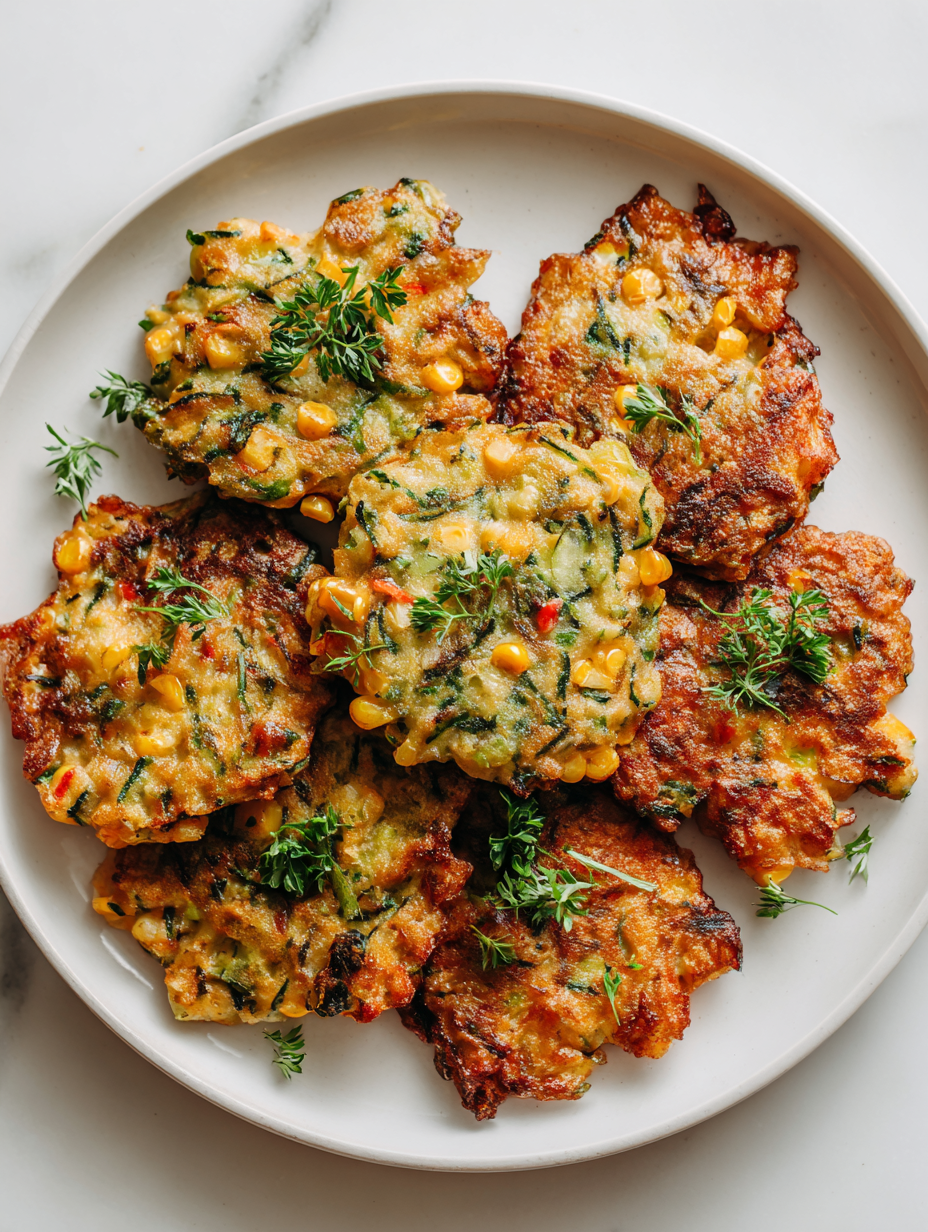
Seasonal Vegetable Fritters
Ingredients
Equipment
Method
- Gather your equipment: a large mixing bowl, a box grater, a frying pan, a spatula, and some paper towels for draining.
- Grate the carrots, zucchini, and onion using the box grater. Be sure to squeeze out excess water from the zucchini with paper towels to prevent sogginess.
- Combine all grated vegetables in the large mixing bowl. Add the chopped herbs, salt, and beaten egg, then sprinkle the flour on top.
- Gently fold everything together until well incorporated; the mixture should hold together when pressed but not be too stiff.
- Heat a tablespoon or two of oil in a skillet over medium heat until it shimmers and smells slightly nutty.
- Scoop about two tablespoons of the batter and gently form into a round patty. Place it carefully into the hot oil, leaving space between fritters.
- Cook the fritters for 3-4 minutes on each side, until they turn a deep golden brown and release a crispy sound when flipped. Adjust heat if they brown too quickly.
- Use a spatula to flip the fritters carefully, ensuring they stay intact and develop an even, crispy crust.
- Once cooked, transfer the fritters to paper towels to drain excess oil. Rest for a couple of minutes to help them crisp further.
- Serve the fritters warm, garnished with extra herbs and a squeeze of lemon if desired. They should be crispy outside and tender inside, bursting with fresh vegetable flavor.
Notes
Pro tips for perfect fritters
- Bolded mini-head: Use a hot pan → Ensures quick, crispy fritters with a golden crust.
- Bolded mini-head: Squeeze out excess moisture → Prevents sogginess, keeps fritters tender inside.
- Bolded mini-head: Don’t overcrowd the pan → Maintains temperature, ensures even browning.
- Bolded mini-head: Flip only when edges are firm and golden → Avoids tearing and uneven cooking.
- Bolded mini-head: Rest the cooked fritters briefly → Helps set the shape and enhances crispness.
- Bolded mini-head: Use a gentle touch when flipping → Keeps fritters intact and prevents breakage.
- Bolded mini-head: Keep oil temperature steady at 160°C/320°F → Achieves perfect crisp without burning.
Common mistakes and how to fix them
- FORGOT to squeeze excess water from zucchini — do it thoroughly to prevent sogginess.
- DUMPED the batter without testing consistency — it should hold together but not be stiff.
- OVER-TORCHED the first batch — reduce heat if fritters brown too quickly, around 160°C/320°F.
- USED cold oil for frying — warm oil (shimmering) helps fritters crisp evenly and prevents sticking.
Quick fixes and pantry swaps
- When batter feels too loose, splash a little water and mix again.
- DUMPED the batter too early — add a spoonful of flour to tighten it up.
- Over-torched the first batch — shield the pan with a lid if flames threaten.
- Splash a little cold water on hot oil to tame splatters and shimmer down smoke.
- heading:
Prep, store, and reheat tips
- Prepare the grated vegetables and squeeze out excess water ahead of time. They’ll keep in the fridge for up to 24 hours, maintaining their freshness and preventing sogginess.
- Mix the batter in advance and refrigerate for up to 2 hours. The flavors meld and the batter firms up slightly, making frying easier later.
- Store cooked fritters in an airtight container in the fridge for up to 2 days. Reheat in a hot skillet until crispy, about 2-3 minutes per side, with a faint crackling sound.
- Reheating may soften the fritters slightly; for best crispness, reheat in a hot oven (around 180°C/356°F) for 5-7 minutes until they shimmer with warmth and regain crunch.
- Fritters freeze well—layer with parchment paper in a container. Reheat directly from frozen in a hot skillet or oven, observing for that fresh-fried texture and aroma.
Common Questions About Vegetable Fritters
1. How do I know when the fritters are cooked?
Use a slotted spoon to lift fritters, and press lightly to remove excess oil. They should shimmer and crackle slightly when ready to flip.
2. Why are my fritters soggy or greasy?
Ensure vegetables are well squeezed to remove moisture, which prevents sogginess and promotes crispness during frying.
3. My batter feels too runny. What now?
If the batter is too loose, add a little more flour. If too thick, splash in a tiny bit of water to loosen it.
4. What’s the best oil temperature for frying?
Use a neutral oil like canola or sunflower at about 160°C/320°F. The oil should shimmer but not smoke.
5. How do I handle watery vegetables?
Squeeze out excess water from zucchini and other high-moisture veggies to prevent sogginess and ensure crisp exterior.
6. Can I make these ahead and freeze them?
Yes, you can freeze cooked fritters. Reheat in a hot oven or skillet for best crispness, about 5-7 minutes at 180°C/356°F.
7. Can I make this recipe vegan?
Vegan? Replace eggs with a flaxseed or chia seed slurry—1 tbsp seeds + 3 tbsp water. It’s softer but works fine.
8. Can I use dried herbs instead of fresh?
Adding herbs like cilantro or parsley brightens the flavor. Fresh herbs offer a vibrant, aromatic punch that dried can’t match.
9. What’s the best pan for frying fritters?
Use a non-stick skillet or well-seasoned cast iron for even browning and easier flipping without sticking.
10. How do I flip the fritters without breaking them?
When flipping, wait until edges are firm and golden, about 3-4 minutes. Gently slide a spatula underneath to turn.
These vegetable fritters are a reminder that simple, seasonal ingredients can shine with just a little attention. They’re perfect for busy nights when you want something satisfying but quick to pull together. Each crispy bite is a little celebration of whatever’s fresh and ripe right now.
Sharing these fritters with friends or family always sparks a moment of appreciation—crunchy, tender, and bright with vegetable flavor. They’re a humble dish, but one that feels rooted in the seasons and honest cooking. In the end, it’s all about enjoying the produce at its peak.