
Edamame often gets relegated to the side of the plate, boiled and plain, but roasting takes it somewhere unexpected. That smoky aroma, a little crispy bite, it’s like discovering a whole new snack from something so humble. It’s honestly the kind of thing I keep reaching for, especially when I want a quick, satisfying crunch that’s still healthy.
There’s something addictive about breaking through that tender pod to reveal the warm, nutty beans inside. Roasting transforms these youthful green legumes into a snack that’s both familiar and totally new. It’s a simple shift—just a little oil and heat—but the flavor depth and texture change make it worth the fuss.
This recipe isn’t about perfection or fancy ingredients. It’s about giving edamame a moment to shine on its own. When I first tried it, I was surprised how something so straightforward could become a go-to snack for lazy nights or unexpected guests. It’s honest, unpolished, and deeply satisfying.
Focusing on the overlooked charm of edamame as a snack that’s both simple and unexpectedly addictive when roasted, highlighting its transformation from a quick boil to a crispy, smoky treat that’s perfect for sharing or solo munching.
The story behind this recipe
- I came across roasted edamame during a late-night kitchen rummage, craving something crunchy but still wholesome. The smoky aroma pulled me in, and I couldn’t resist giving it a try. That first bite—crisp, salty, with a hint of char—made me realize how versatile this snack could be beyond the usual boil-and-eat routine.
- This recipe was born out of my obsession with elevating simple ingredients. Edamame, often overlooked once shelled, gains a whole new personality roasted—more complex, more addictive. I remember sharing it at a casual dinner, and watching friends reach back into the bowl again and again. It’s imperfect, unpolished, and utterly honest in its appeal.
- heading: The spark behind this snack
Key ingredients and their quirks
- Edamame: Fresh or frozen, I prefer the frozen for convenience—just make sure to thaw well before roasting for even crispness. The bright green color and firm texture are my clues it’s ready to go.
- Olive oil: Just a light coating—enough to help the seasoning stick and promote crisping. Too much and they get greasy, losing that satisfying crunch.
- Sea salt: I love a generous sprinkle of flaky sea salt before roasting to bring out the nutty flavor. You can swap for soy sauce or tamari for a more umami punch, but skip the salt then.
- Smoked paprika: Adds a subtle smoky depth that’s crucial for that roasted flavor. If you don’t have it, a pinch of chili powder or cumin works, but the aroma won’t be quite the same.
- Garlic powder: Just a dusting to boost the savory notes. Fresh garlic roasted alongside can be intense—consider adding it later to prevent burning.
- Optional: chili flakes or cumin seeds: I toss these in for extra kick or aroma. They add complexity but can be skipped if you prefer milder snacks.
- Lemon zest: A touch right after roasting lifts the whole thing—bright, zesty, and unexpectedly fresh. Skip if you want a pure smoky snack, but I recommend it for balance.
Spotlight on key ingredients
Edamame:
- Frozen or fresh, I rely on the bright green color and firm texture as signs they’re ready to roast. The beans turn golden and slightly puff up, developing a smoky aroma.
- Olive oil: Just a light coating helps the spices stick and encourages crisping. Too much oil makes the snack greasy, losing that satisfying crunch.
Spices & Salt:
- Smoked paprika: Adds a subtle, smoky depth that’s essential for the roasted flavor. During roasting, it releases a warm, fragrant aroma that’s hard to resist.
- Sea salt: Flaky salt enhances the nutty flavor and provides a pleasant crunch. It dissolves into the beans, balancing the smoky spices beautifully.
Notes for ingredient swaps
- Fresh Edamame: Use fresh if available, but frozen is more reliable for consistent crispness. Thaw thoroughly before roasting.
- Olive Oil: Swap for avocado or sesame oil for different flavor profiles; they add richness and depth but can be slightly more intense.
- Sea Salt: Try flaky Maldon salt for a crunchier finish or soy sauce/tamari for a savory, umami hit. Adjust amount accordingly.
- Smoked Paprika: Use regular paprika if you prefer milder smoky flavor. Chipotle powder offers a spicier alternative with smoky warmth.
- Garlic Powder: Substitute with garlic granules or roasted garlic for a milder, sweeter garlic note. Fresh garlic can burn easily—add later.
- Chili Flakes: Use cayenne or chili powder for more heat or skip entirely for milder snack. Adjust to taste for lingering spice.
- Lemon Zest: Replace with lime zest or a splash of lemon juice after roasting for a fresh, tangy lift that brightens the smoky beans.
Equipment & Tools
- Oven: To roast the edamame evenly at high heat.
- Baking sheet: Provides a flat surface for roasting and easy handling.
- Mixing bowl: To toss and coat the edamame with oil and spices.
- Silicone spatula or spoon: To mix and spread the beans evenly.
- Parchment paper or silicone mat: Prevents sticking and makes cleanup easier.
Step-by-step guide to roasting edamame
- Preheat your oven to 200°C (390°F). Line a baking sheet with parchment paper or a silicone mat for easy cleanup.
- In a mixing bowl, toss 2 cups of frozen edamame (shelled) with 1 tablespoon of olive oil. Make sure each bean is lightly coated.
- Add 1 teaspoon smoked paprika, ½ teaspoon garlic powder, and a generous pinch of sea salt. Mix well to evenly coat the beans.
- Spread the edamame in a single layer on the prepared baking sheet. Shake gently to avoid clumping.
- Roast in the oven for 15-20 minutes. Halfway through, give the tray a shake. Watch for a slight char and crispy edges.
- Check for doneness: the beans should be golden, slightly puffed, and smell smoky with a nutty aroma.
- Remove from oven and let cool on the tray for 5 minutes. The beans will crisp further as they cool.
- Finish with a sprinkle of lemon zest if using. Serve warm or at room temperature, in a bowl or on a platter.
Let the roasted edamame cool on the tray for 5 minutes. Serve slightly warm or at room temperature, sprinkled with lemon zest for brightness if desired. For best crunch, enjoy within a day or two, stored in an airtight container.
How to Know It’s Done
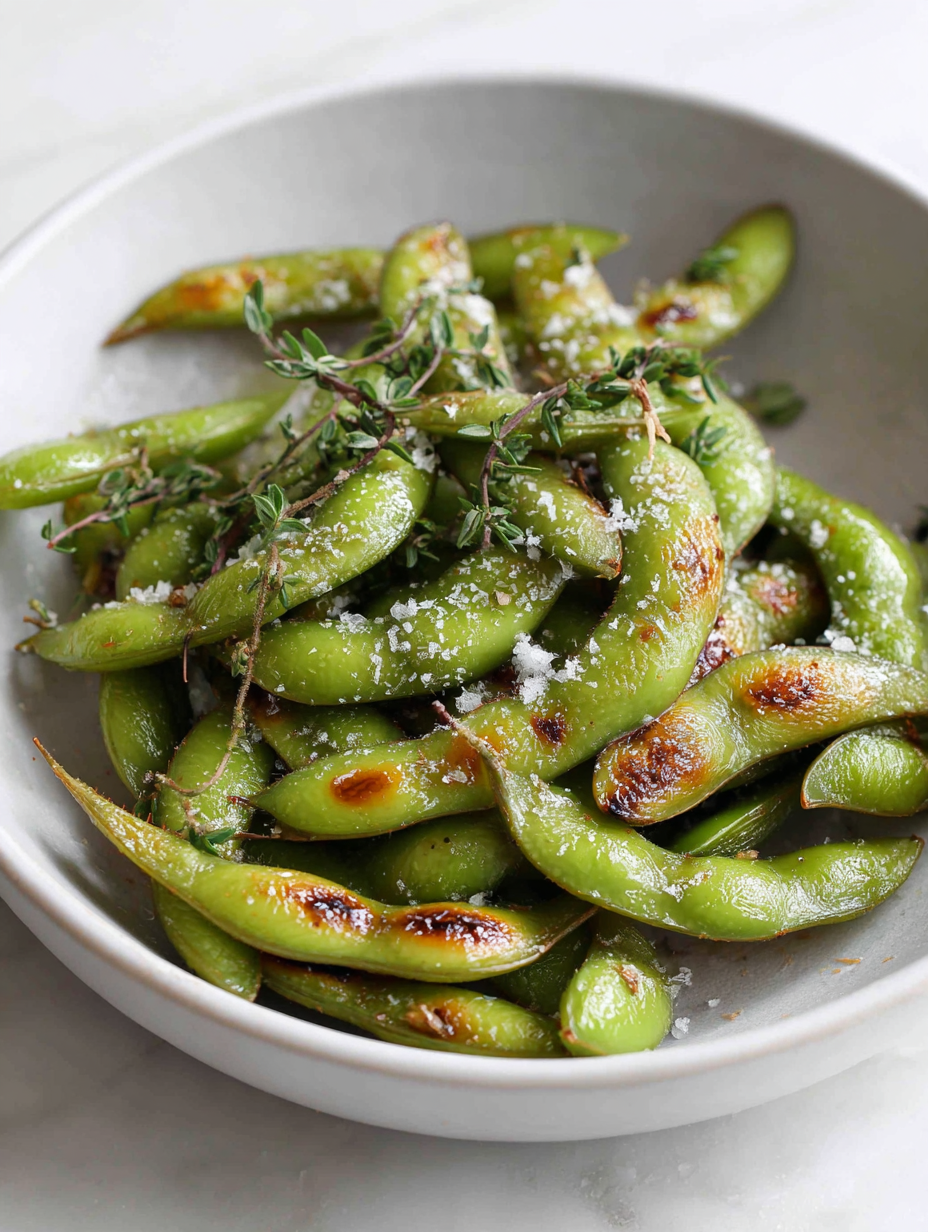
- Color: golden brown with slight char around edges.
- Texture: crispy and puffed, not soggy or chewy.
- Aroma: smoky, nutty with a hint of spice.
Roasted Edamame Snack
Ingredients
Equipment
Method
- Preheat your oven to 200°C (390°F) and line a baking sheet with parchment paper or a silicone mat.
- In a mixing bowl, toss the thawed edamame with a tablespoon of olive oil until each bean is lightly coated. You should hear a gentle sizzle as the oil coats the beans.
- Add the smoked paprika, garlic powder, and a pinch of sea salt to the bowl. Mix again, ensuring the spices cling evenly and the beans start to take on a fragrant smoky aroma.
- Spread the seasoned edamame in a single layer on the prepared baking sheet, shaking gently to avoid clumping. The beans should be evenly spaced for proper crisping.
- Roast in the oven for 15 to 20 minutes, shaking the tray halfway through. Look for golden brown edges and a smoky aroma filling your kitchen.
- Once done, remove from the oven and sprinkle the lemon zest over the hot beans for a bright, fresh contrast. Let the edamame cool on the tray for about 5 minutes, allowing the crispness to set.
- Serve the roasted edamame warm or at room temperature, enjoying their crispy texture and smoky flavor with a satisfying crunch in every bite.
Notes
Pro tips for crispy roasted edamame
- Bolded mini-head: Use a light oil coat → Helps the spices stick and promotes crispiness without greasiness.
- Bolded mini-head: Watch for color change → Edamame should turn golden with slight char; smell smoky and nutty.
- Bolded mini-head: Shake halfway through → Ensures even roasting and prevents burning on one side.
- Bolded mini-head: Cool slightly before serving → Resting allows the crispness to set; avoid serving immediately hot to prevent sogginess.
- Bolded mini-head: Add lemon zest post-roast → Brightens the smoky flavor and enhances freshness.
Common mistakes and how to fix them
- TOO MUCH OIL: Use sparingly to avoid greasy beans; just enough for seasoning adhesion.
- OVER-ROASTED: Watch for dark, burnt edges; remove when beans are golden and fragrant.
- UNDERRIPE EDAMAME: Use fully matured pods for better flavor and crunch.
- FAILED TO THAW: Thaw frozen edamame completely for even roasting and crispy texture.
Quick fixes and pantry swaps
- If smoky aroma is faint, splash a few drops of oil for more crackle and flavor.
- When beans are soggy, increase roasting time or spread them out for even heat.
- Patch dull color with a quick blast under high heat—watch closely to prevent burning.
- When in doubt, swap frozen edamame for fresh—fresh beans roast more evenly and develop better flavor.
- Splash a squeeze of lemon or lime after roasting to add brightness and counteract any bitterness.
Prep, store, and reheat tips
- Prepping the edamame: Thaw frozen edamame in the fridge overnight for even cooking and crispness.
- Storage: Keep roasted edamame in an airtight container at room temperature for up to 2 days; for longer, refrigerate for 3-4 days.
- Shelf life: The snack remains crispy and flavorful for about 2 days; beyond that, they may start to lose crunch and become stale.
- Reheating: Gently reheat in a 180°C (350°F) oven for 5-7 minutes until crisp and warmed through, watching for signs of excess dryness or burning.
Top questions about roasted edamame
1. Can I use fresh edamame instead of frozen?
Fresh edamame tends to be plumper and more vibrant in color, but frozen works just as well if thoroughly thawed before roasting.
2. How do I know when the edamame is done?
Roasted edamame should be crispy, golden, and smell smoky with a nutty aroma. It shouldn’t be soggy or overly dark around edges.
3. How much oil and salt should I use?
A light coating of oil and a sprinkle of salt are enough. Over-oiling can make them greasy, and too much salt can overpower the flavor.
4. How should I store leftovers and reheat them?
Store roasted edamame in an airtight container at room temperature for up to 2 days. Reheat in oven at 180°C (350°F) for 5-7 minutes until crispy.
5. Can I add other seasonings?
Add lemon zest immediately after roasting to keep it bright and fresh. For extra smoky flavor, sprinkle a pinch of smoked paprika before roasting.
6. What oven temperature and timing are best?
Roast at 200°C (390°F) for about 15-20 minutes. Shake the tray halfway to ensure even crisping and watch for a slight char and fragrant aroma.
7. What if they don’t turn crispy?
If the beans aren’t crispy, increase roasting time slightly or spread them out more on the tray. For burnt spots, reduce heat or rotate the tray.
8. What tools do I need?
Use a silicone spatula or your hands to toss the edamame with oil and spices. A parchment-lined sheet helps with cleanup and crisping.
9. Can I make this oil-free or spicier?
Skip the oil or use less if you want a lighter snack. For more smoky flavor, add a smoked paprika or chipotle powder.
10. Why are my edamame mushy after roasting?
If your edamame is mushy, make sure it’s fully thawed and dry before roasting. Use a higher heat and spread them out evenly for better crispness.
Roasted edamame is a simple snack that surprisingly packs a smoky, crispy punch. It’s perfect for when you need a quick crunch without fussing over complicated ingredients or techniques.
This recipe reminds me how humble ingredients can transform with just a bit of heat and patience. It’s a little bit nostalgic, a little bit new, and always satisfying to stash in the snack rotation.