
Turning a cluttered fridge into a rainbow of crispy bites is oddly calming. I find chopping up various veggies—carrots, zucchini, sweet potatoes—almost meditative, a quiet act that clears my head. Baking these veggie chips turns chaos into order, a simple way to create something nourishing and satisfying from whatever’s on hand.
There’s something reassuring about transforming humble vegetables into crunchy, flavorful snacks without the fuss of frying. It’s a mindful process—slicing thin, seasoning lightly, and patiently baking—that helps me pause and reconnect with my kitchen. Plus, the smell of roasted veggies curling up in the oven is a cozy reminder that good things come from small, intentional acts.
Focusing on how making baked veggie chips can be a mindful, meditative act that turns a chaotic fridge load into a crispy, colorful snack.
The story behind this recipe
Making these baked veggie chips was born out of a need to find a snack that’s both satisfying and easy to customize. I was tired of tossing away limp vegetables or feeling guilty about deep-frying. One afternoon, I sliced up a bunch of odds and ends from my fridge—zucchini, carrots, a lonely beet—and popped them in the oven. The smell of roasting veggies and that satisfying crackle of edges crisping up made me realize I’d stumbled onto something I’d want to share.
Ingredient breakdown: key components
- Sweet potatoes: I love their natural sweetness and orange hue, which turns crispy and smoky in the oven. Swap with regular potatoes if you prefer a more neutral flavor, but you’ll miss that vibrant color.
- Zucchini: Its high water content makes it tricky, but slicing thin and salting helps draw out moisture. If you don’t have zucchini, carrots give a similar crunch and a touch of sweetness.
- Carrots: Their earthy sweetness and firm texture make for a satisfying crunch. Consider parsnips for a different earthy tone or beets for deep color—just watch the moisture levels.
- Olive oil: I use just enough to coat the veggies lightly, giving them a glossy finish and helping them crisp. You can try sesame oil for a nutty twist, but reduce the amount due to its strong flavor.
- Salt and spices: A pinch of sea salt is essential, but I often sprinkle smoked paprika or garlic powder for extra flavor. Adjust to your taste—less salt if you’re watching sodium, more for a punch.
- Optional herbs: Fresh thyme or rosemary add an aromatic layer. Dried herbs work too if you want a more concentrated flavor, just use sparingly to avoid overpowering the veggies.
- Vinegar or lemon: A splash at the end brightens the taste and enhances the crispy texture. Skip if you prefer a pure veggie flavor or add more for a tangy kick.
Spotlight on key ingredients
Sweet potatoes:
- I love their natural sweetness and orange hue, which turns crispy and smoky in the oven. Swap with regular potatoes if you prefer a more neutral flavor, but you’ll miss that vibrant color.
- Zucchini: Its high water content makes it tricky, but slicing thin and salting helps draw out moisture. If you don’t have zucchini, carrots give a similar crunch and a touch of sweetness.
Olive oil & seasonings:
- Olive oil: I use just enough to coat the veggies lightly, giving them a glossy finish and helping them crisp. You can try sesame oil for a nutty twist, but reduce the amount due to its strong flavor.
- Salt and spices: A pinch of sea salt is essential, but I often sprinkle smoked paprika or garlic powder for extra flavor. Adjust to your taste—less salt if you’re watching sodium, more for a punch.
Notes for ingredient swaps
- Oil-Free: Use a light spray of cooking spray instead of oil. Expect slightly less shine and crispness, but still tasty.
- Sweetener Swap: Honey or maple syrup can replace oil for a hint of sweetness and a slightly sticky texture.
- Salt Alternatives: Sea salt is classic, but smoked salt adds a smoky depth, or try seasoned salts for extra flavor.
- Spice Variations: Swap smoked paprika for cumin or curry powder to change the flavor profile without affecting texture.
- Vinegar Options: Apple cider vinegar or balsamic vinegar can brighten flavors, but use sparingly to avoid overpowering.
- Herb Additions: Fresh basil or oregano can be sprinkled after baking for a fresh herbal punch, rather than mixed in before.
- Vegan Cheese: Nutritional yeast sprinkled post-baking adds cheesy umami without dairy, for a savory boost.
Equipment & Tools
- Mandoline or sharp knife: To slice veggies evenly and thinly.
- Baking sheets: To hold the veggie slices during baking.
- Parchment paper: To prevent sticking and make cleanup easier.
- Cooling rack: To let chips cool evenly and stay crispy.
Step-by-step guide to veggie chips
- Gather your veggies: thinly slice carrots, zucchini, sweet potatoes, and beets, about 2 mm thick. Use a sharp mandoline if you have one to get even slices.
- Preheat your oven to 160°C (320°F). Line two baking sheets with parchment paper for easy cleanup.
- In a large bowl, toss the sliced veggies with a tablespoon of olive oil, ensuring each piece is lightly coated. Add a pinch of salt and your preferred spices—paprika, garlic powder, or thyme work well.
- Arrange the slices in a single layer on the prepared baking sheets. Don’t crowd them; leave space for air to circulate.
- Bake for about 20-25 minutes. After 10 minutes, rotate the sheets and flip the chips so they crisp evenly. Keep an eye on edges; they should turn golden but not burnt.
- Check the chips at the 20-minute mark: they should be crisp, with edges curling slightly. If still soft, bake for another 5 minutes, checking frequently to prevent burning.
- Once crispy and golden, remove from the oven and let them cool on the baking sheet for 5 minutes. They will crisp up further as they cool.
- Transfer to a wire rack to cool completely. This prevents sogginess and keeps them crunchy.
- Taste and adjust seasoning if needed. Lightly sprinkle with extra salt or herbs while still warm for best flavor.
Let the chips cool on a rack for 5 minutes. Serve immediately or store in an airtight container once fully cooled. For best crunch, keep away from humidity.
How to Know It’s Done
- Edges are golden and curling slightly.
- Chips feel firm and snap when broken.
- No residual moisture when cooled—crisp and dry.
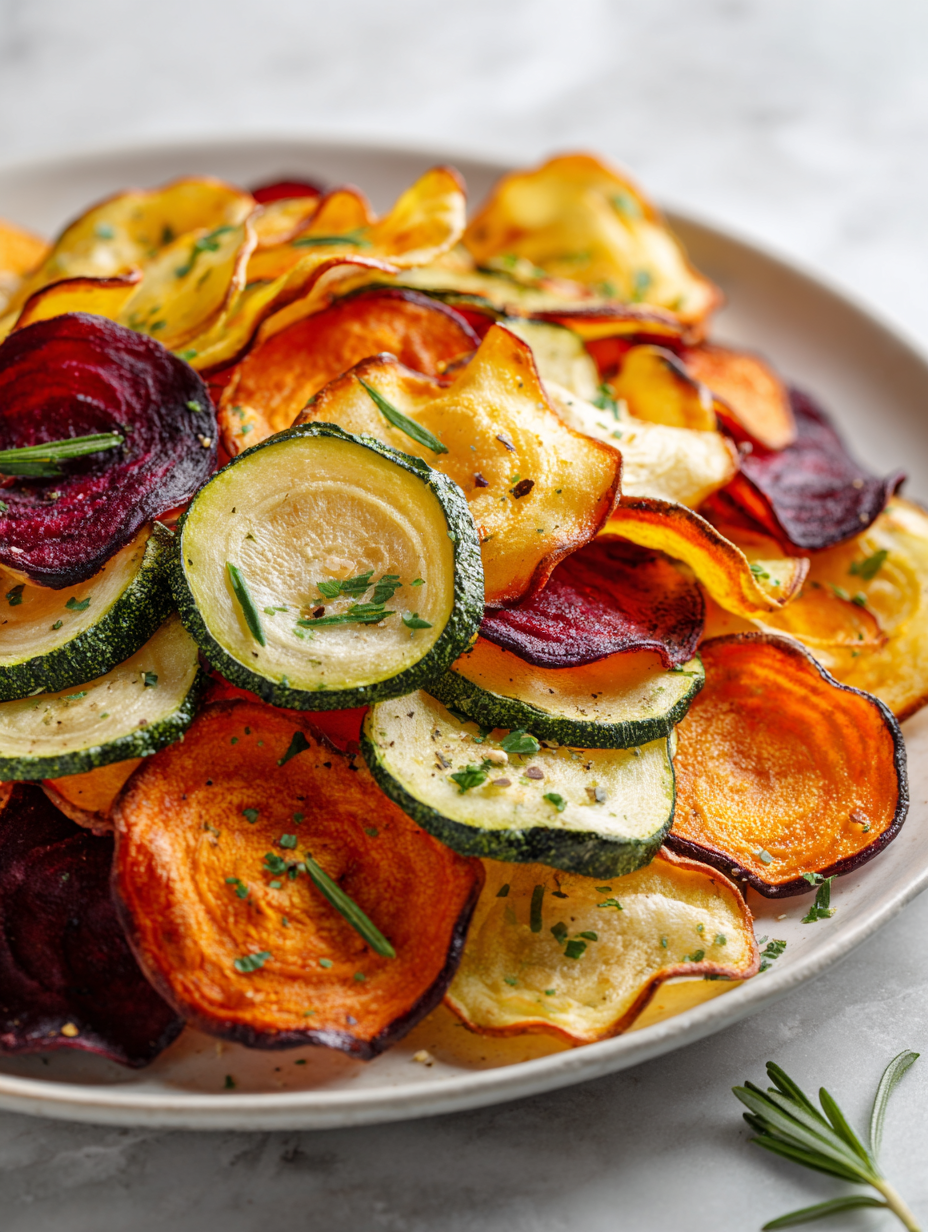
Baked Veggie Chips
Ingredients
Equipment
Method
- Use a mandoline or sharp knife to slice the vegetables into very thin, even rounds about 2 mm thick. Aim for uniform slices to ensure even crisping.
- Preheat your oven to 160°C (320°F). Line two baking sheets with parchment paper to prevent sticking and make cleanup a breeze.
- Place the sliced veggies in a large bowl and drizzle with a tablespoon of olive oil, tossing gently to coat each piece evenly. The slices should feel glossy but not greasy.
- Sprinkle salt and smoked paprika over the vegetables, then toss again to distribute the seasonings uniformly. This adds a flavorful kick to your chips.
- Arrange the slices in a single layer on the prepared baking sheets, leaving space between each to allow air circulation and even baking.
- Bake in the preheated oven for about 20-25 minutes. After 10 minutes, rotate the baking sheets and flip the slices to promote even browning. Keep an ear out for a crispy crackle as they turn golden around the edges.
- Check the chips at the 20-minute mark: they should be golden and curling slightly at the edges. If they need more crispness, bake for an additional 3-5 minutes, watching carefully to prevent burning.
- Remove the chips from the oven and transfer them to a cooling rack. Let them cool for about 5 minutes; this helps them crisp up further and prevents sogginess.
- Once cooled, taste a chip to check for seasoning and crispness. Sprinkle with extra salt or herbs if desired, while still warm for maximum flavor infusion.
- Enjoy your homemade veggie chips immediately or store in an airtight container at room temperature for up to three days to keep them crisp and fresh.
Pro tips for perfect veggie chips
- Boldly slice veggies very thin for maximum crispness and even baking.
- Boldly salt zucchini slices early to draw out excess moisture; pat dry before baking.
- Boldly rotate baking sheets halfway through to prevent uneven browning.
- Boldly keep a close eye after 20 minutes; chips can go from crisp to burnt quickly.
- Boldly cool chips on a wire rack to maintain their crunch and prevent sogginess.
- Boldly use a mandoline for uniform slices—uneven slices won’t crisp evenly.
- Boldly sprinkle herbs or seasonings immediately after baking for best flavor infusion.
Common mistakes and how to fix them
- FORGOT to check for even slices → Ensure uniform thickness for even baking.
- DUMPED in too much oil → Use just enough to lightly coat vegetables, avoid greasiness.
- OVER-TORCHED chips → Remove when edges are golden and crisp, not burnt.
- MISSED flipping midway → Flip slices halfway for even crispness and color.
Quick fixes for veggie chips
- When chips burn quickly, splash a little water on the hot pan to cool and prevent further browning.
- If chips are soggy, patch with a quick blast at 180°C (356°F) for 2-3 minutes to crisp up.
- When slices stick to parchment, shield with a light spray of oil or switch to silicone baking mats.
- If chips are uneven in size, rescue with a quick re-slice and separate before baking again.
- When craving a smoky flavor, swap olive oil for smoked paprika mixed into the oil before tossing veggies.
Prep, store, and reheat tips
- Pre-slice veggies a day ahead and store in an airtight container in the fridge; they stay crisp and ready to bake.
- Store baked chips in a sealed container at room temperature for up to 3 days; crispness diminishes after a day or two.
- For longer storage, freeze baked chips in a zip-top bag for up to a month; reheat in a low oven until crispy again, about 5-7 minutes at 150°C (300°F) with a crackle of heat that revives their crunch.
- Reheating chips in the oven helps restore some crispness; avoid microwaving which can make them soggy and limp. Look for a golden hue and firm snap when reheated.
Top questions about veggie chips
1. How thin should I slice the vegetables?
Slice veggies very thinly, about 2 mm, for maximum crispiness and even baking.
2. What oven temperature and timing work best?
Preheat your oven to 160°C (320°F). Bake for 20-25 minutes, flipping halfway for even crisping.
3. What tools are essential for making veggie chips?
Use parchment paper to prevent sticking and make cleanup easier. Keep a close eye after 20 minutes to prevent burning.
4. How do I prevent uneven baking?
Ensure even slices; rotate baking sheets halfway through. Cool on a wire rack to keep them crispy.
5. How should I store leftover veggie chips?
Store cooled chips in an airtight container at room temperature for up to 3 days; reheat in a low oven to revive crunch.
6. How can I fix soggy veggie chips?
If chips are soggy, re-crisp in a 150°C (300°F) oven for 5-7 minutes. Avoid microwaving, as it makes them limp.
7. Can I swap ingredients in the recipe?
You can substitute sweet potatoes with regular potatoes or carrots for different flavors and textures.
8. What’s the best way to get even slices?
Use a mandoline for uniform slices. Thin, even slices ensure maximum crispness and consistency.
9. How do I make the chips more flavorful?
Adding a splash of vinegar or lemon brightens the flavor and enhances crispness. Use sparingly for best effect.
10. How much oil should I use?
Avoid over-oiling the veggies; just a light coat helps them crisp without greasiness. Too much oil can make them soggy.
These baked veggie chips aren’t just a snack; they’re a little act of mindfulness that turns clutter into crunch. I keep coming back to this recipe when I need a quick, satisfying bite that feels honest and simple. Plus, the smells of roasting veggies curling in the oven are a quiet joy in any busy day.
In the end, it’s about embracing the imperfect, crispy edges and the vibrant colors that make each batch unique. They remind me that good things often come from small, thoughtful moments—like slicing and seasoning, and waiting patiently for that perfect crunch.