
Veggie nuggets often get a bad rap for being bland or soggy, but I’ve found a way to make them crispy and full of flavor without turning to cheese or heavy binders. It’s all about the right veggies, a good crunch coating, and a bit of patience in frying or baking. This recipe is my go-to when I want a snack that’s satisfying but still feels honest.
What I love about these nuggets is how versatile they are—use whatever vegetables you have on hand, and you’ll still get that satisfying crunch on the outside and tender, slightly sweet interior. It’s a way to sneak good stuff into your diet without sacrificing texture or flavor. Plus, they’re just so much fun to make and eat, especially with a dipping sauce that’s tangy or spicy.
Focusing on making vegetable nuggets that are irresistibly crispy on the outside yet tender inside, this recipe elevates humble veggies into a snack that feels indulgent and satisfying without any added cheese or heavy binders.
Crispy Veggie Nuggets with a Twist
- These nuggets remind me of childhood snack bars, but with a fresh, veggie twist that’s surprisingly satisfying.
- I used to think crispy veggie snacks were a hassle, but now I crave the crunch and that warm, fragrant smell during frying.
- It’s a small victory to turn humble vegetables into something so addictive, especially when kids ask for seconds without complaint.
- Nothing beats the smell of golden nuggets bubbling in hot oil — it’s a messy, joyful chaos I secretly love.
- Every time I make these, I feel a little proud of turning simple ingredients into comfort food that’s both honest and fun.
The story behind this recipe
- This recipe was born out of a desperate need to sneak more veggies into my kids’ diets without the usual complaints about mushy textures. One day, I started experimenting with different vegetables, trying to find that perfect crispy outside and tender inside combo. Turns out, a little bit of patience and the right coating can turn humble ingredients into a snack they reach for on their own.
- I remember the first batch turning out so crispy and golden, I practically did a little happy dance in the kitchen. It’s funny how these simple bites became a family favorite, especially when served with that tangy dip I threw together in a rush. Now, they’re part of our weekly lineup—proof that even modest veggies can shine with a bit of love and crunch.
- The best part? No heavy binders or cheese—just honest, crunchy veggies that feel almost indulgent. They remind me that sometimes, keeping things simple and crispy makes all the difference in how you enjoy everyday ingredients.
Trivia and origins of veggie nuggets
- Vegetable nuggets have roots in traditional snack foods but evolved as a health-conscious twist in the 2000s.
- The idea of coating vegetables for frying was popularized by chefs looking to mimic fried chicken textures with plant-based ingredients.
- Early versions of veggie nuggets were often made with processed binders, but recent recipes favor whole vegetables and natural coatings.
- This snack became a hit in vegetarian and vegan circles as a satisfying, crispy alternative to meat-based finger foods.
Key ingredients and tips
- Carrots: I love how their natural sweetness and vibrant orange color brighten the nuggets. If carrots aren’t available, sweet potatoes work well, but keep an eye on moisture.
- Zucchini: It adds a tender, moist bite, and the mild flavor helps the overall texture. Squeeze out excess water to avoid sogginess, or use a little oat flour to absorb moisture.
- Breadcrumbs: I prefer panko for that extra crunch and airy texture. For a gluten-free version, crushed rice crackers give a similar crispy effect without losing flavor.
- Eggs: They help everything bind together, making the nuggets sturdy. For a vegan tweak, try flaxseed meal mixed with water—just expect a slightly different texture.
- Seasonings: Garlic powder and paprika bring warmth and depth. Feel free to toss in a pinch of cayenne for spice or some dried herbs for variety—your call.
- Oil: For frying, I use neutral oil like vegetable or canola for even crispiness. If baking, a light spray of olive oil helps mimic that fried exterior with less fuss.
- Optional add-ins: Finely chopped herbs or a dash of nutritional yeast can elevate flavor, but keep it simple—sometimes less is more when focusing on crispy textures.
Spotlight on key ingredients
Carrots and Zucchini:
- Carrots: I love how their natural sweetness and vibrant orange color brighten the nuggets. If carrots aren’t available, sweet potatoes work well, but keep an eye on moisture.
- Zucchini: It adds a tender, moist bite, and the mild flavor helps the overall texture. Squeeze out excess water to avoid sogginess, or use a little oat flour to absorb moisture.
- Breadcrumbs: I prefer panko for that extra crunch and airy texture. For a gluten-free version, crushed rice crackers give a similar crispy effect without losing flavor.
Eggs and Seasonings:
- Eggs: They help everything bind together, making the nuggets sturdy. For a vegan tweak, try flaxseed meal mixed with water—just expect a slightly different texture.
- Seasonings: Garlic powder and paprika bring warmth and depth. Feel free to toss in a pinch of cayenne for spice or some dried herbs for variety—your call.
- Oil: For frying, I use neutral oil like vegetable or canola for even crispiness. If baking, a light spray of olive oil helps mimic that fried exterior with less fuss.
Notes for ingredient swaps
- Vegan: Swap eggs for flaxseed meal mixed with water—will be a bit denser, but still holds together.
- Gluten-Free: Use crushed rice crackers or gluten-free panko instead of regular breadcrumbs for crunch without wheat.
- Low-Sodium: Choose unsalted or lightly salted vegetables and reduce added salt in the mixture to suit dietary needs.
- Flavor Boost: Add a teaspoon of smoked paprika or a dash of chili powder to enhance smoky or spicy notes.
- Herb Variations: Fresh herbs like parsley or cilantro can replace dried seasoning for a fresher flavor, but chop finely.
- Oil Choice: For baking, spray with avocado oil for a slightly richer flavor; for frying, stick with neutral oils like canola or vegetable.
- Vegetable Swap: Cauliflower or broccoli florets can replace some or all of the carrots and zucchini—aim for similar moisture content.
Equipment & Tools
- Large mixing bowl: Combine and mix ingredients thoroughly.
- Baking sheet or deep fryer: Cook the nuggets either by baking or frying.
- Spatula: Shape and turn the nuggets, and handle hot items.
- Cooling rack: Drain excess oil and keep nuggets crispy.
- Grater: Shred vegetables uniformly.
- Knife and cutting board: Prep vegetables and other ingredients.
Step-by-step guide to vegetable nuggets
- Gather your equipment: a large mixing bowl, a baking sheet or deep fryer, a spatula, and a cooling rack. Preheat oven to 200°C (390°F) if baking, or heat oil to 180°C (350°F) for frying.
- Chop vegetables: grate carrots, zucchini, and any additional veggies to about 1 cm (0.4 inch) size. Squeeze out excess moisture with a clean towel or paper towels to prevent sogginess.
- Prepare the mixture: in the bowl, combine chopped vegetables, 1 cup of breadcrumbs, 1 beaten egg (or flaxseed mixture), 1 teaspoon garlic powder, 1 teaspoon paprika, and a pinch of salt. Mix until well combined. The mixture should hold together when pressed; if too loose, add more breadcrumbs.
- Shape nuggets: scoop about 2 tablespoons of mixture and form into small, flat rounds or oblongs, roughly 3 cm (1.2 inches) wide. Place on a parchment-lined baking sheet or tray if frying.
- Coat or bread: for extra crunch, roll each nugget in panko breadcrumbs or crushed crackers. For baking, lightly spray the coated nuggets with olive oil spray to promote crispiness.
- Cook: if baking, bake in the preheated oven for 20-25 minutes, turning halfway, until golden and crispy. For frying, carefully lower nuggets into hot oil, frying in batches for 3-4 minutes, until crispy and golden. Watch for bubbling and a fragrant smell.
- Check doneness: nuggets should be golden brown on the outside, firm but tender inside, and smell fragrant. If using a probe thermometer, internal temp should reach 75°C (165°F).
- Rest and serve: transfer cooked nuggets to a cooling rack for 2-3 minutes. Serve hot with your favorite dipping sauce. They should be crisp on the outside and tender inside.
Let the nuggets rest on a cooling rack for a few minutes to maintain crispiness. Serve immediately with dips or on their own. For storage, keep in an airtight container in the fridge for up to 3 days or freeze for longer, reheating in oven at 180°C (350°F) until hot and crispy.
How to Know It’s Done
- Golden, crispy exterior with a fragrant smell.
- Inside texture tender but not mushy, with a slight jiggle when pressed.
- Internal temperature reaches 75°C (165°F) if tested with a probe.
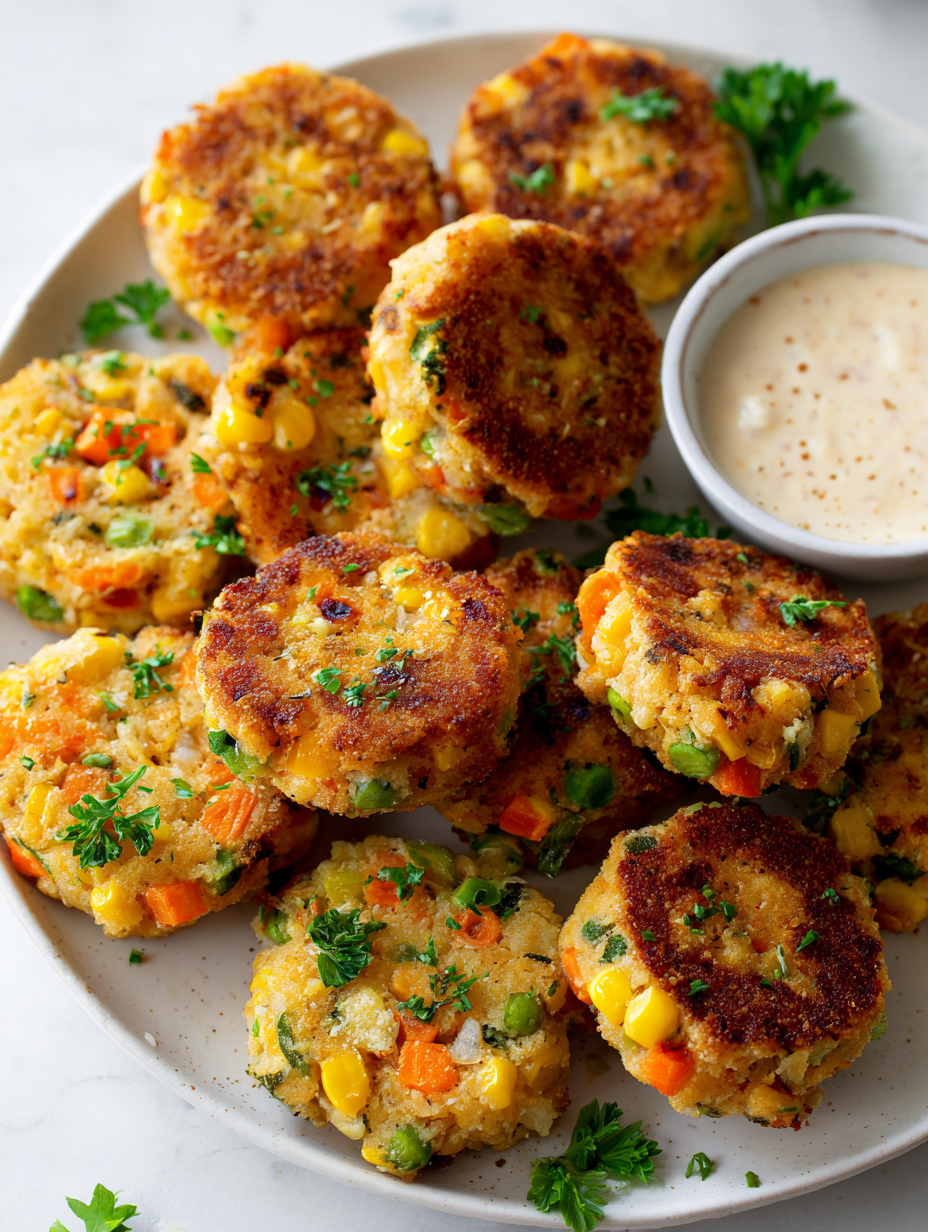
Crispy Veggie Nuggets
Ingredients
Equipment
Method
- Start by grate the vegetables using a box grater until you have about 2 cups. Place the grated vegetables in a clean towel or paper towels and squeeze out as much excess moisture as possible — this helps keep the nuggets crispy.
- In a large mixing bowl, combine the grated vegetables with the egg, garlic powder, paprika, and a pinch of salt. Mix everything thoroughly until the mixture is well combined and sticky enough to hold shape.
- Using your hands or a spoon, scoop about two tablespoons of the mixture and gently shape it into small patties or nuggets, about 3 cm wide. Place each shaped nugget onto a parchment-lined baking sheet or tray if frying.
- Gently roll each nugget in panko breadcrumbs, pressing lightly to coat evenly and create a crunchy exterior.
- If baking, spray the nuggets lightly with olive oil or cooking spray to help them crisp up. Preheat your oven to 200°C (390°F) and bake the nuggets on the middle rack for 20-25 minutes, turning halfway, until golden brown and crispy.
- If frying, heat about 2-3 tablespoons of oil in a deep skillet or fryer to 180°C (350°F). Carefully lower the nuggets into the hot oil in batches. Fry for about 3-4 minutes, turning occasionally, until they are crispy and golden all over.
- Once cooked, transfer the nuggets to a cooling rack or paper towels to drain excess oil and keep them crispy. Let them rest for a couple of minutes to settle the texture before serving.
- Serve the veggie nuggets warm with your favorite dipping sauce, such as tangy yogurt, spicy ketchup, or aioli. Enjoy the crispy outside and tender, flavorful inside with each bite!
Notes
Pro tips for perfect veggie nuggets
- Use panko breadcrumbs for an ultra-crispy coating that shatters satisfyingly with each bite.
- Keep the vegetable mixture chilled before shaping to prevent sticking and ensure even frying.
- When frying, do not overcrowd the pan — work in batches to maintain oil temperature and crispiness.
- For a bake that rivals frying, spray nuggets generously with oil and bake at 200°C (390°F) until golden.
- When coating, press breadcrumbs gently onto the surface to create a sturdy, even crust.
- Rest cooked nuggets for a few minutes on a wire rack — this keeps them crispy and prevents sogginess.
- Use a thermometer to ensure oil stays steady at 180°C (350°F) for optimal frying crunch.
Common mistakes and how to fix them
- FORGOT to preheat oil or oven → ensure proper temperature before cooking.
- DUMPED too much moisture from veggies → squeeze out excess water thoroughly.
- OVER-TORCHED nuggets → reduce heat or cooking time, check for golden color.
- MISSED the resting step → let nuggets sit for a few minutes for better texture.
Quick fixes and pantry swaps
- When oil shimmers, splash a tiny drop of water to test heat.
- If nuggets stick, patch with a gentle nudge and add a bit more flour or breadcrumbs.
- Splash extra oil when frying if the crackle dulls—shimmer should intensify.
- Dump in too much moisture? Fix with a sprinkle of cornstarch or more breadcrumbs.
- When in doubt, swap panko for crushed cereal for an instant crispy rescue.
Prep, store, and reheat tips
- Prep chopped vegetables and mixture ingredients ahead; store in an airtight container for up to 24 hours in the fridge. They stay fresh but may lose a slight crispness.
- Cooked nuggets can be stored in the fridge for up to 3 days; reheat in the oven at 180°C (350°F) for 8-10 minutes until crispy and hot, with a fragrant crunch.
- For longer storage, freeze uncooked or cooked nuggets for up to 1 month. Keep in a sealed container or zip-top bag; reheat straight from frozen for best results.
- Reheating in the oven helps restore crispy exterior, while microwaving yields softer texture. Always check for even heat and a crackling sound or aroma before serving.
Top questions about vegetable nuggets
1. What vegetables work best for nuggets?
Use firm, fresh vegetables like carrots, zucchini, and sweet potatoes for the best texture and flavor. Squeeze out excess moisture to prevent sogginess.
2. Can I bake instead of fry?
Yes, you can bake them at 200°C (390°F) for about 20-25 minutes or fry in hot oil until golden and crispy.
3. How do I know when they’re done?
Make sure to preheat your oven or oil to the right temperature. Keep an eye on the nuggets to prevent burning and check for a golden color.
4. Can I make these vegan?
Yes, substitute flaxseed meal mixed with water for eggs. It will make the nuggets slightly denser but still hold together well.
5. Are there gluten-free options?
Use gluten-free panko or crushed rice crackers for a crispy coating if you need a gluten-free option.
6. Can I customize the seasonings?
Adding herbs like parsley or cilantro can freshen up the flavor. Adjust seasonings to suit your taste for a different flavor profile.
7. How long can I store leftovers?
Cooked nuggets last in the fridge for up to 3 days. Reheat in the oven at 180°C (350°F) until hot and crispy, about 8-10 minutes.
8. Can I freeze them?
Freeze uncooked or cooked nuggets for up to a month. Reheat straight from frozen in the oven for best crispiness.
9. My nuggets are soggy. What now?
If the nuggets are soggy, re-crisp in the oven or air fryer. Splash a little oil or spray to revive crunch and flavor.
10. Any tips for perfect cooking?
Use a thermometer to check oil is at 180°C (350°F) for frying. For baking, ensure the oven is preheated properly for even cooking.
These vegetable nuggets are proof that even humble ingredients can be turned into something satisfying and crispy. Making them at home means you get to control the texture and flavor, plus avoid any unnecessary additives.
They’re perfect for a quick snack or a casual dinner side, especially when you want something warm and crunchy without much fuss. Plus, they remind me how simple, honest cooking can bring a little joy to the table, no matter the season.