
Vegetable fritters are the kind of dish that feels like a culinary hug—imperfect, forgiving, and endlessly adaptable. I love tossing in whatever odds and ends I have in the fridge, from that lonely zucchini to a few stray carrots. It’s surprising how these humble bits transform into something crispy and satisfying with just a little heat and a pinch of patience.
There’s a quiet joy in making fritters when you’re not fussing over perfection. No two batches are exactly the same, and that’s part of the charm. Plus, they’re a great way to clear out your produce drawer without wasting anything—turning leftovers into a snack or a meal with minimal fuss.
Focusing on how vegetable fritters can be a spontaneous, forgiving dish that adapts to whatever odds and ends are left in your fridge, making it a perfect way to clean out produce drawers while still creating something satisfying and crispy.
The art of forgiving fritters
- I love how these fritters remind me of lazy weekend mornings, crispy edges and all.
- There’s a quiet pride in turning leftover veggies into something golden and tempting.
- Cooking these feels like a small act of rebellion against food waste.
- Every batch is a surprise, sometimes perfectly crispy, other times a bit more tender—and that’s okay.
- These fritters have become my go-to when I need a quick, satisfying snack that feels like a treat.
The story behind this recipe
Making vegetable fritters is like capturing a bit of my childhood chaos—those lazy Sunday afternoons when family gathered around a cluttered kitchen counter. I remember rummaging through the fridge, finding odd bits of carrots, zucchini, and onion, and feeling that thrill of turning leftovers into something crispy and warm. It’s a simple, honest way to hold onto the comfort of home cooking, even when time feels tight or the fridge’s bounty is unpredictable.
Historical and Cultural Roots
- Vegetable fritters have roots in many cuisines, from Asia to Eastern Europe, often as a way to make humble vegetables shine.
- Historical recipes often used simple ingredients, making them accessible to home cooks across centuries and continents.
- In some cultures, fritters were a way to stretch ingredients during lean times, transforming leftovers into satisfying bites.
- The crispy exterior and tender interior mimic traditional street foods found in markets worldwide, blending practicality with flavor.
- Today, vegetable fritters are experiencing a revival in farm-to-table and vegetarian circles, celebrating their versatility and comfort.
Ingredient breakdown: key components
- Zucchini: I prefer grating zucchini finely until it’s almost a mash; it releases quite a bit of moisture, so I squeeze out excess water—helps keep fritters crisp and not soggy.
- Carrots: Bright and sweet, I like using shredded carrots for their pop of color and natural sugar; if you want more bite, chop them finer and cook slightly before mixing.
- Onion: A small yellow onion, finely diced, adds a gentle sweetness and depth; if you only have red onion, it works just as well—just chop it finely so it doesn’t overpower.
- Eggs: They act as the glue, making the batter tender but firm; if you’re vegan, try a flaxseed or chia seed slurry—just expect a different, slightly denser texture.
- Flour: I usually reach for all-purpose, but chickpea flour gives a nuttier flavor and extra protein; if you want gluten-free, try rice or almond flour, but adjust the quantity to get the right batter consistency.
- Herbs & Spices: Fresh parsley and a pinch of paprika brighten the fritters; feel free to swap in dill or cumin depending on your mood—just add at the end for maximum flavor.
- Oil: Neutral oil like vegetable or canola for frying; I love the crackle it makes when the batter hits hot oil—that sizzle is the sign it’s time to flip.
Spotlight on key ingredients
Zucchini:
- I prefer grating zucchini finely until it’s almost a mash; it releases quite a bit of moisture, so I squeeze out excess water—helps keep fritters crisp and not soggy.
- Carrots: Bright and sweet, I like using shredded carrots for their pop of color and natural sugar; if you want more bite, chop them finer and cook slightly before mixing.
- Onion: A small yellow onion, finely diced, adds a gentle sweetness and depth; if you only have red onion, it works just as well—just chop it finely so it doesn’t overpower.
Flour & Seasonings:
- Herbs & Spices: Fresh parsley and a pinch of paprika brighten the fritters; feel free to swap in dill or cumin depending on your mood—just add at the end for maximum flavor.
- Oil: Neutral oil like vegetable or canola for frying; I love the crackle it makes when the batter hits hot oil—that sizzle is the sign it’s time to flip.
- Eggs: They act as the glue, making the batter tender but firm; if you’re vegan, try a flaxseed or chia seed slurry—just expect a different, slightly denser texture.
Notes for ingredient swaps
- Dairy-Free: Swap regular milk or yogurt for coconut milk or almond-based options. Keeps the fritters vegan but may alter richness slightly.
- Gluten-Free: Use rice or chickpea flour instead of all-purpose flour. Expect a nuttier flavor and slightly different texture.
- Egg-Free: Replace eggs with a flaxseed or chia seed slurry—about 1 tablespoon ground seeds mixed with 3 tablespoons water per egg. Slightly denser results, but still tasty.
- Herbs & Spices: Fresh parsley can be swapped with dill, cilantro, or thyme. For a smoky kick, try smoked paprika or cumin—just add at the end of mixing.
- Oil for Frying: Use avocado or light olive oil for a subtle flavor boost. If you want a neutral option, stick with vegetable or canola oil.
- Vegetables: Zucchini can be swapped with yellow squash or cucumber for different moisture levels and flavors. Carrots can be replaced with sweet potatoes for a sweeter fritter.
- Fresh vs. Frozen Veggies: Frozen grated veggies work in a pinch—just thaw and squeeze out excess moisture to prevent sogginess.
Equipment & Tools
- Large mixing bowl: To combine and mix the batter ingredients.
- Box grater: To shred vegetables finely for even cooking.
- Clean towel: To squeeze out excess moisture from grated vegetables.
- Frying pan: To cook the fritters evenly over medium heat.
- Spatula: To flip and handle the fritters during cooking.
Step-by-step guide to vegetable fritters
- Equipment & Tools: Prepare a large mixing bowl (for batter), a box grater (for vegetables), a clean kitchen towel (to squeeze out moisture), a frying pan (for cooking), and a spatula (to flip).
- Grate vegetables: Finely shred 1 zucchini, 2 carrots, and 1 small onion. Place in a bowl. For zucchini, squeeze out excess water with a towel—this keeps fritters crispy.
- Mix batter: Add 2 beaten eggs, 1/4 cup all-purpose flour, 2 tbsp chopped parsley, 1 tsp salt, and a pinch of pepper. Stir until combined. If batter feels too loose, sprinkle in a little more flour.
- Heat oil: Pour about 1/4 inch of neutral oil into your pan. Heat over medium heat (about 160°C/320°F) until shimmering and crackling when batter is added.
- Form fritters: Using a spoon or your hands, scoop about 2 tbsp of batter and gently flatten into a patty. Repeat, leaving space between. Watch for a golden-brown edge to form, about 2-3 minutes.
- Cook: Carefully place fritters in hot oil. Cook for 3-4 minutes per side, turning once, until they are crispy and golden brown. If they brown too quickly, lower the heat.
- Check doneness: Fritters should be firm, crispy on the outside, and tender inside. Use a spatula to lift and examine color and texture. If they’re soggy, cook a bit longer.
- Drain: Remove fritters and place on a paper towel-lined plate to drain excess oil. Let rest for 2 minutes before serving.
- Resting & Finishing: Serve immediately with a squeeze of lemon or a dollop of yogurt. For a crispier finish, keep warm in a low oven (around 90°C/200°F) while finishing the batch.
- Checkpoints & How to Know It’s Done: Fritters are golden and crispy, hold their shape without falling apart, and smell fragrant with a slight nutty aroma.
Serve fritters hot, garnished with herbs or lemon. Let them rest briefly on paper towels to drain any residual oil, then plate immediately for maximum crispness.
How to Know It’s Done
- Fritters are evenly golden and crispy on edges.
- They hold shape when flipped without breaking apart.
- Smell of cooked vegetables and toasted flour is present—no raw batter scent.
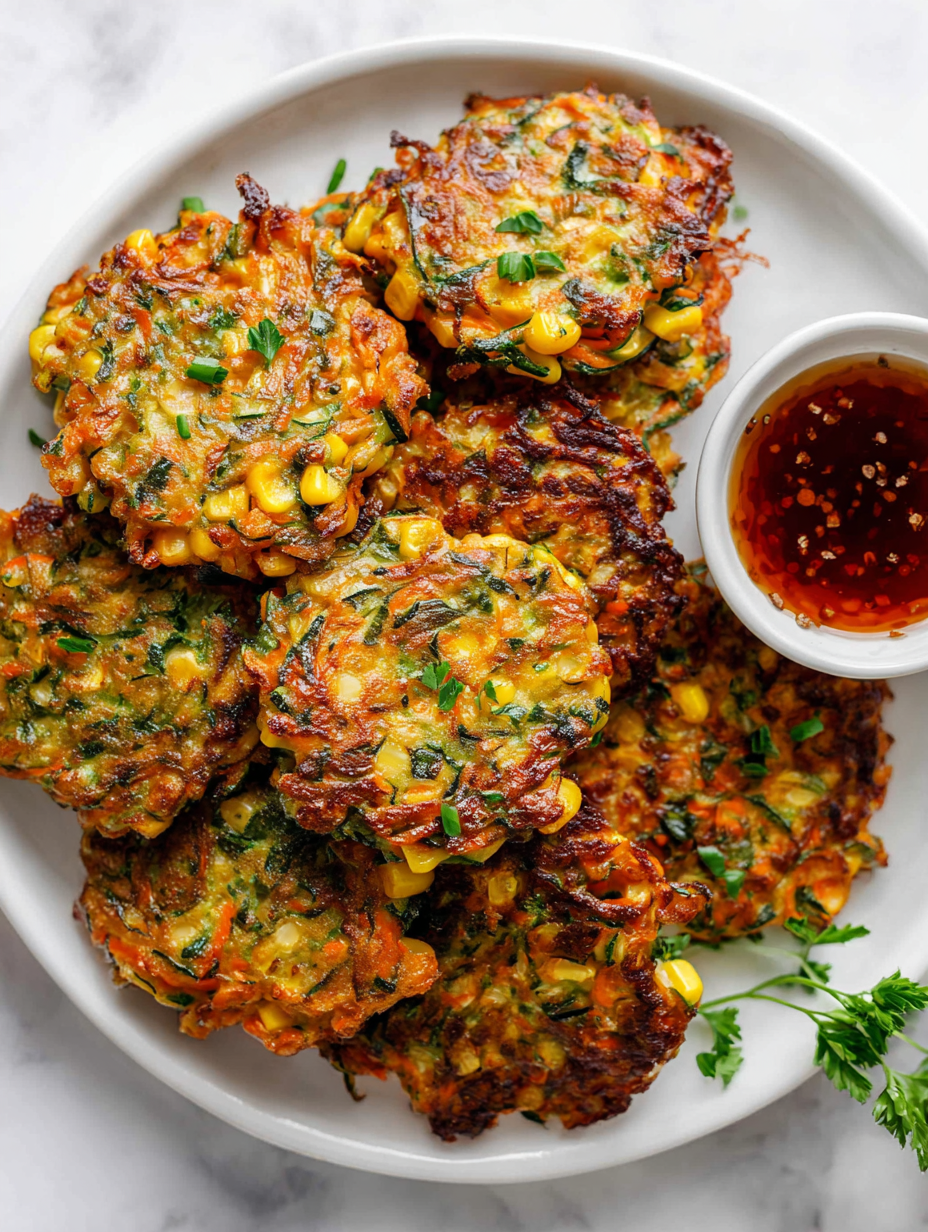
Vegetable Fritters
Ingredients
Equipment
Method
- Start by finely grating the zucchini and carrots, then transfer them to a clean towel and squeeze out the excess moisture. Finely dice the onion and add it to a large mixing bowl along with the grated vegetables.
- Pour in the beaten eggs and sprinkle the flour, chopped parsley, salt, and paprika over the vegetables. Gently fold everything together until the mixture is well combined and slightly sticky.
- Heat a few tablespoons of neutral oil in a frying pan over medium heat until shimmering and bubbling lightly. Using a spoon or your hands, scoop about 2 tablespoons of batter and gently form it into a flat patty in the pan.
- Cook the fritters for about 3-4 minutes on each side, watching for a golden-brown crust to develop and listening for a gentle sizzling sound. Carefully flip them with a spatula to cook evenly on both sides.
- Once the fritters are crisp and golden, transfer them to a paper towel-lined plate to drain excess oil. Repeat with the remaining batter, adding more oil to the pan as needed.
- Serve the vegetable fritters hot, garnished with fresh herbs or a squeeze of lemon for extra brightness. Enjoy their crispy edges and tender insides as a satisfying snack or light meal.
Pro tips for perfect vegetable fritters
- Bolded mini-head: Chill the grated vegetables briefly before mixing to reduce moisture and enhance crispness.
- Bolded mini-head: Use a gentle hand when mixing the batter—overmixing can make fritters dense instead of light.
- Bolded mini-head: Maintain consistent oil temperature (~160°C/320°F) for even browning and crispy edges.
- Bolded mini-head: Press gently on the batter when forming fritters to ensure even contact with hot oil and uniform cooking.
- Bolded mini-head: For extra crispiness, finish cooking in the oven at 180°C/350°F for 5 minutes after frying.
- Bolded mini-head: If fritters stick or fall apart, add a little more flour or chill the batter for 10 minutes before frying.
- Bolded mini-head: Use a slotted spatula to flip fritters carefully, keeping the shape intact and avoiding oil splatters.
Common mistakes and how to fix them
- FORGOT to squeeze excess moisture → Fritters turn soggy, drain vegetables thoroughly.
- DUMPED too much oil → Use enough for crispy edges, avoid greasy results.
- OVER-TORCHED the first batch → Lower heat to prevent burning while crisping.
- MIXED ingredients unevenly → Combine thoroughly for consistent texture and flavor.
Quick fixes and pantry swaps
- When fritters fall apart, gently reassemble with a little extra flour and press firmly before frying.
- Splash a few drops of water into hot oil if crackling diminishes—restores sizzling sound and crispness.
- Patch soggy fritters by baking at 180°C/350°F for 5 minutes—crisp outside, tender inside.
- DUMPED too much oil? Use paper towels to blot excess after frying for less greasiness.
- When ingredients are too wet, squeeze out moisture thoroughly or add a touch more flour to the batter.
Prep, store, and reheat tips
- You can grate and squeeze the vegetables a few hours ahead; keep them in an airtight container in the fridge. They’ll stay fresh and prevent sogginess.
- Assemble the batter up to a day in advance. Cover tightly and refrigerate; the flavors meld, and it’s ready to fry when you are.
- Fritters are best enjoyed fresh, but leftovers can last up to 2 days in the fridge. Reheat in a hot pan until crispy, about 2-3 minutes per side, with a hint of oil to revive crunch.
- Frozen cooked fritters keep for up to a month. Reheat directly from freezer in a hot oven (around 180°C/350°F) for 10 minutes until crisp and heated through, listening for that satisfying crackle.
Top questions about vegetable fritters
1. How do I keep the fritters crispy?
Use fresh, well-drained vegetables and squeeze out excess moisture to prevent sogginess in the fritters.
2. How hot should the oil be for frying?
Make sure the oil is hot enough (around 160°C/320°F) before adding batter to get a nice golden exterior.
3. What if the batter is too runny?
If your batter feels too loose, add a little more flour until it holds together better but isn’t too thick.
4. How do I flip the fritters without breaking them?
Use a slotted spatula to flip the fritters gently, ensuring they don’t break apart during cooking.
5. How long should I cook the fritters?
Cooking times vary depending on thickness, but typically 3–4 minutes per side until golden and firm.
6. Can I prep the ingredients in advance?
You can prepare the grated vegetables and batter a few hours ahead, storing them in the fridge to keep fresh.
7. How can I make these vegan?
For vegan options, replace eggs with a flaxseed or chia seed slurry—about 1 tbsp ground seeds mixed with 3 tbsp water.
8. Can I use frozen vegetables?
Frozen grated vegetables work well; just thaw and squeeze out excess moisture to prevent sogginess.
9. How should I store leftovers?
Leftover fritters can be stored in the fridge for 1–2 days, reheated in a hot pan until crispy again.
10. My fritters are soggy; what now?
If fritters are soggy after frying, reheat in a 180°C/350°F oven for 5 minutes until crispy and fragrant.
These vegetable fritters are a reminder that simple ingredients, when treated with a bit of care, can turn into something unexpectedly delightful. They’re perfect for those moments when you want to clear out the fridge without fussing over perfection.
In a season that celebrates fresh, vibrant produce, these fritters give you a way to enjoy the fleeting bounty while keeping things honest, rustic, and satisfying. They’re not just a snack—they’re a testament to turning odds and ends into comfort food.