
These veggie balls are all about that unexpected crunch. I love how the crispy exterior contrasts with the tender, almost creamy interior. It’s a texture that takes me straight back to childhood snacks, but with a modern veggie twist.
Baking keeps the crunch intact without the mess of frying, and the process is straightforward—no fuss, just honest, good ingredients coming together. It’s the kind of recipe that’s perfect for lazy weekend afternoons or quick weeknight bites when you want something satisfying and a little nostalgic.
Every time I make these, I’m reminded how simple ingredients can surprise you. The crunch might catch you off guard, but it’s the kind of surprise that makes you go back for seconds. They’re a little crunchy, a little tender, and honestly, just good food that feels like a treat.
Focusing on the unexpected crunch of baked veggie balls, highlighting the textural contrast between crispy exterior and tender interior, inspired by childhood snack memories.
Craving Crunchy Veggie Bites
- Making these veggie balls always takes me back to my grandma’s kitchen, where simple ingredients could surprise you.
- I get a real kick seeing how crispy the outsides become, especially when I forget to watch them in the oven.
- There’s a quiet pride in turning humble vegetables into something so satisfying, especially when kids finally dig in.
- Honestly, I love how versatile they are—dinner, snack, or even a quick lunch on busy days.
- Every batch reminds me that good food doesn’t have to be complicated or fancy, just honest and well-made.
The story behind this recipe
- This recipe was born out of a weekend craving for something crispy and veggie-packed, but I didn’t want to fuss with frying. I remembered how my childhood snacks had that perfect crunch, and I wondered if I could recreate that in a healthier way. Baking seemed the best option—less oil, less mess, more control.
- I started experimenting with different vegetables and binding agents, aiming for a texture that’s both tender and satisfyingly crisp. The surprise was how the simple act of roasting and baking could transform humble ingredients into something I actually looked forward to eating. It’s become a go-to for quick, nourishing bites that don’t feel like compromise.
- heading: The genesis of crunchy veggie bites
Trivia & Cultural Roots
- Veggie balls have roots in Mediterranean and Middle Eastern cuisines, where vegetable-based patties and croquettes are traditional snacks.
- This recipe draws inspiration from vegetarian street foods, adapted for oven-baking to suit modern, health-conscious cooks.
- The concept of transforming humble vegetables into crispy bites gained popularity in the early 2000s with the rise of plant-based diets.
- Many cultures have their version of veggie patties, but baking them for crunch is a more recent innovation, emphasizing health and ease.
Ingredient breakdown: key components
- Carrots: I love how their natural sweetness caramelizes slightly, adding a subtle smoky note—try grating a little zest to boost flavor.
- Chickpeas: They provide a hearty, nutty base that holds everything together; if you prefer a softer texture, mash them more thoroughly.
- Breadcrumbs: I prefer panko for extra crunch, but crushed gluten-free oats work well if you want a lighter bite—just watch for dryness.
- Eggs: They act as glue, but if you’re vegan, a flaxseed or chia seed slurry will do the trick; expect a slightly different binding quality.
- Garlic & Onion: Their aroma fills the kitchen and adds a punch—don’t skimp, but be mindful of burning them early in the process.
- Olive Oil: A splash helps the exterior crisp up beautifully; for a richer flavor, use a good extra virgin—just don’t drench the mixture.
- Herbs & Spices: Fresh parsley or cilantro brighten the mix, while paprika adds a smoky warmth—adjust to your taste and mood.
Spotlight on key ingredients
Carrots:
- I love how their natural sweetness caramelizes slightly, adding a subtle smoky note—try grating a little zest to boost flavor.
- Chickpeas: They provide a hearty, nutty base that holds everything together; if you prefer a softer texture, mash them more thoroughly.
Chickpeas:
- They provide a hearty, nutty base that holds everything together; if you prefer a softer texture, mash them more thoroughly.
- Breadcrumbs: I prefer panko for extra crunch, but crushed gluten-free oats work well if you want a lighter bite—just watch for dryness.
Notes for ingredient swaps
- Dairy-Free: Use a flaxseed or chia seed slurry instead of eggs. It may be slightly less firm but still binds well.
- Gluten-Free: Swap breadcrumbs for crushed gluten-free oats or almond flour for a coarser, nuttier crunch.
- Vegan: Replace eggs with a commercial egg replacer or more flaxseed/chia slurry. Expect a softer, slightly denser texture.
- Nut-Free: Omit nuts or nut-based ingredients; ensure spices and add-ins are nut-free to prevent cross-contamination.
- Extra Veggies: Add finely chopped zucchini or spinach for more moisture and color—just squeeze out excess water first.
- Herb Variations: Switch parsley for cilantro or basil for different fresh flavor profiles. Fresh herbs always brighten the bite.
- Oil Choices: Use toasted sesame oil for a smoky note or avocado oil for a milder flavor—both add subtle depth.
Equipment & Tools
- Large mixing bowl: Combine and mix ingredients thoroughly
- Grater: Shred carrots for even texture
- Baking sheet: Hold veggie balls during baking
- Silicone spatula or spoon: Mix and scoop mixture
- Oven: Bake the veggie balls evenly
Step-by-step guide to veggie balls
- Preheat your oven to 200°C (390°F). Line a baking sheet with parchment paper or silicone mat for easy cleanup.
- In a large bowl, combine grated carrots, mashed chickpeas, chopped herbs, minced garlic, and finely diced onion. Mix until well integrated.
- Add breadcrumbs, eggs (or flaxseed slurry), a splash of olive oil, salt, and pepper. Mix thoroughly until the mixture is cohesive but not sticky. If too wet, sprinkle in more breadcrumbs; if too dry, add a teaspoon of water or olive oil.
- Scoop about 2 tablespoons of mixture and roll into a ball. Place on the prepared baking sheet, spacing them about 2 inches apart. Repeat until all mixture is used.
- Bake in the preheated oven for 20–25 minutes. Halfway through, gently flip the veggie balls to ensure even crisping.
- Check for a golden-brown exterior and a firm but tender interior. The edges should be crispy, and the smell should be nutty with hints of garlic and herbs.
- If the veggie balls are not crisp enough, increase oven temperature to 220°C (430°F) and bake for an additional 5 minutes. For softer texture, reduce baking time slightly.
- Remove from oven and let rest for 5 minutes on the baking sheet. This helps the exterior set and prevents crumbling when serving.
- Serve warm with your favorite dipping sauce or atop a fresh salad. Garnish with extra herbs if desired.
Let the veggie balls rest for 5 minutes after baking. Serve warm, garnished with herbs or alongside dips. They’re best enjoyed fresh but can be stored in an airtight container for up to 2 days. Reheat in the oven at 180°C (355°F) for 5–7 minutes until crisp again.
How to Know It’s Done
- Exterior is golden and crispy, with a slight shimmer from olive oil.
- Interior feels tender but holds its shape when gently pressed.
- Aroma of roasted garlic, herbs, and caramelized veggies is fragrant and inviting.
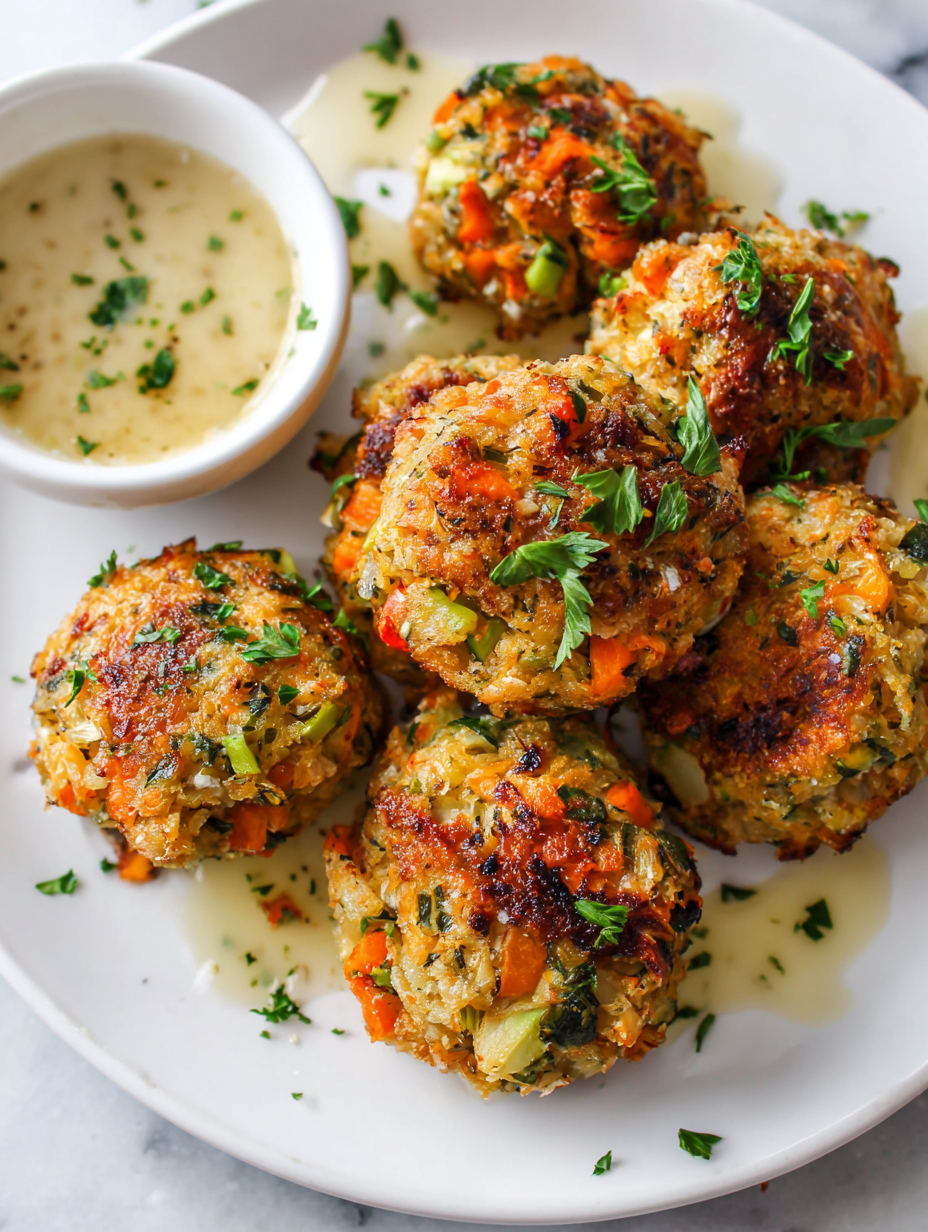
Crunchy Baked Veggie Balls
Ingredients
Equipment
Method
- Preheat your oven to 200°C (390°F) and line a baking sheet with parchment paper to prevent sticking.
- Using a grater, shred the carrots into a large mixing bowl until you have about 2 cups of grated vegetables. The fresh carrots will add natural sweetness and moisture.
- Add the mashed chickpeas to the bowl, breaking them apart with a spoon or fork to distribute evenly. They act as the hearty base that binds everything together.
- Stir in the minced garlic, finely diced onion, chopped herbs, and a pinch of salt and pepper. Mix until the ingredients are well combined and fragrant.
- Sprinkle in the panko breadcrumbs and add the egg (or flaxseed slurry). Use a spatula to fold everything together until the mixture is cohesive but still slightly sticky. If it feels too wet, add a bit more breadcrumbs; if too dry, stir in a teaspoon of water or olive oil.
- Using your hands or a scoop, take about 2 tablespoons of mixture and gently roll into a ball. Place each veggie ball on the prepared baking sheet, spacing them about 2 inches apart for even baking.
- Once all the veggie balls are shaped, drizzle or spray them lightly with olive oil to help achieve a crispy exterior during baking.
- Bake in the preheated oven for 20–25 minutes, flipping them gently halfway through. They should turn golden brown and emit a toasty aroma.
- Keep an eye on the veggie balls—if they look extra crispy and browned, you can bake an additional 2–3 minutes at 220°C (430°F) for an extra crunch.
- Remove the veggie balls from the oven and let them rest for 5 minutes to firm up, which makes them easier to serve without crumbling.
- Serve warm with your favorite dipping sauce or atop a salad, and enjoy the satisfying crunch and tender interior of these homemade veggie bites.
Pro tips for perfect veggie balls
- Crispy exterior: Use panko breadcrumbs for a light, airy crunch that holds up well during baking.
- Even baking: Space veggie balls evenly on the sheet and flip halfway to promote uniform crispness.
- Proper binding: Let the mixture rest for 5 minutes before shaping to ensure better cohesion and less crumbling.
- Oven temperature: Keep the oven at 200°C (390°F) and increase to 220°C (430°F) if you want extra crispness towards the end.
- Handling mixture: Moisten your hands slightly when rolling to prevent sticking and shape more smoothly.
- Cooling: Allow the veggie balls to rest for a few minutes after baking to firm up and avoid crumbling when serving.
- Flavor boost: Add a pinch of smoked paprika or fresh herbs to the mixture for an extra flavor dimension.
Common mistakes and how to fix them
- FORGOT to preheat the oven → Always preheat for even crispness.
- DUMPED in all ingredients at once → Mix ingredients gradually to prevent clumping.
- OVER-TORCHED the veggie balls → Bake until golden, not dark; watch for burnt edges.
- USED too much oil → Use just a splash for crisp exterior without greasiness.
Quick fixes and pantry swaps
- If the mixture feels too wet, splash in a bit more breadcrumbs to firm it up.
- When the veggie balls aren’t crisp enough, increase oven temp to 220°C (430°F) and bake briefly.
- Splash a little water or oil if the mixture is too dry and crumbly to shape smoothly.
- Patch a cracked veggie ball with a tiny bit of mixture and gently press to seal before baking.
- Shield over-browned veggie balls with foil and reduce oven temperature for a softer, more even bake.
Prep, store, and reheat tips
- Prepare the veggie mixture up to 1 day ahead; keep covered in the fridge to preserve freshness and prevent drying out.
- Shape the veggie balls and store them on a plate covered with plastic wrap for up to 24 hours; they may need a gentle reshaping before baking.
- Baked veggie balls can be refrigerated for 2 days; reheat in a 180°C (355°F) oven for 5–7 minutes until crispy and warmed through, watching for any loss of crunch.
- For longer storage, freeze the uncooked or cooked veggie balls in an airtight container for up to 1 month. Thaw in the fridge overnight before reheating or baking directly from frozen, adding a few extra minutes for baking.
Top questions about Veggie Balls
1. Can I use canned chickpeas instead of cooked ones?
Yes, using canned chickpeas works well; just rinse and mash thoroughly to avoid dryness.
2. Can I make these vegan or gluten-free?
Absolutely. You can swap gluten-free oats for breadcrumbs, but expect a slightly softer exterior.
3. My mixture is too wet—what do I do?
If the veggie mixture feels too sticky, add more breadcrumbs gradually until it firms up enough to shape.
4. How long and at what temperature should I bake them?
Bake at 200°C (390°F) for about 20-25 minutes, flipping halfway, until they’re golden and crispy.
5. Can I reheat leftovers without losing crunch?
Yes, they reheat nicely in the oven at 180°C (355°F) for about 5–7 minutes—check for crispness.
6. How can I boost the flavor of these veggie balls?
Adding a sprinkle of smoked paprika or fresh herbs like parsley can elevate the flavor beyond the basic mix.
7. Can I prepare these ahead and freeze them?
Yes, you can freeze uncooked or cooked veggie balls for up to a month; thaw overnight in the fridge.
8. Why aren’t my veggie balls crispy enough?
Ensure the oven is preheated before baking to get that crispy exterior—don’t skip this step.
9. What are good substitutes for breadcrumbs?
Use panko breadcrumbs for a lighter crunch, or crushed oats if you prefer a denser texture.
10. Can I add other vegetables for more flavor and moisture?
Incorporate finely grated zucchini or spinach for extra moisture and color—just squeeze out excess water first.
These veggie balls are a reminder that simple ingredients, when handled right, can surprise you with their crunch and flavor. They’re perfect for when you want a quick, satisfying bite that feels both nostalgic and fresh. I keep coming back to this recipe because it’s honest, easy, and always hits the spot.
Whether as a snack or part of a meal, they bring a bit of texture and brightness to the table. Making them feels like a small act of creativity—one that rewards with crispy edges and tender insides every time. Sometimes, the best comfort food is the simplest and most honest.