
When I first started making vegetable spring rolls, I was obsessed with getting that perfect crunch. It’s not just about freshness, but about balancing that crispy exterior with tender, almost juicy fillings. That contrast, to me, makes every bite satisfying and a little more special.
These rolls are a bit of a messy joy—crisp, chewy, and bursting with raw vegetable flavor. They remind me of lazy weekend afternoons when I’d gather bits from the fridge, trying to create something that felt lively and fresh without fussing over perfect presentation. It’s honest, straightforward cooking that celebrates texture and contrast, not perfection.
Honestly, mastering that balance took a few tries. I learned to slice everything thin, keep the filling chilled, and handle the rice paper with patience. It’s a simple dish, but the textures are what make it memorable—crisp veggies, chewy rice paper, and a hint of tangy dipping sauce. That harmony keeps me coming back to this recipe, season after season.
Focusing on the overlooked art of balancing textures—crisp, chewy, and tender—in vegetable spring rolls for a truly satisfying bite.
The overlooked art of texture balance
- Making these rolls reminds me of the chaos of my first kitchen attempts, where I learned to embrace messy, flavorful bites.
- I get a little nostalgic thinking about how simple ingredients can come together to create something lively and fresh on a busy weeknight.
- There’s a pride in mastering that perfect rice paper roll—crisp, tender, and just the right amount of filling spilling out.
The story behind this recipe
- Making these vegetable spring rolls started as a way to use up odds and ends in my fridge. I wanted something fresh, crunchy, and easy to assemble—no fuss, just real flavors. The idea of wrapping crisp veggies in delicate rice paper felt like a tiny celebration every time.
- I remember the first time I tried to roll them neatly—ended up with more filling on my plate than in the roll. But that messy, imperfect charm is what keeps me coming back. It’s honest, tactile cooking that celebrates the little wins: a perfect fold, a crackle of crispness, that first dip into tangy sauce.
- heading: The art of balancing textures
Contextual origin, trivia, or history
- Vegetable spring rolls have roots in Southeast Asian cuisine, especially Vietnam, where they’re called ‘gỏi cuốn’.
- Originally, these rolls were a way to preserve fresh ingredients before refrigeration was common, wrapping herbs and vegetables in rice paper.
- In some regions, they’re enjoyed as street food, assembled quickly and eaten with hands, making them a portable snack.
- The popularity of fresh spring rolls has spread globally, inspiring countless variations using different fillings and dipping sauces.
Key ingredients and their quirks
- Rice paper: I love how it feels delicate and slightly sticky—soaking it just right makes rolling easier, but don’t let it get too soft or it tears.
- Carrots: Thin julienne slices add a sweet crunch that gets even more vibrant when freshly shredded; skip pre-shredded for that crisp bite.
- Cucumber: I prefer seedless, thinly sliced cuke—bright, juicy, and a cooling counter to the other fillings, but peel if your skin is bitter.
- Fresh herbs: Basil and mint bring a fragrant punch—smell that herbal burst and add more if you want a fresher hit, but don’t overdo it or it overwhelms.
- Bean sprouts: They add a gentle crunch and a subtle nutty flavor—rinsed well, they stay crisp longer; if you don’t like raw sprouts, try lightly steaming them first.
- Tofu: Crispy pan-fried tofu chunks are optional but so satisfying—look for firm tofu, press out excess moisture, then fry until golden for that smoky aroma.
- Dipping sauce: Usually hoisin and peanut, they’re rich and slightly sweet—use a splash of lime juice for brightness or a dash of chili for heat, but keep it balanced.
Spotlight on key ingredients
Rice paper:
- I love how it feels delicate and slightly sticky—soaking it just right makes rolling easier, but don’t let it get too soft or it tears.
- Carrots: Thin julienne slices add a sweet crunch that gets even more vibrant when freshly shredded; skip pre-shredded for that crisp bite.
- Cucumber: I prefer seedless, thinly sliced cuke—bright, juicy, and a cooling counter to the other fillings, but peel if your skin is bitter.
Fresh herbs and bean sprouts:
- Fresh herbs: Basil and mint bring a fragrant punch—smell that herbal burst and add more if you want a fresher hit, but don’t overdo it or it overwhelms.
- Bean sprouts: They add a gentle crunch and a subtle nutty flavor—rinsed well, they stay crisp longer; if you don’t like raw sprouts, try lightly steaming them first.
Notes for ingredient swaps
- Dairy-Free: Coconut aminos instead of soy sauce for a subtly sweet, less salty flavor—skip the dairy and keep it vibrant.
- Gluten-Free: Rice noodles or vermicelli as a filling substitute for traditional rice paper—adds a soft, chewy texture, but skip if you want crunch.
- Vegan: Tofu or tempeh in place of shrimp or pork—soak up flavors beautifully and keep the rolls plant-based.
- Herbs: Cilantro or parsley instead of basil and mint—offers a different aromatic punch, but might alter the familiar freshness.
- Crunch: Toasted chopped nuts like peanuts or cashews instead of bean sprouts—adds a richer crunch, though slightly heavier.
- Sweetness: Honey or agave syrup in dipping sauce—brings a smooth sweetness, but reduce a bit to balance spicy elements.
- Vegetables: Bell peppers or radishes for carrots and cucumber—offer color and crunch, but with a different flavor profile.
Equipment & Tools
- Large shallow dish: For soaking rice paper gently and evenly
- Sharp knife: To slice fillings thinly and precisely
- Damp towel: To keep rice paper moist and workable
- Plate: For assembling and serving the rolls
- Small bowl of water: To seal edges of rice paper
Step-by-step guide to vegetable spring rolls
- Equipment & Tools: Gather a large shallow dish for soaking rice paper, a sharp knife for slicing, a clean damp towel, and a plate for rolling. Also, have a small bowl of water for sealing.
- Prepare fillings: Julienne carrots, thinly slice cucumber, finely chop herbs, and prep any optional proteins. Keep everything chilled for easy rolling.
- Soak rice paper: Submerge one sheet in warm water for about 10-15 seconds until just pliable. Don’t over-soak or it’ll tear. Lay flat on damp towel.
- Assemble: Place a small handful of fillings near the bottom third of the rice paper. Fold the sides inward, then roll tightly from the bottom, sealing the edge with a dab of water.
- Repeat: Continue soaking, filling, and rolling each sheet. Keep finished rolls covered with a damp towel to prevent drying out while you work.
- Finish and serve: Arrange the rolls on a platter. Serve immediately with dipping sauce. If needed, cover lightly with plastic wrap to keep freshness for up to an hour.
- Checkpoints: The rice paper should be translucent and slightly sticky, not torn. Fillings should be crisp and vibrant, not wilted. Rolls should be tight and sealed without gaps.
Arrange the rolls on a platter, cover lightly with a damp cloth if not serving immediately. Serve with your favorite dipping sauce and enjoy the fresh, crisp textures.
How to Know It’s Done
- Rice paper is translucent and slightly sticky, not soggy or tearing.
- Fillings stay crisp and colorful, not wilted or soggy.
- Rolls are tight, sealed, and hold together without falling apart.
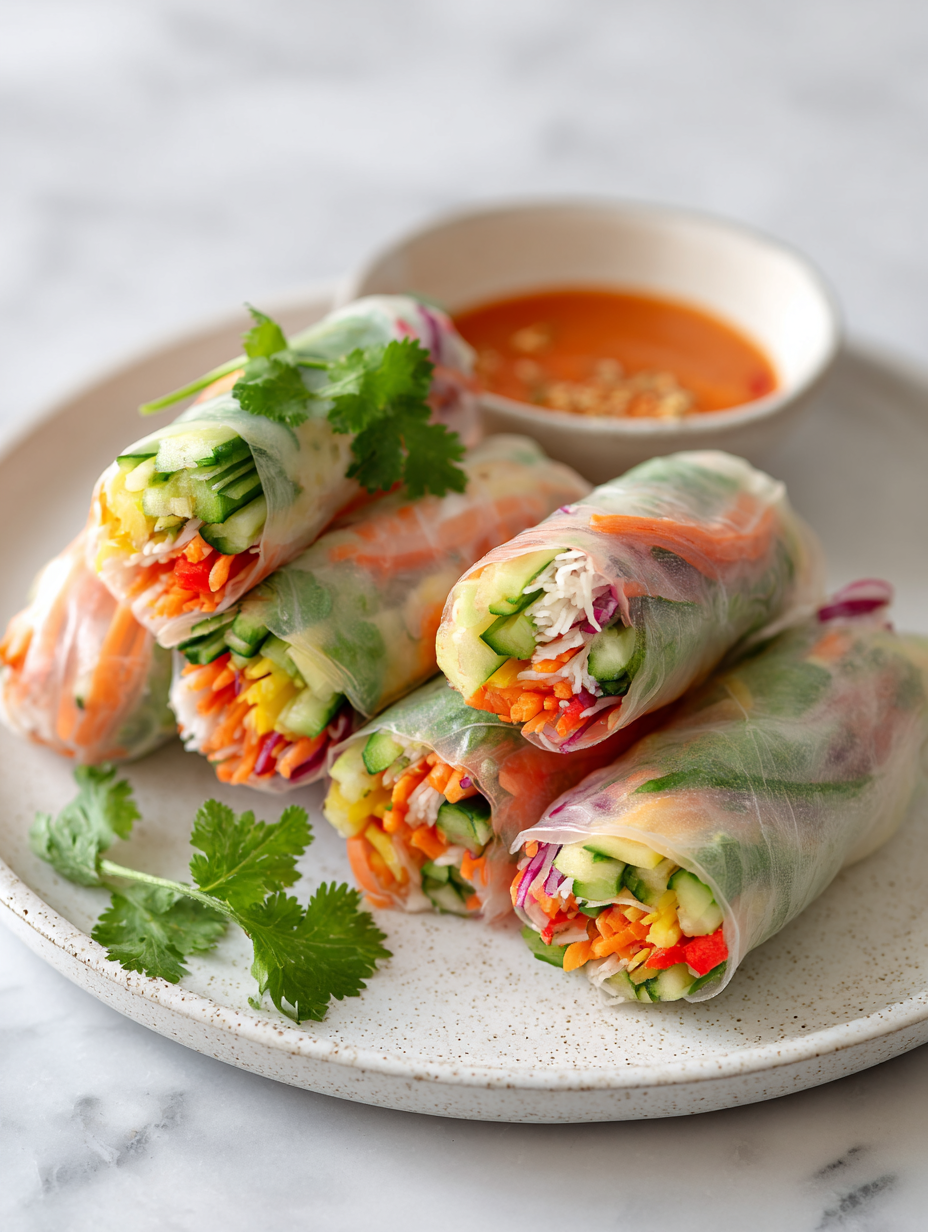
Vegetable Spring Rolls
Ingredients
Equipment
Method
- Gather all your fillings: julienne the carrots, thinly slice the cucumber, chop the herbs, and prepare the tofu by pressing out moisture and frying until golden brown. Keep everything chilled for crispness.
- Fill a large shallow dish with warm water and dip one rice paper sheet for about 10-15 seconds until it becomes just pliable and slightly sticky. Carefully lay it flat on a damp towel to prevent sticking.
- Place a small handful of julienned carrots, cucumber slices, herbs, bean sprouts, and a few pieces of tofu near the bottom third of the rice paper sheet. Keep fillings evenly distributed for balanced bites.
- Fold the sides of the rice paper inward over the fillings, then gently roll from the bottom, pressing firmly but gently to keep everything tight. Seal the edge with a dab of water to prevent unrolling.
- Continue soaking, filling, and rolling each sheet until all the ingredients are used. Cover finished rolls with a damp towel to keep them from drying out while you prepare the rest.
- Arrange the finished spring rolls on a serving platter. Serve immediately with hoisin peanut dipping sauce for a burst of flavor and texture contrast.
Pro tips for perfect spring rolls
- Use warm water for soaking rice paper — it becomes pliable without tearing. Keep it warm to avoid stickiness.
- Slice vegetables very thin — the crispness and ease of rolling depend on delicate cuts.
- Chill fillings before rolling — cold ingredients stay crunchier longer and prevent sogginess.
- Seal edges with a dab of water — it acts like glue, keeping rolls intact during handling.
- Handle rice paper gently — over-soaking or rough handling causes tears and cracks.
- Serve immediately or cover with a damp towel — moisture keeps the rolls fresh and crisp until served.
- Use a gentle, steady roll — don’t rush, or fillings spill out and rice paper tears.
Common mistakes and how to fix them
- FORGOT to keep rice paper damp → Dry rice paper tears easily, keep moist for flexibility.
- DUMPED fillings too quickly → Insert fillings gently, avoid overstuffing to prevent tearing.
- OVER-TORCHED the rice paper → Soak just until pliable; over-soaking causes tearing and stickiness.
- Rushed rolling process → Take your time, seal edges properly, and handle gently for neatness.
Quick fixes and pantry swaps
- When rice paper tears, splash it with warm water and gently smooth out the crackle.
- If fillings spill, patch by resealing with a dampened edge of rice paper and re-roll tightly.
- Over-soaked rice paper becomes sticky; soak only 10-15 seconds and handle with care.
- Dumps too much filling? Ditch excess, or it’ll burst; keep it light and snug.
- When rolls feel dry or sticky, shield with a damp towel and serve promptly for best crunch.
Prep, store, and reheat tips
- Prepare fillings like shredded vegetables and herbs a day in advance; keep refrigerated for up to 24 hours. Crispness stays intact, and flavors meld overnight.
- Soak rice paper just before assembling; it can dry out if left out. Store soaked sheets covered with a damp cloth for up to an hour if needed.
- Assembled rolls are best enjoyed fresh, but can be refrigerated for up to 2 hours. Wrap tightly with plastic wrap to retain moisture and prevent drying out.
- Reheat is not recommended; these are best eaten at room temperature or chilled for a refreshing crunch. If serving later, let rolls sit out for 10 minutes to regain some softness.
Top questions about spring rolls
1. How long should I soak the rice paper?
Use warm water, about 30°C (86°F), to soak rice paper for 10-15 seconds until just pliable. Over-soaking makes tearing more likely.
2. How do I keep fillings crisp before rolling?
Keep fillings cold, around 4°C (39°F), to maintain crunch and prevent sogginess. Assemble quickly to keep everything fresh.
3. How do I seal the spring rolls properly?
Seal the edges with a small dab of water to prevent the rolls from unwrapping. Handle gently and roll tightly.
4. What if my rice paper tears while rolling?
If rice paper tears, dip it again briefly in water, then gently patch the tear with extra rice paper or start over.
5. How long can I store finished spring rolls?
Serve immediately for the best crunch. If refrigerating, wrap tightly and consume within 2 hours to avoid sogginess.
6. Can I substitute different herbs in the filling?
Use fresh herbs like basil and mint for a fragrant burst. Feel free to swap with cilantro or parsley for different flavors.
7. Can I make these vegan or vegetarian?
To make vegan, skip animal proteins and add extra vegetables or tofu. Use soy or coconut aminos for flavor.
8. How can I add more crunch to the rolls?
For extra crunch, add chopped peanuts or cashews. Toast them lightly first for a richer flavor.
9. How do I cut the rolls without squishing them?
Use a sharp knife to cut rolls cleanly. Wet the blade slightly to prevent sticking and get neat edges.
10. What sauces go well with spring rolls?
Pair with a dipping sauce like hoisin, peanut, or a tangy lime-chili sauce. Adjust sweetness and spice to taste.
These spring rolls are more than just a fresh snack—they’re a reminder to slow down and enjoy the simple act of wrapping. The crisp vegetables and fragrant herbs make every bite lively and satisfying, especially when served with a tangy dipping sauce. They’re perfect for a quick lunch or a light appetizer that feels just right for this season.
In a busy world, taking the time to make something handmade like this brings a quiet sense of accomplishment. Plus, they’re endlessly adaptable—swap ingredients based on your mood or pantry—and always taste better when made with care. That balance of textures and fresh flavors keeps me coming back, no matter the occasion.