
Falafel is one of those dishes that seems simple at first glance but hides a lot of nuance beneath its crispy exterior. The secret to truly great falafel isn’t just in the chickpeas, but in how you balance the spices—each one adding its voice to the chorus. This recipe is about tuning into those flavors, understanding how cumin’s earthiness deepens, coriander’s citrus lifts, and chili’s heat warms from within.
I’ve always loved how falafel can be both a quick snack and a meal that takes some mindful attention. It’s a dish that invites you to experiment with spice blends, to taste as you go, and to make it your own. There’s a kind of satisfaction in mastering that perfect spice balance, knowing you’ve created something more than just a fried ball—it’s a crafted symphony of flavor that speaks to your palate.
Focusing on the unspoken craft of balancing spices in falafel, this recipe emphasizes the sensory journey of each spice blend—how cumin’s earthiness deepens, coriander’s citrus brightness lifts, and the subtle heat of chili warms from within. It’s about understanding how each ingredient plays its role in creating a symphony of flavor, not just following a list. This angle invites cooks to tune into their palate and craft falafel that’s uniquely theirs, beyond just the basic recipe.
The subtle art of spice balancing
- Making falafel from scratch always feels like reclaiming a piece of home, especially when the kitchen fills with warm, toasted spices.
- There’s a quiet pride in tweaking the spice blend until it hits that perfect balance—cumin, coriander, chili—and tasting it come alive.
- Nothing beats the smell of freshly fried falafel, crispy and golden, that instantly transports me back to street stalls in distant cities.
- I love how a simple batch can turn into a messy, joyful chaos—kneading the chickpeas, rolling, frying, all in a rhythm of its own.
- The first bite should crackle with crunch, then give way to a tender, herby core that’s just spicy enough to make you smile.
The soul of homemade falafel
- Making falafel from scratch always felt like a small rebellion—breaking away from those pre-made, bland options in the store. I remember the first time I tried to do it without a proper food processor; the chickpeas were stubborn, and I almost gave up. But that mess of a batch turned out to be the most delicious, because I learned to embrace the rough edges of the process. It’s become a kind of ritual, a way to reclaim something flavorful and real.
- There’s a quiet joy in grinding the spices fresh, in feeling the warmth of cumin and coriander fill the air, then frying that first crispy ball and hearing it crackle. It’s not about perfection; it’s about the messy, imperfect moments that lead to something memorable. This dish reminds me that sometimes, the best food is born from patience and a little bit of chaos, turning humble ingredients into a lively, fragrant feast.
- heading: ‘The soul of homemade falafel’
Falafel Trivia & Origins
- Falafel’s roots trace back over a thousand years, with early versions appearing in Middle Eastern street markets, where spices and herbs were as vital as the frying technique.
- Historically, falafel was a humble street food, made by vendors who perfected their spice blends over generations, turning simple chickpeas into a flavorful, portable snack.
- Some believe falafel originated as a vegetarian alternative to meat dishes in regions where meat was scarce, blending legumes and herbs into a satisfying bite.
- The spice mix in traditional falafel varies regionally—some add mint, parsley, or even a dash of cinnamon—each variation telling a local story of flavor and culture.
- In recent years, falafel has seen a global renaissance, moving beyond street stalls into upscale cafes, where chefs experiment with unusual herbs and spices to elevate the classic.
Key ingredients and tips
- Dried chickpeas: I prefer soaking overnight, then blitzing until grainy but not mushy—gives that authentic texture. Skip canned for best flavor.
- Fresh parsley: Brightens the falafel with a grassy, clean aroma. Chop finely to avoid greying or overpowering the chickpeas.
- Cumin: I love toasted cumin seeds for a smoky depth. If you’re in a rush, ground cumin works but loses some punch.
- Cilantro: Adds a fresh, citrusy note. If you dislike its soapy side, just reduce or omit, but it really lifts the flavor.
- Onion: Finely grated, it melts into the blend, adding a subtle sweetness. Avoid large chunks that can fall apart during frying.
- Baking soda: Just a pinch helps the falafel puff up. Be careful not to overdo, or they’ll turn into fluffy clouds rather than crispy bites.
- Sesame seeds: Toasted lightly, they add a nutty finish and extra crunch. Mix into the dough or sprinkle on top before frying for visual appeal.
Spotlight on key ingredients
Cilantro:
- Dried chickpeas: I prefer soaking overnight, then blitzing until grainy but not mushy—gives that authentic texture. Skip canned for best flavor.
- Fresh parsley: Brightens the falafel with a grassy, clean aroma. Chop finely to avoid greying or overpowering the chickpeas.
- Cumin: I love toasted cumin seeds for a smoky depth. If you’re in a rush, ground cumin works but loses some punch.
Onion:
- Sesame seeds: Toasted lightly, they add a nutty finish and extra crunch. Mix into the dough or sprinkle on top before frying for visual appeal.
- Finely grated, it melts into the blend, adding a subtle sweetness. Avoid large chunks that can fall apart during frying.
Notes for ingredient swaps
- Dried chickpeas: I prefer soaking overnight, then blitzing until grainy but not mushy—gives that authentic texture. Skip canned for best flavor.
- Fresh parsley: Brightens the falafel with a grassy, clean aroma. Chop finely to avoid greying or overpowering the chickpeas.
- Cumin: I love toasted cumin seeds for a smoky depth. If you’re in a rush, ground cumin works but loses some punch.
- Cilantro: Adds a fresh, citrusy note. If you dislike its soapy side, just reduce or omit, but it really lifts the flavor.
- Onion: Finely grated, it melts into the blend, adding a subtle sweetness. Avoid large chunks that can fall apart during frying.
- Baking soda: Just a pinch helps the falafel puff up. Be careful not to overdo, or they’ll turn into fluffy clouds rather than crispy bites.
- Sesame seeds: Toasted lightly, they add a nutty finish and extra crunch. Mix into the dough or sprinkle on top before frying for visual appeal.
Equipment & Tools
- Food processor: Grind chickpeas and herbs to coarse consistency.
- Large mixing bowl: Combine and rest the falafel mixture.
- Deep-fry thermometer: Maintain proper oil temperature for crispness.
- Slotted spoon: Remove falafel from hot oil safely.
- Paper towels: Drain excess oil and keep falafel crispy.
Step-by-step guide to falafel
- Equipment & Tools: Use a food processor to blitz soaked chickpeas until grainy, not smooth. Have a large mixing bowl, a spoon, a small scoop or spoon for shaping, and a deep-fry thermometer ready.
- Soak chickpeas in plenty of water overnight, then drain and dry thoroughly. This helps achieve the right texture.
- In the food processor, pulse chickpeas, onion, garlic, parsley, cilantro, cumin, coriander, chili, and salt until roughly combined—grainy, not mushy. About 10-12 pulses, scraping down sides.
- Transfer to a bowl, sprinkle in baking soda, and mix well. Let sit for 10 minutes to activate the leavening.
- Shape the mixture into small balls or patties, roughly 2 inches across. Keep hands damp to prevent sticking.
- Heat oil in a deep pan or wok over medium-high heat (~180°C / 350°F). Test with a small piece—if it sizzles and rises, it’s ready.
- Fry falafel in batches, turning occasionally, until golden brown and crispy—about 3-4 minutes. Look for even color and crackling sound.
- Remove with a slotted spoon, drain on paper towels, and rest for 2-3 minutes to settle the crust.
- Serve hot with pita, tahini, or fresh herbs. Resting helps the flavors meld and keeps the falafel crispy when plated.
Let the fried falafel rest on paper towels for a couple of minutes to settle. Serve immediately with your favorite sides or in pita with toppings.
How to Know It’s Done
- Color: Deep golden exterior, crackling sound during frying.
- Texture: Crispy outside, tender inside when pressed gently.
- Appearance: Uniform size and shape, no raw or undercooked spots.
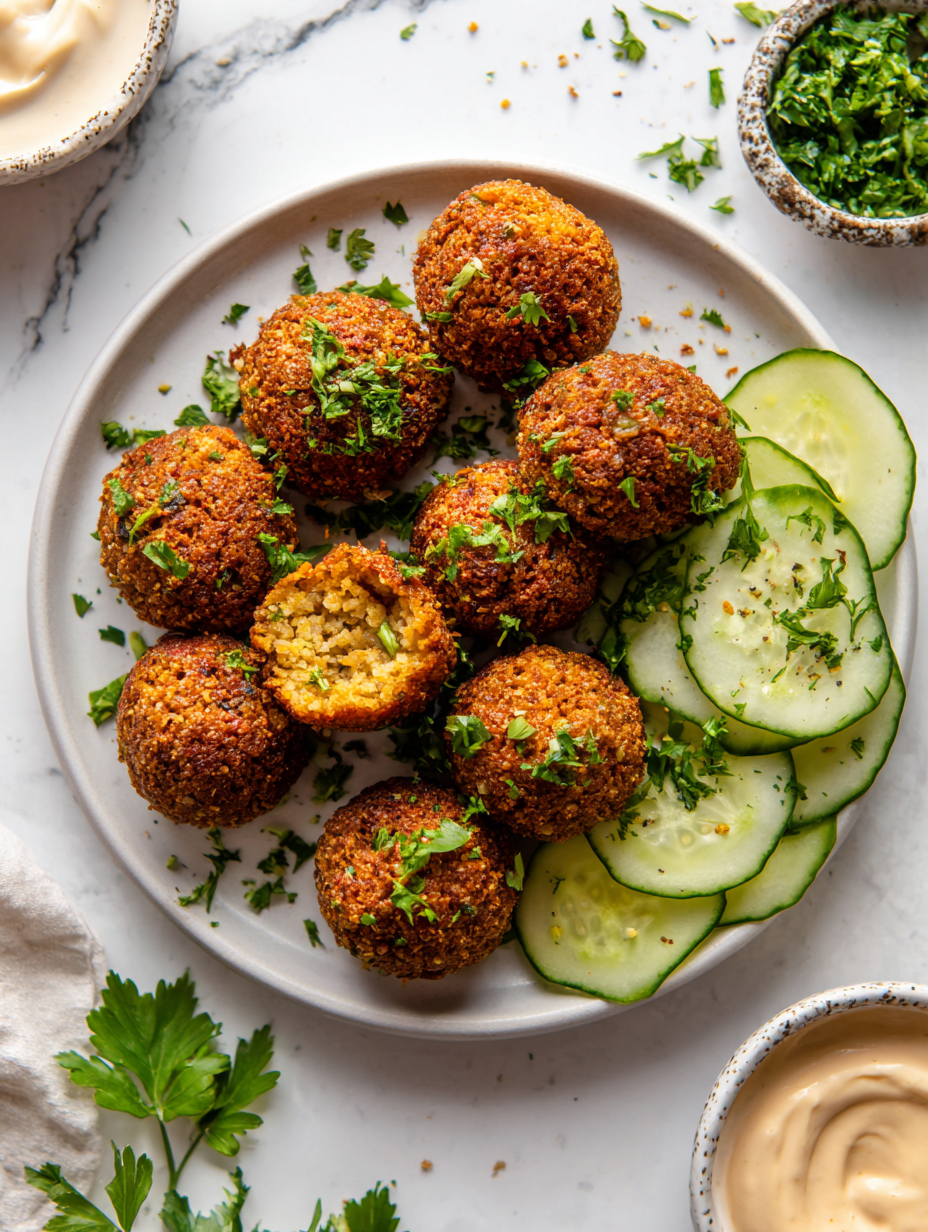
Homemade Falafel
Ingredients
Equipment
Method
- Start by soaking dried chickpeas overnight in plenty of water. Drain well and pat dry, then transfer to a food processor.
- Pulse the chickpeas until roughly chopped and grainy—avoid a smooth paste to maintain texture. Transfer to a large mixing bowl.
- Add the finely chopped parsley, cilantro, grated onion, minced garlic, cumin, coriander, chili powder, and a pinch of salt to the chickpeas. Mix well to combine.
- Sprinkle in the baking soda and stir into the mixture. Let sit for about 10 minutes—this helps the spices activate and the mixture relax.
- Shape the mixture into small balls or patties about 2 inches across, keeping your hands damp to prevent sticking.
- Heat the vegetable oil in a deep pan or wok to about 180°C (350°F). Use a thermometer to keep the temperature steady.
- Carefully lower the shaped falafel into the hot oil using a slotted spoon. Fry in small batches, turning occasionally, until golden brown and crispy—about 3 to 4 minutes.
- Once golden and crispy, remove the falafel with a slotted spoon and drain on paper towels. Repeat with remaining portions.
- Let the fried falafel rest for a couple of minutes to settle, then serve hot with pita, tahini, or fresh herbs for a satisfying meal.
Notes
Pro tips for crispy falafel
- Bolded mini-head: Use a food processor to pulse chickpeas until grainy—avoid over-blending for the best texture.
- Bolded mini-head: Keep the oil at steady 180°C (350°F)—use a thermometer for consistent crispiness.
- Bolded mini-head: Rest the shaped falafel for 10 minutes before frying—this helps keep their shape and improves crunch.
- Bolded mini-head: Test a small piece first—should crackle and turn golden within 3 minutes to confirm perfect oil temp.
- Bolded mini-head: Dampen hands when shaping—prevents sticking and gives even, smooth balls or patties.
- Bolded mini-head: Fry in small batches—crowding reduces oil temperature, leading to soggy falafel.
- Bolded mini-head: Drain on paper towels immediately—keeps falafel crispy and prevents excess oil absorption.
Common falafel mistakes and how to fix them
- FORGOT to dry chickpeas after soaking? Pat them thoroughly to prevent splattering during frying.
- DUMPED the oil at too high a heat? Lower to 180°C / 350°F for even crispness.
- OVER-TORCHED the falafel? Reduce heat and cook in smaller batches for uniform golden color.
- MISSED the resting time? Let fried falafel sit for 2 minutes to settle and stay crispy.
Quick fixes and pantry swaps
- When oil shimmers, splash a tiny bit of water—if it crackles, you’re ready to fry.
- If falafel sticks to hands, dampen palms to shape smoothly.
- Splash a few drops of lemon juice into tahini if it’s too thick or bitter.
- Patch over a small tear in the falafel with a bit of extra mixture—keeps it intact during frying.
- Shield from smoke and splatter by gently lowering falafel into hot oil from a spoon.
Prep, store, and reheat tips
- Prep the mixture: Soak chickpeas overnight, then pulse with herbs and spices until grainy—this saves time and ensures proper texture.
- Shape the falafel balls ahead: Form into shape and refrigerate on a tray covered with plastic wrap for up to 24 hours; keeps them firm and ready to fry.
- Store cooked falafel: Keep in an airtight container in the fridge for up to 3 days. Reheat in a hot oven or skillet until crispy, with a crackling sound and warm aroma.
- Freeze for longer storage: Arrange uncooked falafel balls on a baking sheet, freeze until solid, then transfer to a sealed bag—good for up to 1 month. Fry directly from frozen, adding a minute or two.
- Reheating tips: Reheat in a hot skillet with a splash of oil until they shimmer and crackle, restoring crispness and fragrant warmth without drying out.
Top questions about falafel
1. Can I use canned chickpeas?
Use dried chickpeas soaked overnight for the best texture. Canned chickpeas make the mixture too soft and damp, resulting in fall-apart falafel.
2. Can I use canned chickpeas?
Yes, soaking them thoroughly and drying well helps achieve the right grainy texture. Skip rinsing canned chickpeas for authentic flavor.
3. How do I know when the oil is ready?
Fry falafel in oil heated to about 180°C (350°F). Look for a crackling sound and golden color. Too hot, and they burn; too cool, and they get greasy.
4. How big should the falafel be?
Shape your falafel into small balls or patties about 2 inches across. Keep your hands damp to prevent sticking and ensure even shapes.
5. Should I rest the falafel before frying?
Rest shaped falafel for about 10 minutes before frying. This helps them hold their shape and crispen evenly.
6. Why add baking soda?
Add a pinch of baking soda to the mixture. It helps the falafel puff up and become fluffy inside while staying crispy outside.
7. Can I skip the herbs?
Use fresh parsley and cilantro for vibrant flavor. Chop finely so herbs distribute evenly and don’t overpower the chickpeas.
8. How many falafel can I fry at once?
Fry in small batches to keep the oil temperature steady. Overcrowding lowers the heat, resulting in soggy falafel.
9. Should I drain the falafel after frying?
Drain cooked falafel on paper towels immediately after frying. Rest for a few minutes to let the crust settle before serving.
10. How do I reheat falafel?
Reheat leftovers in a hot oven or skillet until crispy and warm. Avoid microwaving, which makes them soggy and limp.
Making falafel from scratch is a reminder that great flavor comes from patience and a bit of mess. Each batch is a small victory, especially when those crispy outsides crackle just right and the herbs inside burst with freshness. It’s a dish that keeps inviting me back, season after season.
In a world rushing toward quick fixes, this recipe offers a slow, satisfying process—one that ends with a warm, fragrant bite that feels worth every minute. Whether in the middle of a weekday or a lazy weekend, falafel remains a humble reminder of how good simple, honest food can be.