
Frying onion bhajis fills the kitchen with a scent that instantly drags me back to my childhood, sitting on a bustling street corner in Mumbai. It’s that warm, smoky aroma of spices mingling with the sweet sharpness of onions that turns even a dull afternoon into a moment of nostalgia. There’s something about those smells that feels like a secret handshake from the past, a reminder of lazy weekends and simple pleasures.
Making these crispy bites is more than just following a recipe; it’s about capturing that sensory magic. The process of transforming raw onions into golden, crackling treats is a small act of joy, a kind of meditative ritual that makes the house smell like home. When the oil starts to shimmer and crackle, I know I’m about to recreate a little piece of my childhood, no matter where I am now.
Focusing on how the scent of frying onion bhajis can instantly evoke childhood memories, transforming the kitchen into a nostalgic haven while highlighting the sensory journey from raw onion to crispy snack.
The scent of childhood
- The smell of frying onion bhajis instantly takes me back to lazy Sunday afternoons at my grandma’s house, where every bite was a tiny celebration.
- I find a strange comfort in the chaotic sizzle of onions hitting hot oil—it’s a messy, addictive process that always makes me smile.
- There’s a pride in perfecting the crispy edge—after years, I finally got that elusive crunch that makes them irresistible.
- Watching the batter turn a deep, golden amber is oddly soothing, a small reminder that patience in the kitchen pays off.
- Sharing these with friends feels like passing on a secret, a spicy, crunchy secret that makes everyone smile.
The story behind this recipe
- My first memory of onion bhajis is from a rainy afternoon in a tiny Indian street stall. The sizzling sound, the spicy aroma wafting through the air—those moments felt like a secret only I knew. Years later, I realized how much I craved that perfect crispy edge and the tender onion inside, and I set out to recreate it at home.
- There’s a kind of magic in the messy process—chopping onions until they shimmer with moisture, mixing a batter that feels like a loose, spicy cloud, then watching the oil turn into a bubbling, crackling frenzy. Each fry is a small adventure, a moment to forget the world outside and focus on that sizzle, that smell, that satisfying crackle of crispy goodness.
- heading
- story_type
Trivia and Origins
- Onion bhajis have roots in Indian street food, where vendors would fry spiced onion batter over open flames, creating irresistible snacks that traveled well.
- The dish likely traveled from Indian subcontinent to Britain during colonial times, where it evolved into the crispy, deep-fried snack loved today.
- In the UK, onion bhajis became a staple in fish and chip shops, blending British pub snacking with Indian flavors—an accidental fusion born of convenience and craving.
Ingredient breakdown
- Onions: I prefer yellow onions for their balanced sweetness and sharpness, which become oozy and fragrant when fried—skip the milder varieties if you want that punch of flavor.
- Chickpea flour: It gives the bhajis a crispy, smoky crunch—try rice flour if you’re avoiding chickpeas, but expect a slightly lighter bite.
- Spices: Cumin, coriander, turmeric—these warm the batter with earthy aroma and color. Adjust to your taste, but don’t skip the turmeric; it adds a golden hue and depth.
- Water: I keep the batter just loose enough to coat the onions—if it’s too thick, they’ll be greasy; too thin, they won’t hold together—test by dipping a spoon.
- Oil: Use a neutral oil with a high smoke point like vegetable or sunflower. When shimmering and crackling, it’s ready—if it smokes excessively, turn down the heat.
- Salt: I add it to balance the spices, but taste the batter before frying—over-salted batter can overshadow the onion’s natural sweetness.
- Optional herbs: Fresh coriander adds a burst of green and freshness—skip if you prefer a more straightforward, onion-forward bite.
Spotlight on key ingredients
Onions:
- I prefer yellow onions for their balanced sweetness and sharpness, which become oozy and fragrant when fried—skip the milder varieties if you want that punch of flavor.
- Chickpea flour: It gives the bhajis a crispy, smoky crunch—try rice flour if you’re avoiding chickpeas, but expect a slightly lighter bite.
Spices and Oil:
- Spices: Cumin, coriander, turmeric—these warm the batter with earthy aroma and color. Adjust to your taste, but don’t skip the turmeric; it adds a golden hue and depth.
- Oil: Use a neutral oil with a high smoke point like vegetable or sunflower. When shimmering and crackling, it’s ready—if it smokes excessively, turn down the heat.
Notes for ingredient swaps
- Dairy-Free: Use a plant-based yogurt or omit altogether for a lighter, dairy-free bite that still crisps up well.
- Gluten-Free: Swap regular chickpea flour for a certified gluten-free blend; the texture might be slightly denser but still tasty.
- Vegan: Ensure any spices or herbs are vegan-friendly; no eggs or dairy are needed for this batter.
- Spice Level: Add chili powder or fresh chopped green chilies for more heat, or skip for a milder snack.
- Onion Type: Use red onions for a sweeter, milder flavor, or shallots for a more delicate, tender bite.
- Oil Choice: Use sesame or coconut oil for distinct aroma and flavor—watch their smoke points, adjust heat accordingly.
- Herbs & Extras: Fresh cilantro or mint can brighten up the flavor—skip if you want a straightforward onion punch.
Equipment & Tools
- Large mixing bowl: For mixing the batter and coating onions
- Sharp knife: To thinly slice onions precisely
- Slotted spoon: To scoop and drain fried bhajis
- Heavy-bottomed pan or deep fryer: For even, consistent frying at high heat
- Kitchen thermometer: To monitor oil temperature accurately
- Paper towels: To drain excess oil from fried bhajis
Step-by-step guide to onion bhajis
- Equip your station with a large mixing bowl, a sharp knife, a slotted spoon, and a heavy-bottomed pan or deep fryer. The bowl is for mixing, the knife for slicing, the spoon for scooping, and the pan for frying.
- Peel and thinly slice 2 large yellow onions. Aim for about 2mm thickness—think paper-thin, so they cook evenly and get crispy.
- In the bowl, combine 1 cup chickpea flour, 1 teaspoon cumin, 1 teaspoon coriander, 1/2 teaspoon turmeric, and a pinch of chili powder if you like heat. Mix well.
- Add the sliced onions to the bowl. Toss to coat thoroughly with the spice and flour mixture. The onions should feel slightly sticky and coated, not dry.
- Pour in about 1/4 cup cold water gradually, mixing as you go. The batter should be loose but hold together when you scoop. If it’s too runny, sprinkle in a little more chickpea flour; if too thick, add a splash more water.
- Heat your oil in the pan over medium-high heat (~180°C / 350°F). To check if ready, drop in a small piece of batter—if it sizzles and rises quickly, you’re good to go.
- Once hot, use a spoon or your hands to scoop small portions of the batter, roughly 2 tablespoons each. Gently slide them into the oil—don’t overcrowd the pan.
- Fry for about 3-4 minutes per batch, turning occasionally. Look for deep golden brown and crispy edges. The smell should be smoky, spicy, and inviting.
- Use a slotted spoon to lift out the bhajis. Drain on paper towels to remove excess oil. If they’re not crispy enough, increase the heat slightly and fry a little longer.
- Let the fried bhajis rest for 1-2 minutes before serving. They should be crackling, tender inside, with a golden exterior.
Let the bhajis sit briefly on paper towels to drain excess oil. Serve hot with chutney or yogurt. They’re best enjoyed immediately while crackling and warm, but can be kept warm in a low oven for 10-15 minutes.
How to Know It’s Done
- Batter holds loosely on the spoon and sizzles immediately in hot oil.
- Bhajis turn a deep, even golden brown without burning edges.
- They crackle when touched, indicating crispiness and proper frying temperature.
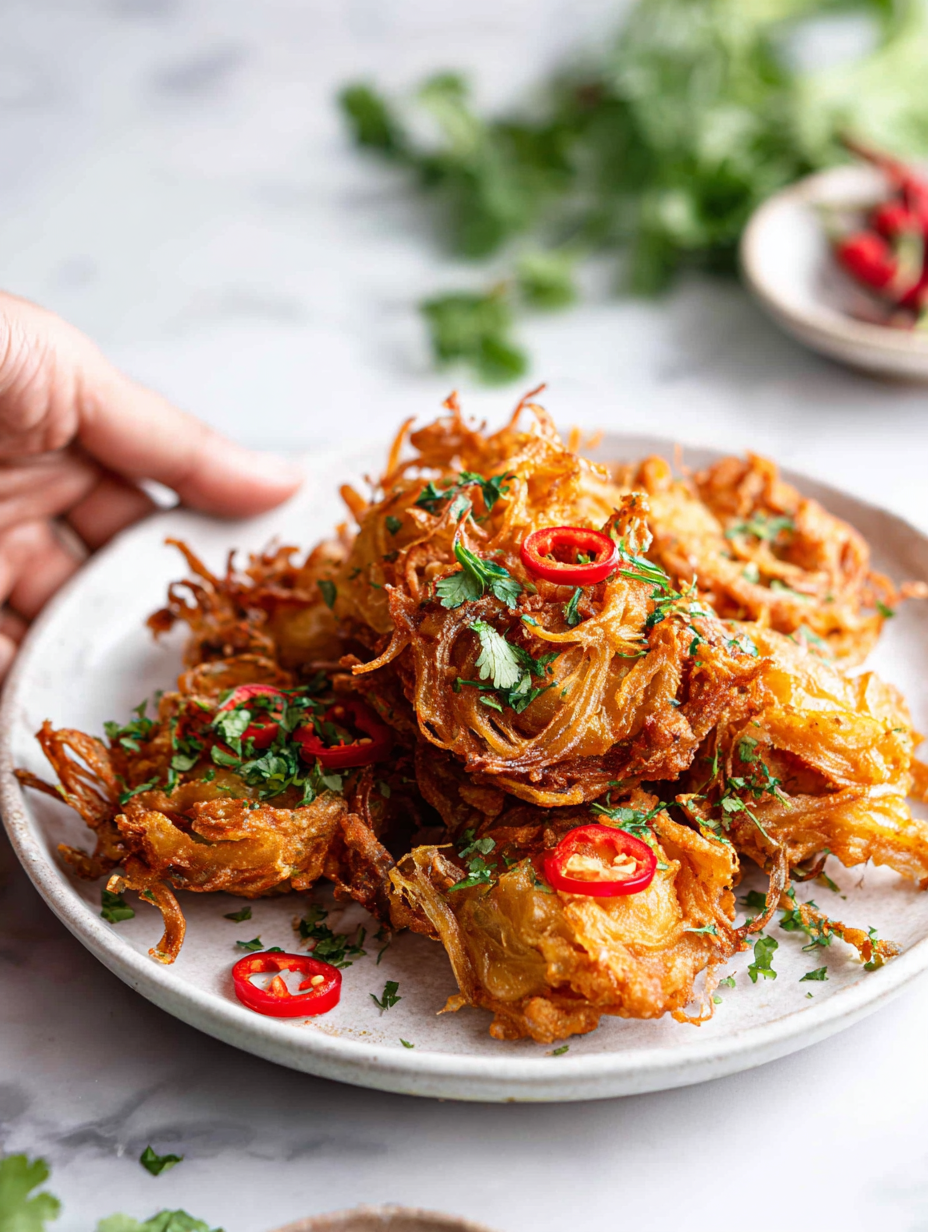
Crispy Onion Bhajis
Ingredients
Equipment
Method
- Peel the onions and thinly slice them to about 2mm thickness, aiming for almost paper-thin slices that will crisp nicely when fried. Set aside in a large mixing bowl.
- In the same bowl, add the chickpea flour, ground cumin, coriander, turmeric, and chili powder if using. Mix these spices into the flour to create an aromatic, evenly combined dry mixture.
- Pour the cold water gradually into the spice and flour mixture, stirring gently to coat the onions evenly. The batter should be loose but hold together when scooped—add more water if needed, or a little extra chickpea flour if too runny.
- Season with salt to taste and add chopped fresh coriander if desired. Mix everything thoroughly until the onions are well coated with the batter, feeling slightly sticky but not wet.
- Heat the oil in a heavy-bottomed pan or deep fryer to about 180°C (350°F). To test if the oil is ready, drop in a small spoonful of batter—if it sizzles and rises to the surface quickly, the oil is hot enough.
- Using a spoon or your hands, scoop about 2 tablespoons of batter and gently slide it into the hot oil. Be careful not to overcrowd the pan, as this can lower the temperature and lead to greasy bhajis.
- Fry the bhajis for 3-4 minutes, turning occasionally, until they are deep golden brown and crispy on the edges. You should hear a gentle crackling sound and smell a fragrant, spicy aroma.
- Use a slotted spoon to lift out the crispy bhajis and drain on paper towels to remove excess oil. Continue frying the remaining batter in batches, maintaining the oil temperature.
- Let the fried bhajis rest for a minute or two, then serve hot with chutney or yogurt. Their crackling exterior and tender, aromatic onion interior make them irresistible.
Pro tips for perfect onion bhajis
- Bolded mini-head: Use a gentle hand when mixing the batter—overworking can make bhajis dense instead of crispy.
- Bolded mini-head: Maintain oil temperature around 180°C (350°F) for even crispiness; too hot and they burn, too cool and they get greasy.
- Bolded mini-head: Add water gradually to the batter—if it’s too runny, add more chickpea flour; if too thick, splash in a little more water.
- Bolded mini-head: For maximum crunch, fry in small batches—overcrowding drops the oil temperature and softens the bhajis.
- Bolded mini-head: Use a slotted spoon to gently lower batter scoops into oil—avoid splashing to prevent burns and uneven frying.
- Bolded mini-head: Let fried bhajis rest briefly on paper towels—this helps drain excess oil and keeps them crisp.
- Bolded mini-head: For extra flavor, sprinkle a pinch of flaky sea salt immediately after frying—this enhances the savory punch.
Common mistakes and how to fix them
- TOO MUCH ONION: Use finely sliced onions to avoid soggy bhajis; too thick slices lead to uneven cooking.
- DUMPED BATTER: Ensure batter is loose but not runny; too thick or thin ruins texture and frying process.
- OVER-TORCHED OIL: Keep oil temperature steady around 180°C (350°F); too hot burns exterior, raw inside.
- UNDERSALTED: Taste the batter before frying; too little salt makes bhajis bland, too much overwhelms onion flavor.
Quick kitchen fixes
- If oil smokes excessively, splash in a bit of water to calm the heat.
- When batter feels too thick, add a splash of cold water to loosen it.
- Splash cold water on hot oil if the crackling noise stops suddenly.
- DUMPED batter? Mix in a little more chickpea flour for better coating.
- When bhajis are soggy, immediately increase oil heat and fry briefly again to crisp.
Prep, store, and reheat tips
- Prep the sliced onions and batter mixture a few hours in advance; keep refrigerated to preserve freshness and prevent oxidation, which can turn onions brown and alter flavor.
- Store leftover cooked bhajis in an airtight container in the fridge for up to 2 days. Reheat in a hot oven (around 180°C / 350°F) until crispy and fragrant, about 5-7 minutes, watching for that crackling sound to return.
- Uncooked batter can be frozen for up to a month—thaw overnight in the fridge before frying. Expect a slightly denser texture, but still good for a quick snack.
- Reheating fried bhajis in the microwave isn’t ideal—they tend to soften quickly. For best results, crisp them up again in the oven or a toaster oven, checking often for that sizzling, golden crunch.
Top questions about onion bhajis
1. What oil is best for frying onion bhajis?
Use a neutral oil like vegetable or sunflower for frying; it handles high heat well and doesn’t overpower the flavors.
2. Can I substitute chickpea flour?
Yes, rice flour or cornstarch can be used as a substitute for chickpea flour, but expect a lighter, less smoky crunch.
3. How thin should the onions be sliced?
Finely slice your onions, aim for almost paper-thin slices to ensure they cook evenly and get crispy.
4. How do I know when the oil is hot enough?
Keep the oil around 180°C (350°F). When a small batter piece sizzles and rises quickly, it’s ready for frying.
5. How many can I fry at once?
Fry small batches to avoid overcrowding; this keeps the oil temperature steady and results in crisp bhajis.
6. How should I reheat leftover bhajis?
Serve immediately for the crispiest texture. If needed, reheat in an oven at 180°C (350°F) until sizzling again.
7. Can I add herbs or other ingredients?
Use fresh coriander or mint for a bright, herbal contrast. Skip if you want a straightforward, onion-forward bite.
8. How much should I mix the batter?
Over-mixing can make the batter dense. Mix until just combined to keep the bhajis light and crispy.
9. What consistency should the batter be?
Ensure the batter is loose but not runny—test by dipping a spoon; it should coat but not drip excessively.
10. How do I safely fry the bhajis?
Use a slotted spoon to gently lower batter scoops into hot oil to avoid splashes and burns.
The aroma of crispy onion bhajis just might pull you back to simpler times, or inspire a new tradition in your own kitchen. There’s a messy charm to frying them—watching the batter bubble and turn that perfect golden hue is oddly satisfying. It’s a small act of patience that rewards with a crackling, spicy crunch that’s hard to beat.
Even if they don’t turn out perfect every time, the process itself feels worth it—more than just a snack, it’s a nostalgic escape and a reminder that good food is often about the little, imperfect moments. These bhajis are best enjoyed hot, with a squeeze of lemon or a dollop of yogurt, straight from the pan to your plate.