Chickpea fritters might seem like a simple snack, but for me, they’re a bowl of childhood comfort. My grandma’s kitchen always smelled of cumin and warm chickpeas, and those crispy bites were a staple at our Sunday lunches. Over the years, I realized these fritters can be both nostalgic and adaptable—perfect for anyone craving something hearty without the fuss.
What I love most is how these fritters bridge the gap between tradition and modern eating habits. They’re naturally plant-based, filling, and versatile enough to serve for breakfast, lunch, or a casual snack. Making them feels like reconnecting with a piece of my past, but tweaking the recipe for today’s tastes. It’s honest, unpolished comfort in every crispy bite.
Focusing on how chickpea fritters can be a nostalgic comfort food that also adapts to modern dietary needs, offering a satisfying bite that bridges tradition and health-conscious eating.
Nostalgic bites with a modern twist
- These fritters remind me of lazy weekend mornings at my grandma’s, smelling of cumin and warm chickpeas.
- I get a little thrill every time I hear that satisfying crackle as they hit the hot oil—like a tiny celebration.
- There’s a quiet pride in turning a humble can of chickpeas into something crispy and flavorful that everyone loves.
- Sometimes, I toss in a dash of smoked paprika just to bring a smoky warmth that lingers in every bite.
- Making these feels like a small act of rebellion—simple, honest, and totally satisfying.
The story behind this recipe
This recipe came about during a particularly chaotic week when I craved something familiar and easy to throw together. I remembered how my aunt used to fry chickpeas with just a few pantry staples, turning them into crispy, golden bites that seemed to fix everything. It’s funny how a simple snack can feel like a warm hug after a long day, especially when it’s made with a handful of ingredients that I always keep on hand. Now, I make these fritters whenever I need a quick boost of comfort or a way to clear out the fridge.
Historical & Cultural Roots
- These chickpea fritters likely originated in Middle Eastern or Mediterranean cuisines, where chickpeas have been a staple for centuries.
- Historically, they were a humble street food, cooked over open flames and sold fresh from market stalls, capturing the vibrant street food culture.
- In recent years, they’ve become a beloved plant-based snack worldwide, especially with the rise of vegan and vegetarian diets, blending tradition with modern health trends.
Key Ingredients and Tips
- Canned chickpeas: I mash these until almost smooth, but a few chunks give texture—skip this step if you prefer silkier fritters.
- Fresh parsley: Brightens the flavor with a fresh, grassy note. Feel free to swap with cilantro for a different herbal punch.
- Garlic: I use minced garlic for a punch of warmth, but roasted garlic adds a mellow sweetness—try it for a richer taste.
- Cumin: Adds earthy warmth and a smoky aroma—if you’re out, a pinch of smoked paprika works nicely as a stand-in.
- Flour: I prefer all-purpose for a crispy exterior, but chickpea or gluten-free flour makes them more tender—play with the texture.
- Oil for frying: I use neutral oil like vegetable or canola, but if you want more flavor, try ghee or coconut oil for a subtle aroma.
- Lemon juice: Brightens everything with a zing—skip it if you want milder tasting fritters, but don’t skip the zest for extra brightness.
Spotlight on key ingredients
Chickpeas:
- Canned chickpeas: I mash these until almost smooth, but a few chunks give texture—skip this step if you prefer silkier fritters.
- Fresh parsley: Brightens the flavor with a fresh, grassy note. Feel free to swap with cilantro for a different herbal punch.
- Lemon juice: Brightens everything with a zing—skip it if you want milder tasting fritters, but don’t skip the zest for extra brightness.
Spices & Fat:
- Cumin: Adds earthy warmth and a smoky aroma—if you’re out, a pinch of smoked paprika works nicely as a stand-in.
- Oil for frying: I use neutral oil like vegetable or canola, but if you want more flavor, try ghee or coconut oil for a subtle aroma.
Notes for ingredient swaps
- Canned Chickpeas: I mash these until almost smooth, but a few chunks give texture—skip this step if you prefer silkier fritters.
- Fresh Parsley: Brightens the flavor with a fresh, grassy note. Feel free to swap with cilantro for a different herbal punch.
- Garlic: I use minced garlic for a punch of warmth, but roasted garlic adds a mellow sweetness—try it for a richer taste.
- Cumin: Adds earthy warmth and a smoky aroma—if you’re out, a pinch of smoked paprika works nicely as a stand-in.
- Flour: I prefer all-purpose for a crispy exterior, but chickpea or gluten-free flour makes them more tender—play with the texture.
- Oil for Frying: I use neutral oil like vegetable or canola, but if you want more flavor, try ghee or coconut oil for a subtle aroma.
- Lemon Juice: Brightens everything with a zing—skip it if you want milder tasting fritters, but don’t skip the zest for extra brightness.
Equipment & Tools
- Mixing bowl: Combine and mix ingredients thoroughly.
- Fork or potato masher: Mash chickpeas to desired texture.
- Large spoon or scoop: Shape and portion fritters easily.
- Skillet or cast-iron pan: Fry fritters evenly and achieve crispiness.
- Spatula: Flip and handle fritters during frying.
- Paper towels: Drain excess oil after frying.
Step-by-step guide to chickpea fritters
- Equipment & Tools: Gather a mixing bowl (for combining ingredients), a fork or potato masher (to mash chickpeas), a large spoon or scoop (for shaping fritters), a non-stick skillet or cast-iron pan (for frying), spatula (to flip), paper towels (to drain), and a plate for serving.
- Drain and rinse a can of chickpeas. Mash them roughly in a bowl with a fork or masher until mostly smooth but still with some texture. This takes about 2-3 minutes.
- Add finely chopped fresh parsley, minced garlic, ground cumin, a squeeze of lemon juice, and a pinch of salt to the mashed chickpeas. Mix well. Adjust seasoning to taste.
- Stir in about 2-3 tablespoons of all-purpose flour until the mixture holds together when pressed. If too sticky, add a touch more flour; if too dry, a splash of water or lemon juice can help.
- Form the mixture into small patties or balls, about the size of a golf ball, then flatten slightly into discs. Keep hands damp if mixture sticks.
- Heat 2-3 tablespoons of neutral oil in your skillet over medium heat (around 160°C / 320°F). When shimmering, carefully add fritters, spacing them apart. Fry for 3-4 minutes per side, until golden brown and crispy.
- Once browned, flip the fritters and cook the other side. Check for even crispness and a deep golden color. If they brown too quickly, reduce heat slightly.
- Remove fritters with a slotted spatula and drain on paper towels. Rest for 2 minutes before serving to let the crust set.
- Resting & Finishing: Serve immediately with a squeeze of lemon or a dollop of yogurt. For best texture, eat while crispy, but they also reheat well.
- Checkpoints & How to Know It’s Done: Fritters are golden and crispy all over, with a firm but tender interior. They shouldn’t be greasy, and the edges should crackle when you bite into them. The internal temperature should reach about 70°C / 160°F if testing with a thermometer.
Let the fried fritters rest on paper towels for 1-2 minutes to drain excess oil. Serve hot with lemon wedges or your favorite sauce. For a crispier finish, serve immediately; they soften if left to sit for too long.
How to Know It’s Done
- Golden, crispy exterior with a crackling sound when bitten.
- Interior feels firm yet tender, not mushy or raw.
- Color is deep golden brown, evenly cooked without burnt edges.
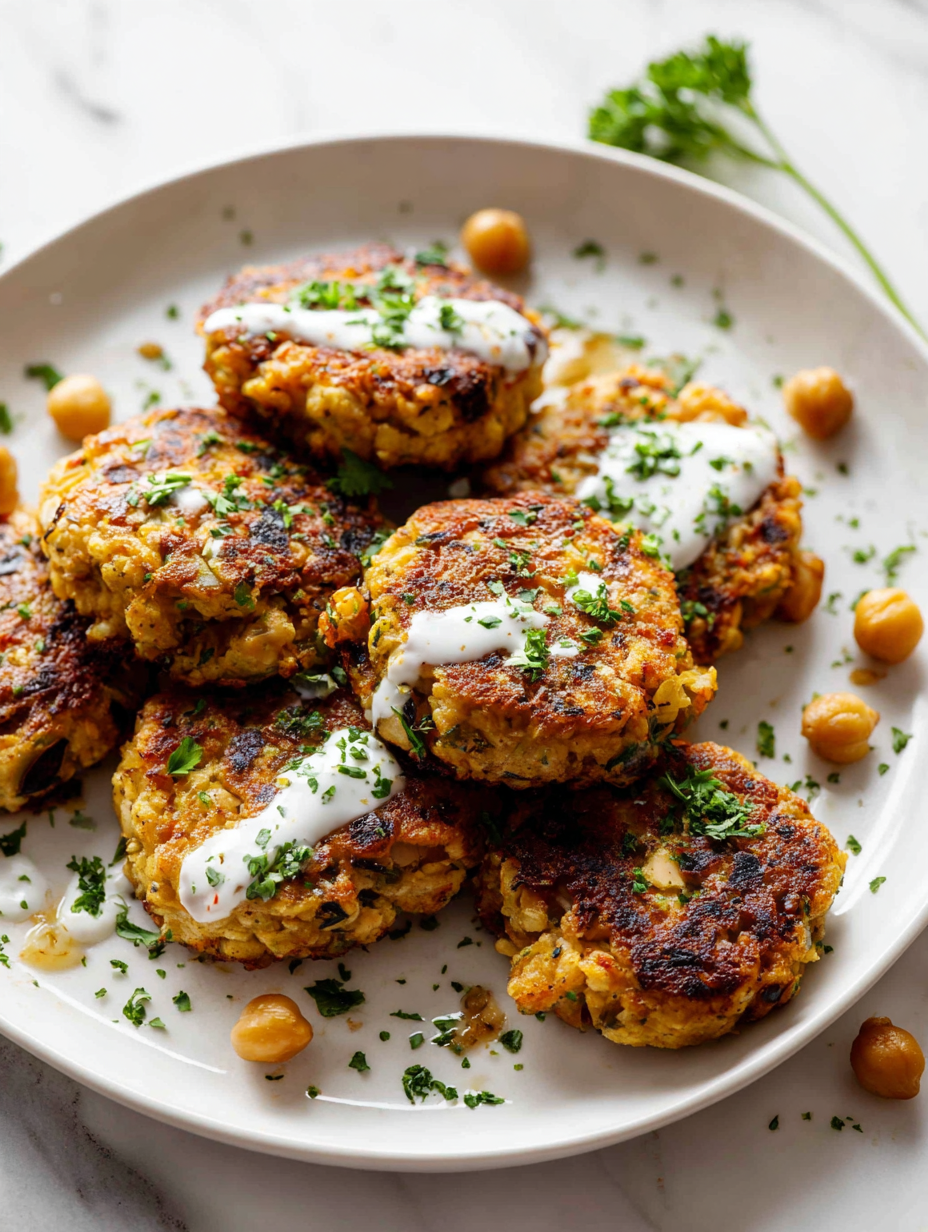
Chickpea Fritters
Ingredients
Equipment
Method
- Drain and rinse the chickpeas thoroughly, then transfer them to a bowl. Use a fork or potato masher to mash the chickpeas until mostly smooth, leaving some chunks for texture.
- Add the chopped parsley, minced garlic, ground cumin, lemon juice, a pinch of salt, and any optional spices to the mashed chickpeas. Mix everything together until well combined.
- Stir in 1 to 2 tablespoons of flour until the mixture holds together when pressed. If it feels too sticky, add a little more flour; if too dry, add a splash of water or lemon juice.
- Shape the mixture into small, flat patties or balls, about the size of a golf ball, then gently flatten into discs. Keep your hands damp to prevent sticking.
- Heat 2-3 tablespoons of oil in a skillet over medium heat until shimmering and hot. Carefully add the fritters, spacing them apart, and cook for about 3-4 minutes per side, until golden brown and crispy.
- Flip the fritters with a spatula once the underside is deeply golden and crispy, then cook the other side until equally browned. Adjust heat as needed to prevent burning.
- Remove the cooked fritters with a spatula and place them on paper towels to drain excess oil. Rest for 1-2 minutes to help set the crust.
- Serve the crispy chickpea fritters hot, garnished with additional parsley or a squeeze of lemon if desired. Enjoy their warm, crunchy texture with your favorite dipping sauce or yogurt.
Pro tips for perfect chickpea fritters
- Use a gentle touch when mixing to keep the chickpeas intact and avoid dense fritters.
- Keep oil at consistent medium heat—too hot and they burn, too cool and they soak up oil.
- Use a non-stick pan for easier flipping and less sticking, especially if your oil isn’t very high quality.
- Chill the mixture for 10-15 minutes if it’s too sticky—makes shaping easier and fritters crispier.
- Flip the fritters only once they’re golden and crispy on the edges—avoid flipping too early to prevent breaking.
- Rest cooked fritters on paper towels briefly—this helps drain excess oil and keeps them crispy.
- For extra crunch, sprinkle a little coarse sea salt on hot fritters right after frying—enhances texture and flavor.
Common mistakes and how to fix them
- FORGOT to drain chickpeas → Rinse and dry thoroughly to prevent sogginess.
- DUMPED too much flour → Add gradually until mixture holds without crumbling.
- OVER-TORCHED oil → Lower heat to medium, oil should shimmer but not smoke.
- MISSED resting time → Let fritters sit 2 minutes before serving for crispness.
Quick fixes and pantry swaps
- If mixture is too sticky → Splash in a little water or lemon juice to loosen it.
- When fritters aren’t crisp enough → Patch with a quick second fry over medium-high heat.
- Splash hot oil if fritters stick → Shield with a lid briefly to prevent splatters.
- Dumped too much flour → Rescue by adding a tiny bit of water and mixing gently.
- When oil shimmers but smokes → Reduce heat immediately and switch to a fresher batch of oil.
Prep, store, and reheat tips
- You can prep the chickpea mixture up to a day in advance; keep it covered in the fridge to maintain freshness and prevent drying out.
- Fritters are best enjoyed fresh, but store leftovers in an airtight container in the fridge for up to 2 days; reheat in a hot skillet until crispy and warm, with a slight shimmer of oil and a crackling crust.
- Frozen uncooked patties can be formed, stored flat in a zip-top bag for up to a month; cook directly from frozen, adding an extra minute per side for a crisp finish.
- For reheating cooked fritters, a quick pan-fry or oven bake at 180°C / 350°F for 5-7 minutes restores crunch, releasing a toasty aroma and a satisfying snap with each bite.
Top questions about chickpea fritters
1. Can I use dried chickpeas instead of canned?
Use canned chickpeas for convenience; mash them until almost smooth for the best texture.
2. How do I prepare dried chickpeas for this recipe?
Yes, but soak and cook dried chickpeas first, then mash thoroughly to avoid dry, crumbly fritters.
3. Can I make these fritters fluffier or denser?
Add a pinch of baking powder to make fritters a little lighter and fluffier.
4. What’s the best oil for frying these fritters?
Fry in neutral oil like vegetable or canola until crispy and golden, about 3-4 minutes per side.
5. How should I serve chickpea fritters?
Serve hot with lemon wedges, yogurt, or your favorite dipping sauce for maximum flavor.
6. Can I reheat leftovers and keep them crispy?
To keep them crispy, reheat in a hot skillet with a splash of oil for 3-4 minutes.
7. Can I substitute parsley with other herbs?
Yes, adding chopped cilantro instead of parsley gives a different herbal note and fresh brightness.
8. What if my mixture is too wet or sticky?
If mixture is too sticky, add a little more flour until it holds together but isn’t dry.
9. What pan is best for frying these fritters?
Use a non-stick skillet or cast iron to prevent sticking and make flipping easier.
10. How do I know when the fritters are cooked properly?
Fritters are done when they are deep golden, crispy on the outside, and firm inside.
These chickpea fritters are a humble reminder that simple ingredients can create something oddly comforting. They’re perfect for a quick snack or a casual lunch, especially when you want something crispy and filling without much fuss. Making them is like reconnecting with a piece of childhood, but with a modern, plant-based twist.
Even on busy days, I find myself reaching for these fritters—they’re honest, satisfying, and just a little chaotic in the best way. There’s something about the crackle and the smoky aroma that makes every bite feel worth the effort. It’s a small act of kitchen therapy that keeps me coming back for more.