Growing up, street food stalls were my playground. The aroma of crispy, golden vegetable cutlets always drew a crowd and made my stomach rumble. Now, I find myself turning to this humble snack when I want something savory and satisfying, especially on busy days when leftovers call for a new purpose.
There’s something honest about these cutlets—they’re imperfect, a little rustic, yet deeply comforting. I love experimenting with whatever veggies I have on hand, turning them into something crispy outside and tender inside. It’s a simple recipe, but it’s the kind of food that feels like a warm hug from childhood, reimagined for today’s fridge scavenging.
Focusing on the nostalgia of childhood street food, this vegetable cutlets recipe is about recreating those crispy, savory bites with a personal twist—using leftovers from the fridge and a pinch of improvisation that turns simple ingredients into a comforting, memorable snack.
Reviving Childhood Street Snacks
- Making these cutlets always reminds me of my grandma’s busy kitchen, where the smell of spices and frying oil filled the air, wrapping us in a warm, chaotic hug.
- I love how these bites turn humble leftovers into something crispy and golden, giving me that nostalgic rush of street food afternoons from my youth.
- There’s a quiet pride in flipping these until perfectly browned, knowing I’ve crafted something both simple and deeply satisfying.
- Whenever I’m in a rush, these are my go-to snack—quick to assemble, yet forever comforting and full of familiar flavors.
- Cooking these feels like a small rebellion, turning everyday veggies into a crispy treat that makes everyone smile, even on the busiest days.
The story behind this recipe
- This recipe was born out of a lazy weekend afternoon when I realized I had a fridge full of odds and ends—some leftover carrots, a lonely potato, and a wilted spinach bunch. Instead of tossing them, I decided to see if I could turn them into something crispy and satisfying. The process reminded me of childhood street food stalls, where improvisation was the secret ingredient, and every snack had a story.
- Cooking these vegetable cutlets became a small act of rebellion against waste, a way to make humble ingredients feel special. The aroma of frying spices and sizzling veggies filled my tiny kitchen, bringing back memories of bustling street corners and carefree afternoons. It’s funny how such simple bites can carry so much nostalgia and comfort, even now, when life feels a little chaotic.
- heading: ‘The story behind this recipe’
Historical & Cultural Tidbits
- Vegetable cutlets have roots in Indian street food, where vendors served crispy, spiced bites to busy crowds.
- This dish evolved as a way to use up leftover vegetables, turning humble ingredients into a flavorful snack.
- In many households, these cutlets are a nostalgic reminder of family gatherings and festive celebrations.
- The crispy exterior is traditionally achieved with a seasoned chickpea flour coating, adding a smoky depth.
- While popular in South Asia, similar vegetable patties appear in various cuisines worldwide, each with local twists.
Key ingredients and tips
- Potatoes: I love how they become fluffy inside, giving that soft, tender bite—try boiling then mashing until smooth, and if they’re too gluey, add a touch more bread crumbs.
- Carrots: Their sweetness adds a nice contrast, especially when grated finely. Use fresh carrots for that bright, crisp texture and a slightly juicy bite.
- Spinach: I toss in wilted, chopped spinach to boost the green factor—make sure to squeeze out excess water so the mix stays firm, not soggy.
- Breadcrumbs: Essential for that crispy crust, but if you’re out, crushed crackers or oats can work—just expect a slightly different crunch and flavor.
- Spices: A pinch of cumin, coriander, and chili powder makes all the difference—toast the spices briefly in oil before mixing for that smoky aroma.
- Binding agent: I prefer a beaten egg, but if you’re vegan, mashed chickpeas or a splash of flour mixed with water can hold everything together—just watch the moisture level.
- Oil for frying: Use a neutral oil like canola or sunflower—hot enough (around 180°C/356°F) to sizzle immediately on contact and turn golden within minutes.
Spotlight on key ingredients
Potatoes:
- I love how they become fluffy inside, giving that soft, tender bite—try boiling then mashing until smooth, and if they’re too gluey, add a touch more bread crumbs.
- Carrots: Their sweetness adds a nice contrast, especially when grated finely. Use fresh carrots for that bright, crisp texture and a slightly juicy bite.
- Spinach: I toss in wilted, chopped spinach to boost the green factor—make sure to squeeze out excess water so the mix stays firm, not soggy.
Vegetables (Carrots & Spinach):
- Carrots: Their natural sweetness really pops when grated finely, and a quick squeeze of excess moisture keeps the mixture from becoming mushy.
- Spinach: Fresh, wilted spinach adds vibrant color and a slight earthiness—just be sure to squeeze out all excess water before mixing.
- Breadcrumbs: They’re the secret to that crispy exterior, but crushed oats or crackers can work if you’re out—expect a slightly different crunch and flavor.
Notes for ingredient swaps
- Dairy-Free: Swap out any milk or dairy-based binders with mashed bananas or pureed beans—expect a slightly denser, earthier bite.
- Gluten-Free: Use rice flour or chickpea flour instead of bread crumbs—these add a nutty flavor and a bit more crunch.
- Vegan: Replace eggs with flaxseed meal (1 tbsp flaxseed + 3 tbsp water per egg)—can slightly alter the binding and texture, but works well.
- Sweet Potatoes: Substitute with regular potatoes for a milder, moister interior, but keep an eye on moisture levels to prevent sogginess.
- Carrots: Use zucchini or bell peppers for a different sweetness or color, but squeeze out excess moisture to keep the mixture firm.
- Fresh Herbs: Add chopped cilantro or mint instead of spinach for a fresh, bright flavor—just chop finely to distribute evenly.
- Oil: Swap sunflower or canola oil for coconut oil for a subtle aroma; watch the smoke point to avoid burning.
Equipment & Tools
- Large pot: Boil potatoes until tender.
- Grater: Finely grate carrots.
- Mixing bowl: Combine ingredients thoroughly.
- Frying pan: Cook the cutlets to crispy perfection.
- Spatula: Flip and handle patties safely.
- Paper towels: Drain excess oil after frying.
Step-by-step guide to vegetable cutlets
- Gather all ingredients: potatoes, carrots, spinach, bread crumbs, spices, egg, oil. Have a mixing bowl and frying pan ready.
- Peel and boil potatoes until fork-tender, about 15 minutes at 100°C/212°F. Mash until smooth and set aside.
- Grate carrots finely, then squeeze out excess moisture. Chop spinach finely, then squeeze out water—set aside.
- In a large bowl, combine mashed potatoes, grated carrots, chopped spinach, and spices. Mix well.
- Add bread crumbs gradually, mixing until the mixture holds together but isn’t too sticky—about 1/2 cup.
- Beat the egg separately. Mix into the veggie blend to act as a binder. Adjust with more bread crumbs if needed.
- Shape the mixture into small, flat patties, about 2-3 inches wide, pressing firmly to compact.
- Heat oil in a frying pan over medium-high heat, about 180°C/356°F. Test with a small piece—should sizzle immediately.
- Fry the cutlets in batches, about 3-4 minutes per side, until golden brown and crispy. Turn carefully to prevent breaking.
- Check for doneness: the exterior should be deep golden and crispy; the inside soft and steaming. The smell should be fragrant with spices.
- Remove from pan and drain on paper towels. Let rest for 2-3 minutes before serving.
Let the cutlets rest for 2-3 minutes on a paper-lined plate to firm up. Serve hot with chutney or yogurt for dipping, and enjoy that satisfying crunch with each bite.
How to Know It’s Done
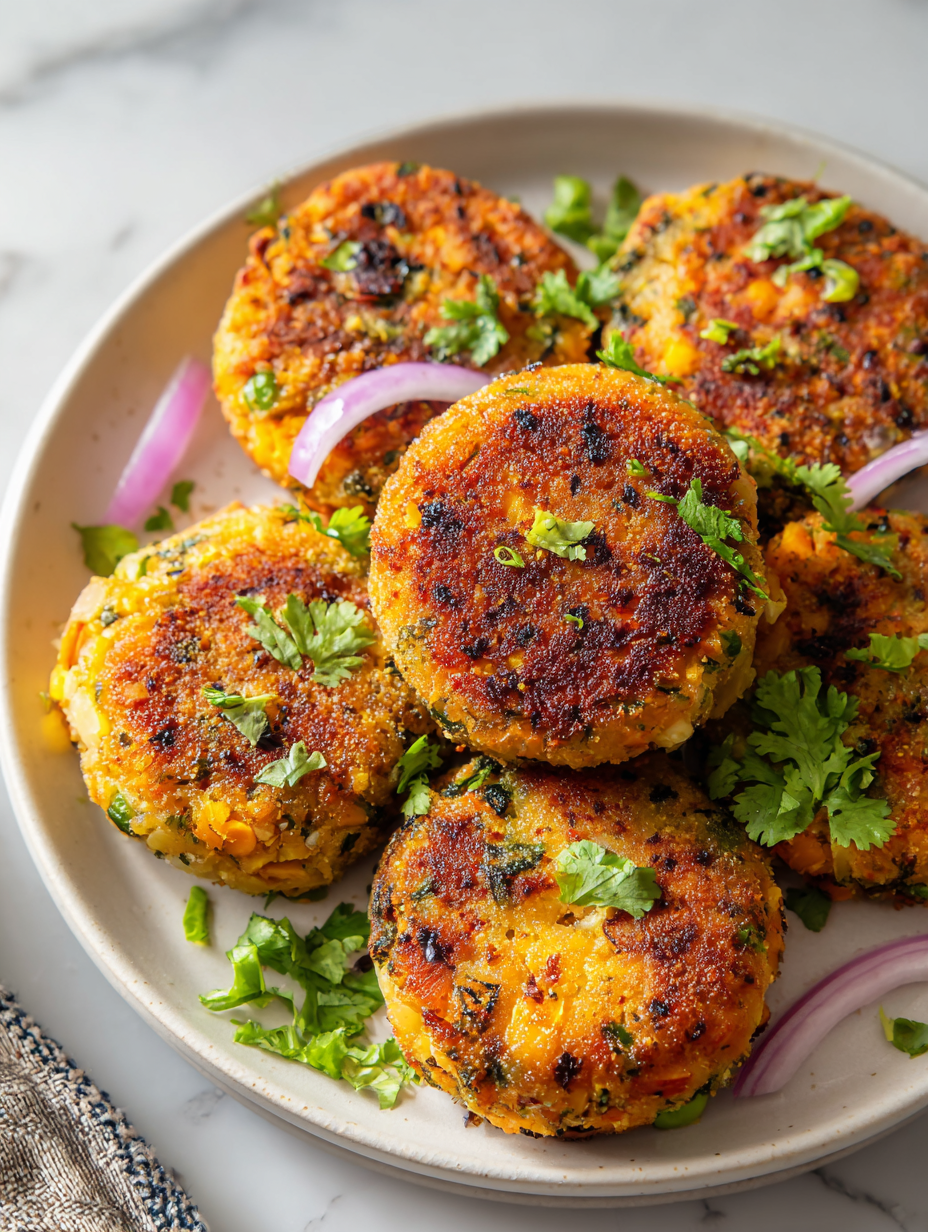
- Color: deep golden brown on outside with a crispy crust.
- Texture: inside should be tender, not mushy, with a firm yet soft bite.
- Appearance: evenly browned patties with no raw or burnt spots.
Vegetable Cutlets
Ingredients
Equipment
Method
- Peel and chop the potatoes, then place them in a large pot and boil until fork-tender, about 15 minutes. Mash them until smooth and set aside to cool slightly.
- While the potatoes cook, grate the carrots finely and squeeze out any excess moisture. Chop the spinach into small pieces and gently wilt it in a hot pan or microwave, then squeeze out the water and set aside.
- In a large mixing bowl, combine the mashed potatoes, grated carrots, and chopped spinach. Add cumin, coriander, chili powder, and a pinch of salt, then mix until well incorporated, filling your kitchen with fragrant spices.
- Gradually add the bread crumbs to the mixture, mixing with a spoon or your hands, until the mixture holds together but isn’t sticky. If it feels too wet, sprinkle in a little more bread crumbs.
- Beat the egg in a small bowl and fold it into the vegetable mixture, ensuring everything binds together evenly. The mixture should be firm enough to shape into patties.
- Divide the mixture and shape it into small, flat patties about 2-3 inches wide, pressing firmly to ensure they hold their shape.
- Heat oil in a frying pan over medium-high heat until shimmering and hot—test by dropping a tiny piece of mixture; it should sizzle immediately.
- Carefully place the patties into the hot oil, frying in batches. Cook for about 3-4 minutes on each side, until they turn deep golden brown and crispy, with a fragrant aroma filling your kitchen.
- Use a spatula to flip the cutlets gently, ensuring they don’t break, and cook until both sides are evenly crisped and browned.
- Remove the cooked cutlets and transfer them to paper towels to drain any excess oil, then let them rest for a couple of minutes to set.
- Serve the vegetable cutlets hot with your favorite chutney or yogurt dip, and enjoy that satisfying crunch and vibrant flavor in every bite.
Pro tips for perfect cutlets
- Bolded Mini-Head: Use medium heat for frying—this prevents burning the crust before the inside cooks.
- Bolded Mini-Head: Chill the mixture before shaping—this makes shaping easier and the cutlets hold together better.
- Bolded Mini-Head: Test oil temperature with a small piece—if it sizzles immediately, you’re good to fry.
- Bolded Mini-Head: Don’t overcrowd the pan—cook in batches to keep oil temperature steady and ensure crispiness.
- Bolded Mini-Head: Flip carefully to avoid breaking—wait until edges are golden and firm before turning.
- Bolded Mini-Head: Rest on paper towels after frying—this absorbs excess oil and keeps the crust crispy.
- Bolded Mini-Head: Serve hot for maximum crunch—these cutlets lose some crispness as they cool, so enjoy right away.
Common mistakes and how to fix them
- FORGOT to dry vegetables thoroughly → Results in soggy cutlets, fix by squeezing out excess moisture.
- DUMPED too much oil in pan → Causes greasy texture, use just enough for shallow fry.
- OVER-TORCHED at high heat → Burns exterior, lower heat to medium for even crispiness.
- MISSED resting time → Rest for 2 minutes before serving to set the texture.
Quick fixes and pantry swaps
- If the cutlets stick to the pan, splash a little water around and cover for 30 seconds.
- When oil splatters, shield with a splatter guard or reduce heat slightly.
- Dumped too much oil? Pat the cutlets with paper towels to absorb excess before serving.
- Overcooked or burnt? Lower the heat immediately and extend cooking time to prevent further charring.
- Rescue a soggy batch by placing cutlets on a wire rack in a hot oven for 5 minutes to crisp up.
Prep, store, and reheat tips
- Prep the vegetable mixture a day in advance; keep chilled in an airtight container for up to 24 hours, which helps flavors meld and makes frying quicker.
- Shape the cutlets ahead of time and store them flat in a single layer between parchment paper in the fridge for up to 12 hours. They may need a gentle reshape if they dry out slightly.
- Cooked cutlets can be refrigerated in an airtight container for 2-3 days. Reheat in a hot skillet or oven until crispy—smell the toasty aroma and listen for a gentle crackle.
- For longer storage, freeze the uncooked or cooked cutlets for up to 1 month. Thaw in the fridge overnight, then reheat as before for best crispiness and flavor, watching for slight reheating sogginess.
Top questions about vegetable cutlets
1. How do I shape the cutlets without breaking them?
Use a sharp knife to cut through to avoid squishing the shape, and keep the cutlets firm by chilling before frying.
2. How do I know when the oil is ready for frying?
Make sure your oil is hot enough (around 180°C/356°F) so the cutlets turn crispy and golden without absorbing too much oil.
3. My cutlets are sticking to the pan—what’s wrong?
If they stick to the pan, splash a bit of water and cover for 30 seconds, then try flipping again gently.
4. How can I keep the cutlets crispy if not serving right away?
To keep them crispy longer, serve immediately after frying or reheat in a hot oven or skillet until golden and crackly again.
5. Can I use canned vegetables for this recipe?
Use leftover cooked vegetables or even canned ones, just drain excess moisture thoroughly before mixing.
6. How do I make vegetable cutlets vegan?
To make them vegan, replace the egg with flaxseed meal mixed with water, or mashed chickpeas for binding.
7. Can I add other vegetables like zucchini or bell peppers?
Use freshly grated carrots for sweetness and crunch, and squeeze out excess moisture to prevent sogginess.
8. Should I chill the mixture before shaping?
Chill the mixture for 30 minutes to make shaping easier and to improve the overall texture.
9. How do I test if the oil is hot enough?
Test the oil with a small piece; if it sizzles immediately and bubbles vigorously, it’s ready for frying.
10. Can I prepare these ahead of time?
Store uncooked shaped cutlets in the fridge up to 12 hours; reheat in a hot pan for best results.
These vegetable cutlets might seem simple, but they carry a lot of childhood memories and a little bit of kitchen magic. Every crispy bite is a reminder of how humble ingredients can turn into something satisfying, especially when you’re in a rush or craving comfort.
In times like these, when quick snacks feel more precious than ever, having a go-to recipe like this keeps things easy and cozy. Plus, the smell alone—rich spices and frying oil—fills the house with a warmth that’s hard to beat. Sometimes, it’s the simplest bites that bring the most joy.